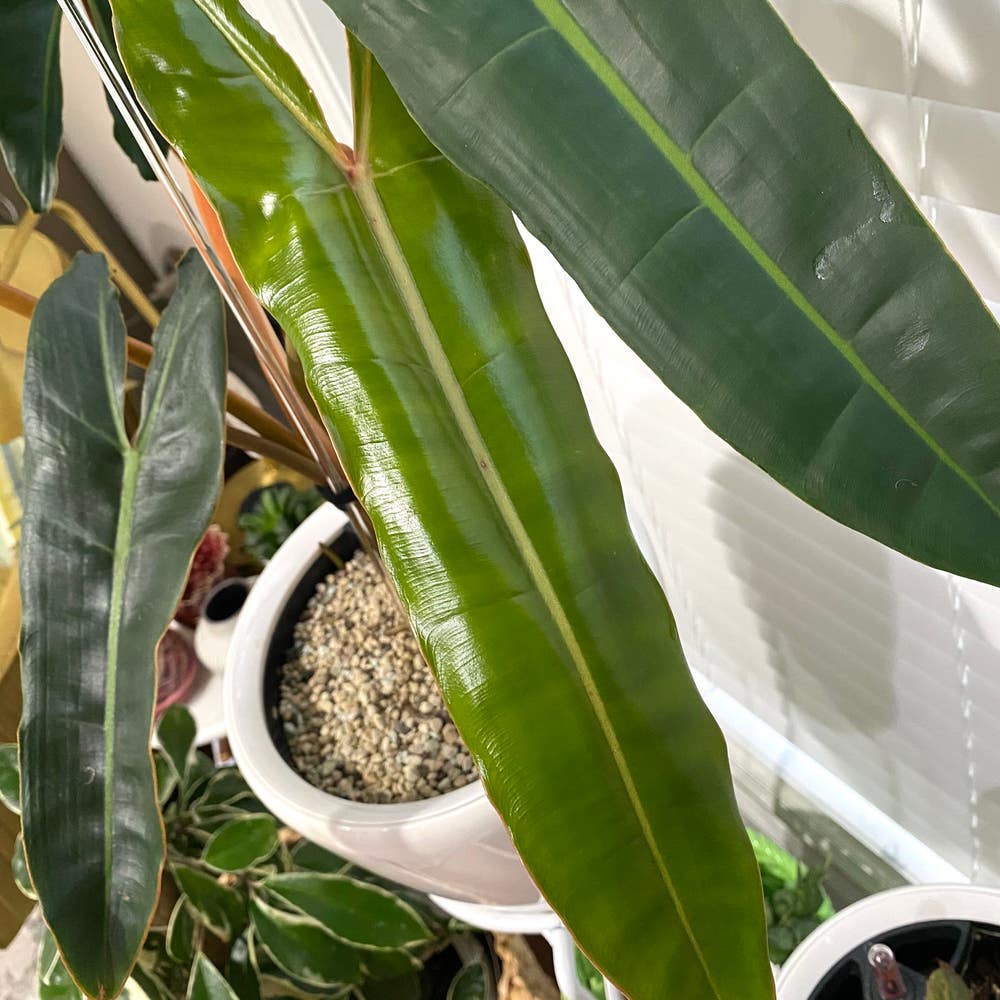
💧 How to Fix Your Philodendron billietiae Wilting
Philodendron billietiae
By the Greg Editorial Team
Sep 29, 2024•6 min read
This article was created with the help of AI so we can cover more plants for you. May contain errors. See one? Report it here.
- 🌱 Wilting in Philodendron billietiae often signals water or heat stress—act quickly!
- 💧 Check soil moisture regularly to prevent droopy leaves and yellowing foliage.
- 🌡️ Relocate to shadier spots and increase humidity to combat heat stress effectively.
Common Causes of Wilting Leaves
💧 Water Stress
Wilting leaves can often signal water stress in your Philodendron billietiae. Look for droopy leaves, dry soil, and yellowing foliage as key symptoms.
Inconsistent watering practices are usually to blame. Overwatering can suffocate roots, while underwatering leaves them parched and desperate for moisture.
🔥 Heat Stress
Heat stress is another common culprit behind wilting. Symptoms include crispy leaf edges, wilting during hot days, and even leaf drop.
This condition often arises from exposure to direct sunlight or high temperatures without adequate humidity. Your plant thrives in a balanced environment, so keep it cool and shaded.
🦠 Disease-Related Wilting
While rare, disease-related wilting can occur in Philodendron billietiae. Sudden wilting, discoloration, and leaf spots are telltale signs.
Pathogenic wilt is uncommon but can happen under specific conditions. Always keep an eye out for these symptoms to catch any issues early.
Understanding these common causes will help you take the right steps to revive your plant. Next, let’s dive into how to diagnose wilting effectively.
Diagnosing Wilting
🕵️♂️ Step-by-Step Guide to Diagnose Wilting
Diagnosing wilting in your Philodendron billietiae is straightforward. Start by assessing soil moisture.
Assess soil moisture: Check the top 2 inches of soil for dryness or sogginess. This will help you determine if your plant is overwatered or underwatered.
Observe environmental conditions: Monitor the temperature and humidity levels in the plant's location. Extreme conditions can lead to stress.
Inspect leaves: Look for discoloration, spots, or signs of pests. Healthy leaves should be vibrant and free from blemishes.
Evaluate watering routine: Review how often and how much water you give your plant. Consistency is key to preventing wilting.
👀 Signs to Look for in Leaves and Soil
Pay attention to both leaf and soil conditions.
Leaf condition: Look for curling, yellowing, or browning. These are clear indicators that something is off.
Soil condition: Check for compactness, odor, or the presence of mold. Healthy soil should be loose and earthy, not compacted or smelly.
By following these steps, you can effectively diagnose the cause of wilting in your Philodendron billietiae. This will set you on the right path to restoring your plant's health and vitality.
Next, let's explore practical solutions for addressing wilting leaves.
Solutions for Wilting Leaves
🌊 Addressing Water Stress
To tackle water stress, start by adjusting your watering schedule. Water your Philodendron billietiae when the top 2 inches of soil feel dry to the touch.
Using a moisture meter can help you gauge soil moisture accurately. This tool takes the guesswork out of watering and ensures your plant gets just the right amount.
☀️ Addressing Heat Stress
If your plant is suffering from heat stress, consider relocating it to a shadier spot. You can also use sheer curtains to diffuse harsh sunlight.
Increasing humidity is crucial as well. A humidifier or a pebble tray filled with water can create a more favorable environment for your plant.
🦠 Solutions for Disease-Related Wilting
For disease-related wilting, the first step is to identify any fungal or bacterial infections. Use appropriate fungicides or bactericides to treat these issues effectively.
Don't forget to remove any affected leaves. This helps prevent the spread of disease and encourages healthier growth in the long run.
By addressing these key areas, you can significantly improve the health of your wilting Philodendron billietiae. Next, let’s explore how to revive a wilted plant effectively.
Reviving a Wilted Plant
Reviving a wilted Philodendron billietiae can feel daunting, but with the right techniques, you can breathe life back into your plant. Here are some effective methods to help your plant recover.
💧 Techniques for Bottom Watering
- Fill a basin with water. This allows for even moisture distribution.
- Place the pot in the basin for 30 minutes. This lets the soil absorb moisture from the bottom up.
- Remove and let excess water drain. This prevents waterlogging, which can lead to further issues.
🌍 Relocating the Plant Temporarily
Sometimes, a change of scenery is all your plant needs.
- Move to a more suitable environment with stable temperature and humidity. This can help reduce stress.
- Monitor the plant closely for signs of recovery. Look for improved leaf turgor and color.
✂️ Pruning Damaged Leaves
Pruning can be a game-changer for your plant's health.
- Use clean, sharp scissors to remove wilted or damaged leaves. This helps redirect energy to healthier parts of the plant.
- Encourages new growth and improves overall plant health. Fresh leaves can emerge stronger and more vibrant.
Reviving a wilted plant requires patience and care. By employing these techniques, you can set your Philodendron billietiae on the path to recovery. Next, let’s explore preventive measures to keep your plant thriving in the long run.
Preventive Measures
Best Practices to Minimize Future Wilting 🌱
To keep your Philodendron billietiae thriving, establish a consistent watering schedule. Adjust this schedule based on seasonal changes to ensure your plant gets the right amount of moisture year-round.
Regularly check the soil moisture to avoid surprises. A simple finger test can help; if the top 2 inches feel dry, it’s time to water.
Environmental Adjustments for Optimal Growth 🌿
Humidity plays a crucial role in your plant's health. Aim to maintain humidity levels above 50% to create a comfortable environment for your Philodendron.
Be mindful of your plant's location. Avoid placing it near heating vents or drafty windows, as these can lead to fluctuating temperatures that stress your plant.
By implementing these preventive measures, you can significantly reduce the chances of wilting and promote a vibrant, healthy plant. Next, let’s explore when it’s time to seek professional help for your wilting Philodendron.
When to Seek Help
Signs That Indicate the Need for Professional Assistance 🌱
If your Philodendron billietiae continues to wilt despite your best efforts, it may be time to seek help. Persistent wilting can signal deeper issues that simple adjustments won't fix.
Look for signs of severe disease or pest infestation. If you notice unusual spots, discoloration, or an influx of pests, don’t hesitate to reach out for professional advice.
Resources 🌍
Local nurseries can be invaluable for expert advice and plant care products. They often have knowledgeable staff who can help diagnose issues and recommend solutions.
Online communities like Greg are also fantastic resources. You can connect with fellow plant enthusiasts who share tips and support, making your plant care journey a little less lonely.
⚠️ Safety First
This content is for general information and may contain errors, omissions, or outdated details. It is not medical, veterinary advice, or an endorsement of therapeutic claims.
Always consult a qualified healthcare professional before using any plant as food, medicine, or supplement.
Never eat any plant (or feed one to pets) without confirming its identity with at least two trusted sources.
If you suspect poisoning, call Poison Control (800) 222-1222, the Pet Poison Helpline (800) 213-6680, or your local emergency service immediately.
Spotted an error? Please report it here.
Revive your wilting Philodendron billietiae 🌱 with Greg's tailored watering plans and moisture monitoring to keep your plant thriving and vibrant!