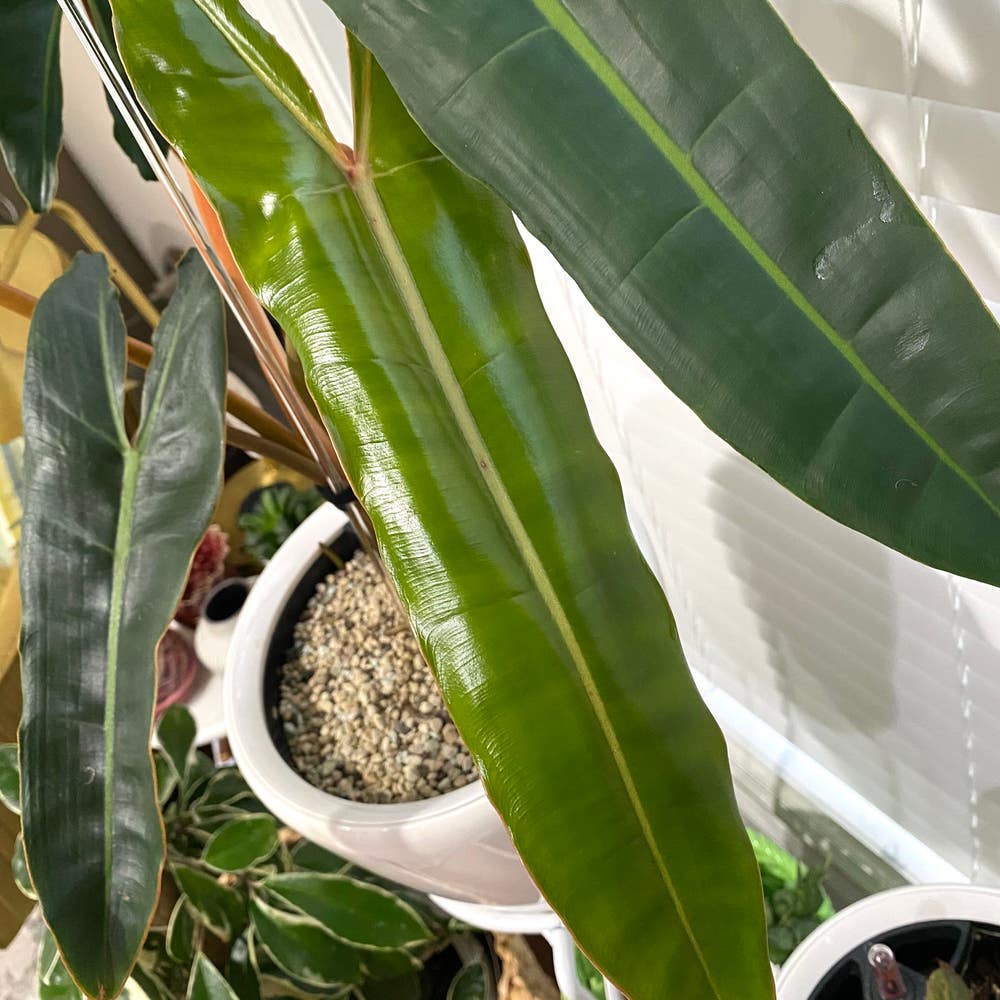
Why Are My Philodendron billietiae Leaves Droopy?
Philodendron billietiae
By the Greg Editorial Team
Jun 18, 2024•5 min read
This article was created with the help of AI so we can cover more plants for you. May contain errors. See one? Report it here.
- Droopy leaves signal distress; check for water, light, and pests.
- 🌱 Balance water and light to prevent over/underwatering and root rot.
- Maintain 65-85°F and 40-60% humidity for perky Philodendron billietiae leaves.
Spotting the Signs: When Your Philodendron billietiae is Unhappy
🌿 Visual Cues of Droopiness
Philodendron billietiae communicates distress through its leaves. Droopiness can be the plant's white flag, signaling that all is not well in its world. Yellowing leaves suggest a water imbalance or a cry for sunlight, while brown edges hint at a plea for higher humidity. If the leaves seem to have lost their firmness and hang lower than usual, it's time to play plant detective.
🛠 Troubleshooting Tips
To pinpoint the problem, start with a soil check. If the top inch feels like a forgotten desert, it's time to water. Conversely, if it's more like a swamp, you've overdone it. Next, assess the lighting; leggy growth and pale leaves are the plant's way of stretching towards a light source it desperately needs. Don't forget to inspect for pests—these unwelcome guests can also cause droopiness. Lastly, consider the fertilizer frequency; overfeeding can lead to a nutrient overdose, manifesting as wilting or brown leaf tips.

Thirsty or Drowning? Balancing Water Needs
🌊 Saving the Overwatered Philodendron
Overwatering your Philodendron billietiae is like throwing it a pool party without an exit ramp. Root rot is the uninvited guest here. To save your plant from a watery grave, follow these steps:
- Halt the H2O: Stop watering and let the soil dry out. Touch the soil; if it's soggy, it's time for a break.
- Drainage Drama: Check the pot for proper drainage. No holes? Time to drill.
- Sunny Side Up: Move the plant to a brighter spot, but avoid direct sunlight to speed up drying without scorching the leaves.
- Leaf Lifeguard: Trim any yellow or mushy leaves. They're not coming back.
- Root Rehab: If the roots are brown and squishy, repot with fresh soil and trim the dead weight.
- Fungicide to the Rescue: Apply a fungicide to prevent opportunistic diseases from kicking your plant while it's down.
- Fertilizer Freeze: Don't fertilize until the plant has fully recovered. It's on a strict water diet for now.
💧 Reviving the Underwatered Philodendron
Underwatering is like sending your Philodendron on a desert trek with an empty canteen. To quench its thirst without overdoing it, follow these tips:
- Deep Drink: Water thoroughly, allowing moisture to reach the roots. If the soil is bone dry, it may repel water, so soak it slowly to rehydrate evenly.
- Consistency is Key: Establish a regular watering schedule. Stick your finger in the soil; if it's dry an inch down, it's time to water.
- Weight Watch: Lift the pot. Light as a feather? Your plant's parched.
- Monitor Moisture: Use a moisture meter if you're notorious for neglect. It's like a plant hydration nanny.
- Humidity Helper: Consider a pebble tray or humidifier if your air is drier than a stand-up comedian's wit.
Remember, your Philodendron billietiae isn't a cactus. It's a tropical treasure that craves consistent moisture without the swampy aftermath.

Let There Be Light (But Not Too Much!)
🌞 Finding the Sweet Spot for Sunlight
Philodendron billietiae is a light lover, but it doesn't want to bathe in the sun's full glory. Bright, indirect light is the sweet spot for this tropical beauty. Place it near a north or east-facing window where the rays are gentle, or use a sheer curtain as a shield against harsher southern exposures. It's all about simulating the dappled sunlight of a rainforest canopy.
🌅 Adjusting Your Plant's Tan
If your Philodendron billietiae's leaves are drooping, it might be signaling a light issue. Too much direct sunlight can lead to a crispy, sunburned plant, while too little can cause it to become leggy and dull. Adjust your plant's position to avoid the intense midday sun. If natural light is scarce, especially in the winter, consider an LED grow light—just keep it on for about 8-10 hours, akin to a typical workday. Remember, your plant's foliage will communicate its contentment with vibrant growth and upright leaves.

Keeping It Cool: Temperature and Your Philodendron
🌴 Ideal Temperature Range
Philodendron billietiae are tropical tenants, preferring a steady climate similar to a balmy vacation spot. The sweet spot for these leafy lovelies is between 65°F and 85°F. Straying outside this range is like sending your plant on an unexpected polar expedition or a desert trek — neither of which ends well for its perky foliage.
❄️ Weathering the Extremes
Drafts are the nemesis of your Philodendron billietiae. Keep them away from the icy breath of air conditioners and the Sahara-like blast of heaters. If your plant's leaves are throwing a fit, showing signs of distress like discoloration or wilting, it's time to rethink its placement. During winter, it's a houseplant, not an ice sculpture, so keep it indoors and cozy. And remember, consistency is key — sudden changes in temperature are about as welcome as a hiccup during a tightrope walk.
Prevention: Keeping Your Philodendron Perky
💧 Routine Care Schedule
Consistency is your Philodendron billietiae's BFF. To avoid droopiness, water when the top inch of soil dries out. Remember, your plant's not into soggy feet, so no overwatering. Bright, indirect light keeps it from becoming a slouch. Prune with purpose – remove the sad leaves to boost morale and growth.
🏝 Creating the Ideal Home Environment
To create a slice of tropical paradise, keep the thermostat above 60°F (15°C). Humidity should hover around 40-60%; if your air's more desert than rainforest, consider a humidifier. And don't let your plant play hide and seek with the sun – bright, indirect light is the name of the game. If your Philodendron billietiae could talk, it'd say, "Thanks for not making my life a rollercoaster of temperature and light changes."
⚠️ Safety First
This content is for general information and may contain errors, omissions, or outdated details. It is not medical, veterinary advice, or an endorsement of therapeutic claims.
Always consult a qualified healthcare professional before using any plant as food, medicine, or supplement.
Never eat any plant (or feed one to pets) without confirming its identity with at least two trusted sources.
If you suspect poisoning, call Poison Control (800) 222-1222, the Pet Poison Helpline (800) 213-6680, or your local emergency service immediately.
Spotted an error? Please report it here.
Ensure your Philodendron billietiae thrives with upright leaves 🍃 by using Greg to monitor moisture levels and optimize light conditions, preventing droopiness with ease.