Why Are My Philodendron billietiae Leaves Falling Over?
Philodendron billietiae
By the Greg Editorial Team
Jun 18, 2024•6 min read
This article was created with the help of AI so we can cover more plants for you. May contain errors. See one? Report it here.
- Droopy leaves signal care issues, like hydration or light deficiencies.
- Perfect watering and light are crucial; adjust for seasons and humidity.
- Consistent care and check-ups prevent drooping; use stakes for support.
Spotting the Signs: When Your Philodendron Needs Help
🚩 Identifying Droopy Leaves: What Does Trouble Look Like?
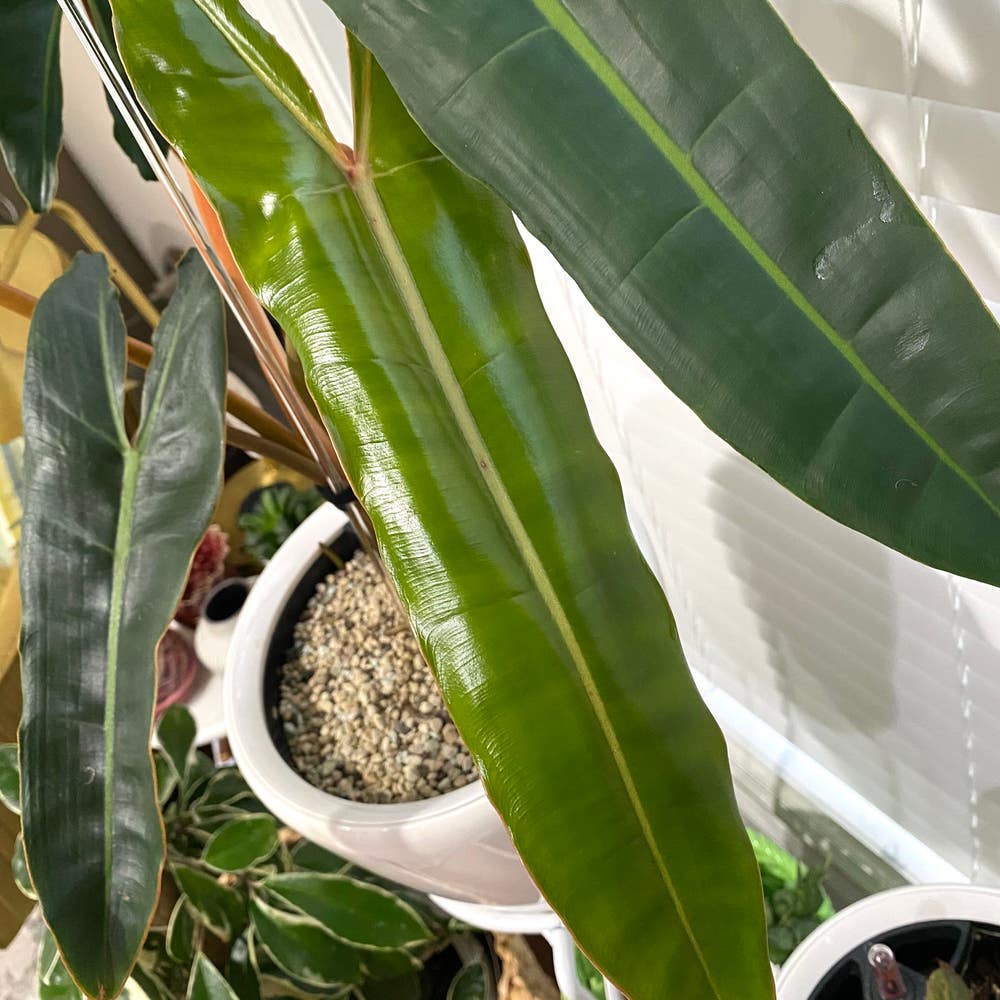
Droopy leaves on your Philodendron billietiae are the plant's white flag—a sign that it's not all green and glossy in Philoland. If your plant's leaves hang like a teenager's shoulders on chore day, it's time to perk up and pay attention.
🚨 The Tell-Tale Symptoms: Yellowing, Wilting, and Other Red Flags
Yellowing leaves are the botanical equivalent of a bad complexion, hinting at either a hydration hiccup or a light deficiency. Wilting leaves? That's your Philodendron's rendition of a wilted salad—either overwatered or craving a drink. Brown edges are like frayed jeans, a sign of distress, possibly from inconsistent watering. Leggy growth screams for more light, like a sun-starved beachgoer. And if you're seeing leaves drop faster than a hot potato, it's time to reassess your care routine pronto.

The Water Balancing Act
💦 Too Much Love: The Perils of Overwatering
Overwatering is like helicopter parenting: it smothers. Your Philodendron billietiae's roots need to breathe, not swim. If leaves are yellowing or you're seeing a mushy base, you've crossed the line into overbearing plant parent territory. Cut back on the water, let the soil dry out a bit between drinks, and ensure your pot has proper drainage to avoid waterlogged soil.
🏜️ Thirsty Roots: The Signs and Solutions for Underwatering
Conversely, underwatering turns your plant into a parched desert wanderer. Look out for droopy, brown-tipped leaves that feel as crisp as autumn foliage. When the top couple of inches of soil are dry, it's time to hydrate. But don't just pour and go—water slowly and deeply to encourage roots to seek moisture downwards, promoting healthy growth.
🚰 Perfecting Your Watering Technique: Tips for Just-Right Moisture
Finding the hydration sweet spot is less about a strict schedule and more about reading the room—or pot. Stick your finger in the soil; if it's dry a couple of inches down, it's time for a drink. Water thoroughly but allow excess to drain. Think of it as a bartender's pour: enough to quench the thirst, not so much that your plant gets waterlogged. Remember, consistency is your friend, but so is adaptability. Adjust your watering habits with the seasons and your home's humidity levels.

Let There Be (The Right Amount of) Light
🌞 Sunburnt or Starved: Finding the Light Sweet Spot
Philodendron billietiae thrives in that Goldilocks zone of light—not too much, not too little. If your plant's leaves look like they've had a rough day at the beach, it's getting too much sun. Conversely, leaves that droop like they're yearning for a sunny vacation could be starving for light.
Making Moves: Adjusting Your Plant's Position for Optimal Light
It's a game of inches and angles. Move your Philodendron closer to a window for more light, but avoid the harsh midday sun that can cause the leaf equivalent of a nasty sunburn. East or west-facing windows usually provide a happy medium. And remember, gradual changes are better than drastic relocations—don't shock your plant with a sudden game of musical chairs.
💡 Artificial Sunshine: When to Consider Grow Lights
When the sun is playing hard to get, artificial grow lights can step in as a stand-in. They're a personal sun for your plant, minus the risk of overexposure. Keep the light indirect and the intensity moderate. Think of grow lights as a steady diet of vitamin D for your Philodendron, without the risk of turning it into a crispy critter.

Feeding Finesse: Nutrients for Upright Leaves
💪 The Skinny on Nutrients
Philodendron billietiae craves a balanced diet to keep its leaves standing at attention. Yellowing leaves? Might be a cry for help. Your green buddy could be lacking magnesium and iron, leading to chlorosis. A dash of chelated iron could be the pick-me-up it needs.
🌱 Fertilizer Fix
When it's time to feed, think balanced meals: a 20-20-20 NPK (nitrogen, phosphorus, potassium) ratio is the plant equivalent of a well-rounded diet. But don't just grab any old fertilizer. Look for one that's a hit with houseplants, like Tropical Houseplant Food, and consider the occasional treat of composted coffee grounds or aquarium water for a nutrient boost.
📅 Schedule for Success
Timing is everything. Hold off on fertilizing newbies for a month and give the winter months a break. From spring through summer, it's dinner time once a month. And remember, overfeeding is like overseasoning—a surefire way to ruin a good thing. Keep it light, keep it right.
Pro Tips for Prevention and Care
💧 Crafting a Care Schedule
Consistency is your Philodendron billietiae's best friend. Establish a watering routine when the top inch of soil dries out, but avoid the swampy conditions of overwatering. Bright, indirect light should be your plant's daily bread—too little, and you'll witness a droop-fest.
👀 Vigilant Plant Parenting
Keep a watchful eye on your green buddy. Regular check-ups can prevent the onset of yellowing leaves or the dreaded root rot. Spot an issue? Tackle it head-on, like you would a sneaky weed in your garden.
🌿 The Support System
Sometimes, your Philodendron needs a literal shoulder to lean on. Use stakes or ties to prop up those languishing leaves. Think of it as a plant crutch—it's there when your Philodendron needs to get back on its feet, er, roots.
✂️ Pruning and Grooming
Snip off any sad, droopy leaves to redirect your plant's energy. It's like giving your Philodendron a pep talk with scissors—encouraging it to grow new, perky leaves. Remember, clean tools are a must to avoid infection.
🌦 Seasonal Adjustments
Adapt your care with the changing seasons. Less water in winter, a bit more shade in summer. It's like dressing your plant appropriately for a weather forecast—it appreciates the thought.
🔄 Rotation for Even Growth
Give your plant a quarter twist with each watering. It's like ensuring your Philodendron gets a well-rounded education, with equal opportunities to bask in the light.
🕵️ Regular Inspection and Maintenance
Stay on top of humidity levels and pest control. A Philodendron with spider mites is like a dog with fleas—uncomfortable and unhappy. And always, always keep an eye on those roots during repotting. Healthy roots mean a happy plant.
⚠️ Safety First
This content is for general information and may contain errors, omissions, or outdated details. It is not medical, veterinary advice, or an endorsement of therapeutic claims.
Always consult a qualified healthcare professional before using any plant as food, medicine, or supplement.
Never eat any plant (or feed one to pets) without confirming its identity with at least two trusted sources.
If you suspect poisoning, call Poison Control (800) 222-1222, the Pet Poison Helpline (800) 213-6680, or your local emergency service immediately.
Spotted an error? Please report it here.
Ensure your Philodendron billietiae stays healthy and upright 🌿 with Greg's personalized care reminders for just the right water and light.