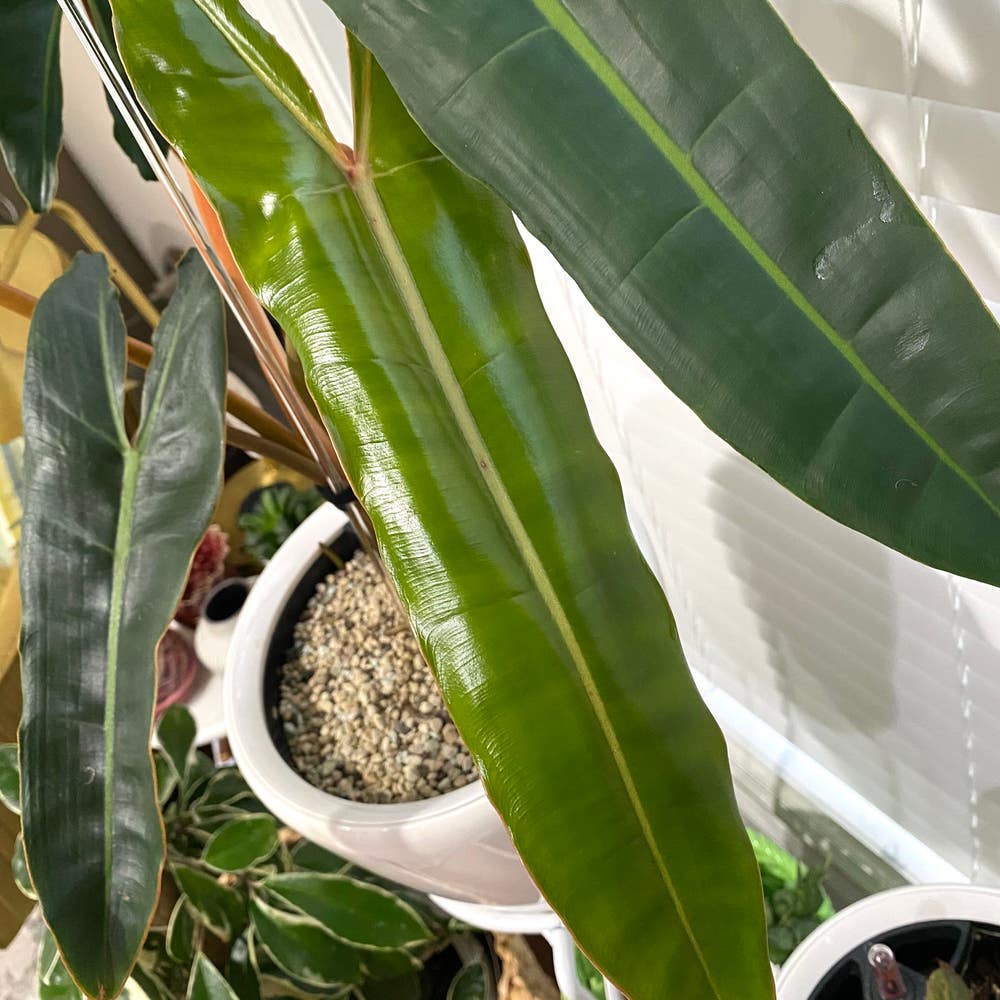
How to Get a Philodendron billietiae to Bloom
Philodendron billietiae
By the Greg Editorial Team
Jun 18, 2024•3 min read
This article was created with the help of AI so we can cover more plants for you. May contain errors. See one? Report it here.
- 🌞 Bright, indirect light for 6-8 hours is crucial for blooms.
- 💦 Maintain 65°F-85°F and high humidity to set the stage for flowering.
- 🌼 Phosphorus-rich fertilization and strategic pruning after flowering season promote blooms.
Prime Conditions for Philodendron billietiae Blooms
💡 Light: The Key to Unlocking Flowers
Philodendron billietiae is not a sunbather. It craves bright, indirect light, akin to a shaded forest canopy. Six to eight hours of this gentle illumination daily will satisfy its needs without the risk of leaf scorch. Place it near a window that bathes it in soft light, but shield it from the harsh midday glare.
🌡️ Temperature and Humidity: Setting the Stage for Flowering
Warmth and moisture are the Philodendron billietiae's best friends. Aim for a temperature range of 65°F to 85°F (18°C to 29°C) and avoid the chill below 55°F (13°C). Humidity should be high, around 60% or more. If your air is as dry as a comedian's humor, consider a humidifier or a pebble tray to ramp up the humidity. Seasonally, ensure your plant gets a bit more warmth and moisture to trigger its flowering instincts.

Feeding Your Philodendron for Fabulous Flowers
💐 The Right Nutrients for Blooms
To coax your Philodendron billietiae into blooming, phosphorus is your plant's best friend. A fertilizer with a higher phosphorus content (look for a higher middle number in the N-P-K ratio) is like a secret handshake that invites flowers to the party. Spring and summer are prime times for feeding, aligning with your plant's growth spurts.
🍔 Overfeeding vs. Underfeeding: Finding the Balance
Yellow leaves? Could be a cry for nutrients. But don't drown your plant in a nutrient flood; overzealous feeding can lead to a lush green bush with zero blooms. If your philodendron's leaves are more yellow than a school bus, consider a chelated iron supplement. Adjust your fertilization strategy like a DJ tweaks a soundboard—carefully and with an ear for feedback. Feed once a month during the growing season, and during winter, let your plant nap without the extra snacks.

Pruning for Blooms: Less Can Be More
🌱 Strategic Pruning Techniques
Pruning your Philodendron billietiae isn't just about keeping it from turning into a jungle beast; it's strategic. By selectively snipping, you're essentially telling your plant to put its energy into blooming, not just leaf-making. Timing is crucial; prune after the flowering season to avoid accidentally giving future blooms the chop. Aim for early spring, just as the plant wakes up for its growth spurt.
🏋️ Training for Show-Stopping Blooms
Training your Philodendron billietiae is like coaching an athlete for the Olympics, except here, the gold medals are the blooms. Use stakes and ties to guide your plant into an aesthetically pleasing shape that doesn't just look good but also promotes better air circulation and light exposure. This isn't just for show; it's a calculated move to enhance flowering. Remember, a well-shaped plant is a blooming plant.

Advanced Tips for Encouraging Philodendron billietiae Flowers
🌺 The Maturity Factor
Philodendron billietiae is not a youngster's game; age matters. Before you even think about blooms, your plant needs to hit its stride in maturity. This could mean years, not months, of growth. Patience is the gardener's virtue here, as these plants won't consider blooming until they've fully settled into their pots and life indoors.
🌿 Stress Techniques to Prompt Blooming
To nudge your Philodendron billietiae into the blooming phase, consider controlled stress techniques. It's like telling your plant, "Hey, it's time to show what you've got." A slight reduction in watering, mimicking the dry season, or a change in temperature can signal your plant to enter survival mode, often triggering flowering as a natural response. But remember, it's a fine line—too much stress can backfire, leaving you with a stressed-out plant rather than a blooming one.
⚠️ Safety First
This content is for general information and may contain errors, omissions, or outdated details. It is not medical, veterinary advice, or an endorsement of therapeutic claims.
Always consult a qualified healthcare professional before using any plant as food, medicine, or supplement.
Never eat any plant (or feed one to pets) without confirming its identity with at least two trusted sources.
If you suspect poisoning, call Poison Control (800) 222-1222, the Pet Poison Helpline (800) 213-6680, or your local emergency service immediately.
Spotted an error? Please report it here.
Achieve that elusive Philodendron billietiae bloom 🌺 by letting Greg's personalized care reminders and light monitoring guide you to the perfect growing conditions.