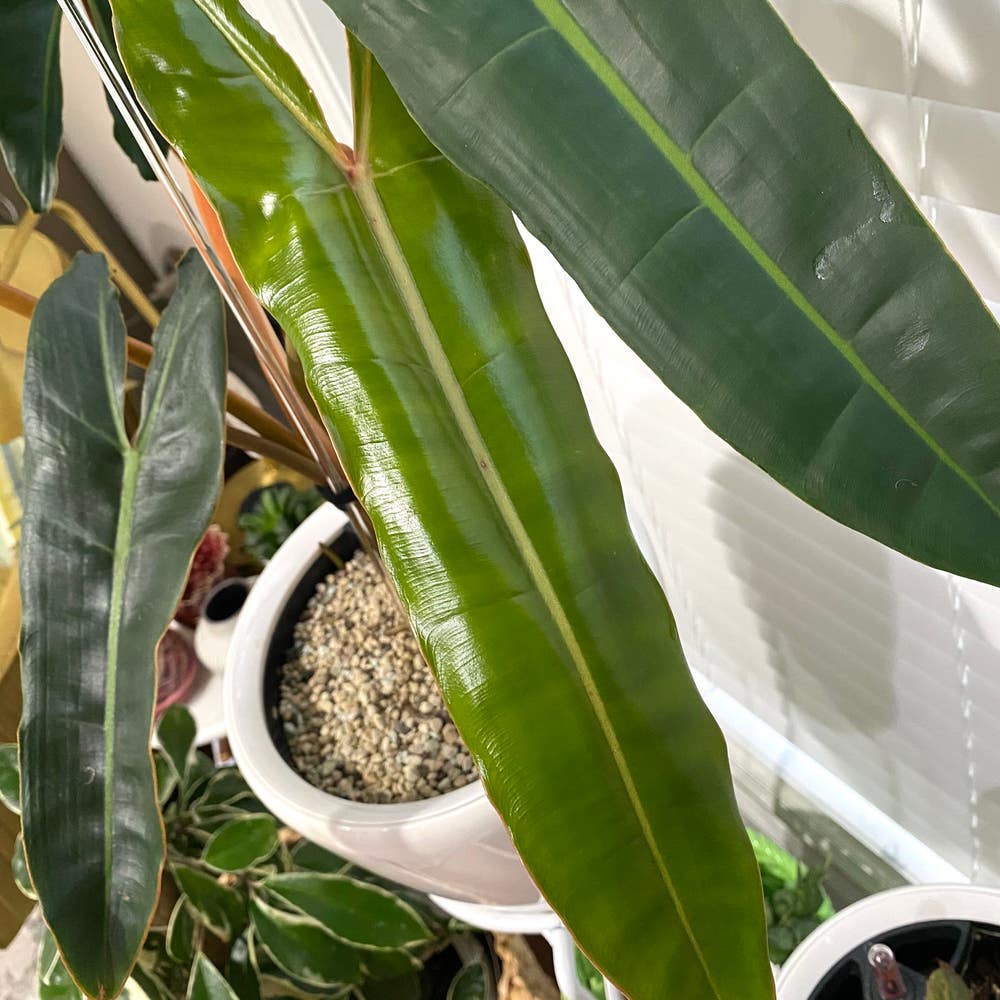
🌞 Is Direct Sunlight Good for My Philodendron billietiae?
Philodendron billietiae
By the Greg Editorial Team
Jun 18, 2024•4 min read
This article was created with the help of AI so we can cover more plants for you. May contain errors. See one? Report it here.
- 🌿 Philodendron billietiae loves gentle sunlight, mimicking its rainforest origins.
- 🌞 Direct sun can scorch leaves; north or east-facing windows are ideal.
- 🔄 Adjust location seasonally to balance light exposure and prevent distress.
Sunlight Simplified: Direct vs. Indirect
🌞 What is Direct Sunlight?
Imagine the sun playing tag with the Earth; when it's "it," the sun's rays touch the ground directly, no clouds or trees to hide behind. That's direct sunlight—a straight shot of solar energy without any interference.
🌅 Direct vs. Indirect Sunlight
Direct sunlight is the VIP of light: exclusive and intense. It's the spotlight on a stage, hitting one spot with all its might. Indirect sunlight is more like the ambient light in a room—spread out, softer, and more democratic. It's the difference between standing in the full glare of the sun at noon and lounging in the dappled shade of a tree.

Philodendron billietiae and the Sun's Embrace
🌿 Native Habitat Clues
Philodendron billietiae originates from the rainforests of South America. Here, it basks in the dappled light filtering through the dense canopy. This environment is key to understanding its light requirements.
🌱 Leaves Tell a Story
The leaf structure of Philodendron billietiae is not just for show. Large, heart-shaped, and with serrated edges, they're designed to catch light efficiently but are prone to scorching under direct sunlight. This tells us that while the plant craves brightness, it prefers the sun's touch to be gentle.

When the Sun Comes Knocking: Window Direction and Hemisphere Hints
🌞 Window Wisdom
Windows are the gatekeepers of sunlight for your Philodendron billietiae. Each direction has its own vibe. North-facing windows offer a consistent, gentle light, a safe bet for those who fear overdoing it. South-facing windows are the solar heavyweights, especially in the Northern Hemisphere—great for a tan, not so great for your plant without some sheer curtains as a buffer. East-facing windows dish out a soft morning light, ideal for easing your plant into the day. West-facing windows? They're the afternoon drama queens, intense and potentially overwhelming.
🌍 Hemisphere Highlights
Your spot on the globe flips the script on plant care. In the Northern Hemisphere, south windows are the main event, dishing out the brightest light. Down under in the Southern Hemisphere, it's the north windows that hog the spotlight. Remember, as the seasons shift, so does the sun's angle—your plant's placement needs to groove with this rhythm. Keep it closer to the window when the sun's playing hard to get in winter, and pull it back when summer's rays are in full force. It's like a delicate dance with the sun, and you're leading.

Reading the Leaves: Signs of Sunlight Success or Distress
🌞 Sun-kissed or Sunburned?
Philodendron billietiae, like a social media influencer, thrives in the limelight of indirect sunlight. However, direct sun exposure can turn it into a crispy critter. Scorched leaves with brown patches or a bleached appearance scream 'too much sun'. If you spot leaves mimicking a sunburnt tourist—think crispy edges or a spectrum of red to white—it's time to dial down the solar intensity.
🌚 The Shady Side of Things
Conversely, your Philodendron billietiae can slip into a gloomy funk when starved for light. Yellowing leaves, leggy growth, and a general lack of enthusiasm in leaf production are its way of saying, "I need a sunnier disposition." If it's stretching like a cat in one direction, it's not just showing off—it's reaching for more light. Rotate the pot to even out growth and ensure it's getting its light fix.
Sunlight Strategies for Philodendron billietiae
🌞 Perfect Placement
Finding the ideal spot for your Philodendron billietiae is like a game of chess; every move matters. Bright, indirect light is your king, and it's best to protect it. Keep your plant near a north or east-facing window where the light is gentler, or use sheer curtains to diffuse the harsher light from south and west-facing windows. Remember, direct sunlight is a checkmate for your plant's vibrant leaves.
🌦️ Seasonal Sunlight Shifts
As the seasons change, so does the intensity of sunlight. During summer, shield your Philodendron billietiae from the strong sun, especially in the afternoon. Consider moving it away from windows where the light is too direct or intense. In winter, when the sun is less harsh, you might need to relocate your plant to catch those precious rays. Keep an eye on the foliage; if you notice any signs of distress, it's time to rethink your strategy.
⚠️ Safety First
This content is for general information and may contain errors, omissions, or outdated details. It is not medical, veterinary advice, or an endorsement of therapeutic claims.
Always consult a qualified healthcare professional before using any plant as food, medicine, or supplement.
Never eat any plant (or feed one to pets) without confirming its identity with at least two trusted sources.
If you suspect poisoning, call Poison Control (800) 222-1222, the Pet Poison Helpline (800) 213-6680, or your local emergency service immediately.
Spotted an error? Please report it here.
Shield your Philodendron billietiae from harsh rays and ensure thriving growth 🌿 with Greg's precise light metering and custom care reminders.