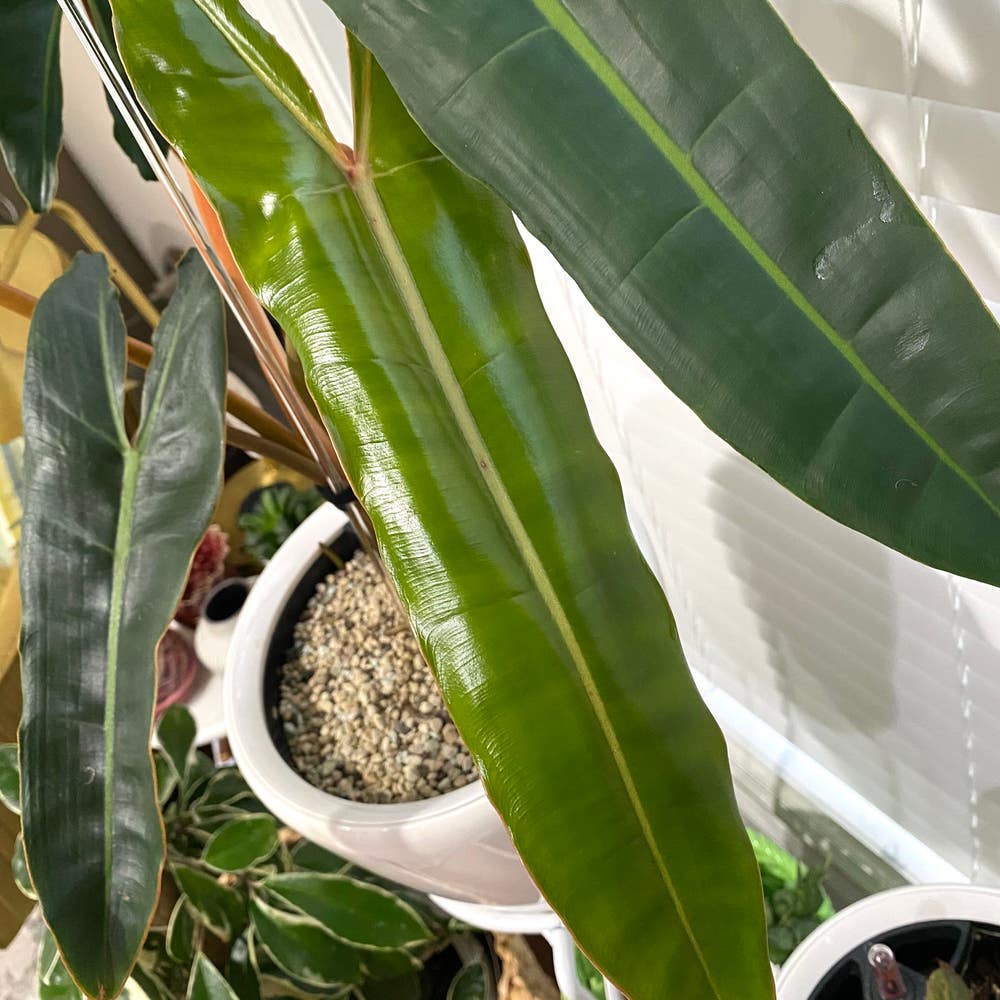
💧 How Do I Know When My Philodendron billietiae Needs Water?
Philodendron billietiae
By the Greg Editorial Team
Jun 18, 2024•4 min read
This article was created with the help of AI so we can cover more plants for you. May contain errors. See one? Report it here.
- Wilting leaves and dry soil signal your Philodendron billietiae needs water.
- Adjust watering with seasons: more in spring/summer, less in fall/winter.
- Pot type and soil mix affect watering—choose terracotta and well-draining mix.
Spotting Thirsty Philodendron Billietiae
🚰 Visual SOS Signals from Your Plant
Philodendron billietiae has a dramatic way of showing it's thirsty. When leaves droop or wilt, it's the plant's equivalent of waving a white flag. A dry soil surface is another distress call, while brown, crispy leaf tips are the final act of this sad play.
Tactile and Weight Clues
Lift test: Pick up the pot. A lightweight feel is a dead giveaway your plant's parched. Finger test: Dig in. If the top inch of soil feels like a neglected sandbox, it's time to water. Your Philodendron billietiae's life quite literally depends on it.

Watering Rhythms and Rituals
💦 Seasonal Watering Cadence
Spring and summer are your Philodendron billietiae's heyday; it's all about growth spurts. This means more water to keep up with its enthusiasm for life. As the seasons turn, and your plant starts to chill out in fall and winter, it's time to ease off the hydration pedal.
🚰 The Perfect Pour
When watering, think Goldilocks: not too much, not too little, but just right. Aim for moist soil, not a swamp. Techniques matter—water should reach the roots and then be free to leave, not linger like an awkward guest. Bottom watering can be a game-changer here, encouraging roots to grow downward and preventing overwatering.

The Environment's Role in Watering
🌡️ Home Humidity and Temperature
Your Philodendron billietiae's thirst levels are at the mercy of your indoor climate. A warm room might have your plant gulping water like there's no tomorrow, while cooler spaces could turn it into a bit of a camel. Humidity is the sneakier factor; high levels mean less watering, low levels, more. It's a delicate dance of air moisture and soil dryness.
🌞 Light and Location
Sunlight is the life of the party for plants, but it also makes them thirsty. A spot near a sunny window will have your Philodendron billietiae chugging water, while a shady corner is more of a sipper's zone. Keep an eye on your plant's location—it's all about location, location, hydration. Remember, no two spots in your home are the same; your plant might need a change of scenery as the seasons shift.

Tailoring Watering to Your Philodendron Billietiae
💧 Potting Mix and Pot Size Considerations
Choosing the right soil and container is crucial for your Philodendron billietiae's moisture balance. A well-draining potting mix is essential; think of it as the plant's bed, where comfort is key. Ingredients like peat moss, perlite, or vermiculite ensure the soil is airy yet retains moisture appropriately. Avoid heavy, waterlogged soils like you'd avoid a traffic jam.
When it comes to pots, size and material matter. Terracotta pots are the unsung heroes, offering breathability and even drying. Plastic or glazed containers can be used but remember they hold moisture longer, like a sponge. Always opt for a pot that's just one size up from the current one to prevent the soil from staying wet for too long and causing root rot.
🌱 Adapting to Your Plant's Growth and Changes
As your Philodendron billietiae grows, so should your watering strategy. It's not set in stone; think of it as a playlist that needs updating. Monitor your plant's growth and adjust your watering schedule accordingly. If your plant's leaves are thirstier than a marathon runner, consider a soil mix that retains moisture a bit more. Conversely, if the soil feels like a swamp, it's time to tweak the mix to dry out faster.
Remember, the right pot size and soil mix are as important as the watering itself. Keep an eye on your plant and be ready to make changes. It's all about finding that sweet spot where your Philodendron billietiae thrives, and you become the plant whisperer you were always meant to be.
⚠️ Safety First
This content is for general information and may contain errors, omissions, or outdated details. It is not medical, veterinary advice, or an endorsement of therapeutic claims.
Always consult a qualified healthcare professional before using any plant as food, medicine, or supplement.
Never eat any plant (or feed one to pets) without confirming its identity with at least two trusted sources.
If you suspect poisoning, call Poison Control (800) 222-1222, the Pet Poison Helpline (800) 213-6680, or your local emergency service immediately.
Spotted an error? Please report it here.
Keep your Philodendron billietiae thriving 🌿 with Greg's personalized watering reminders that adjust to your plant's growth and the changing seasons.