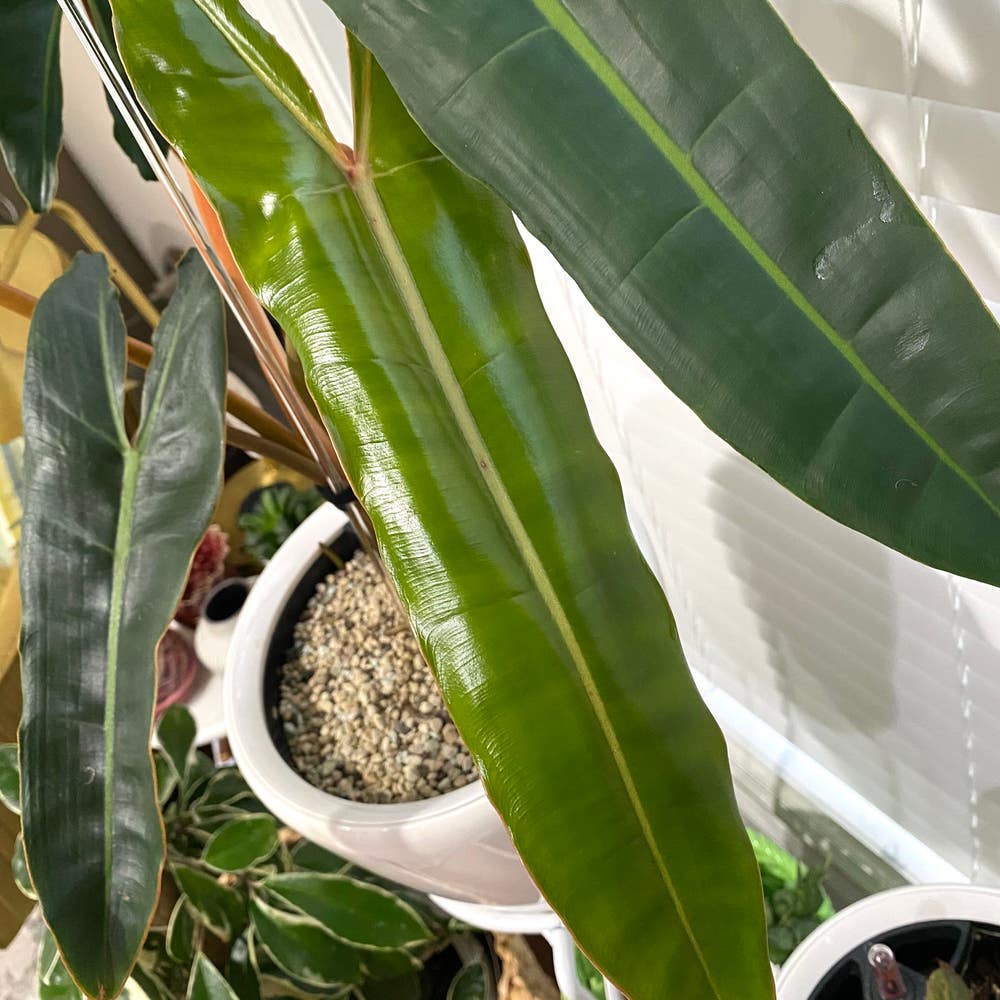
🌞 My Philodendron billietiae's Light Requirements
Philodendron billietiae
By the Greg Editorial Team
Jun 18, 2024•4 min read
This article was created with the help of AI so we can cover more plants for you. May contain errors. See one? Report it here.
- Bright, indirect light is key for Philodendron billietiae's health and growth.
- Watch for leggy stems as a sign of light starvation; adjust plant's position.
- Grow lights help in low light, with LED or fluorescent types recommended.
Perfecting Indoor Light for Philodendron billietiae
💡 Finding the Sweet Spot
Identifying the best indoor locations for your Philodendron billietiae isn't rocket science, but it does require some attention to detail. Bright, indirect light is the plant's jam. Think near a north or east-facing window where the sun's rays are more RSVP than gatecrasher.
Understanding the balance between light intensity and duration is like being a DJ for your plant's light party. Too much direct sunlight, and you're playing the scorching summer hits that will fry the leaves. Not enough light, and it's a snooze-fest that leads to leggy growth. Aim for that sweet spot where the beats are just right.
🛡️ Preventing Light Starvation
Signs your Philodendron billietiae is throwing an S.O.S. for more light include a dull look or a stem that's stretching out like it's trying to reach the snack table from the couch. Leggy stems and small leaves are the plant's way of telling you it's not getting enough of that light goodness.
Adjusting light conditions without causing a scene is key. If your plant is looking a bit peaky, consider moving it closer to the light source or clearing any obstacles that might be hogging the spotlight. But remember, no direct sunlight—unless you're into the crispy leaf aesthetic.

Simulating the Great Outdoors
🌿 Transitioning to Outdoor Light
Acclimating your Philodendron billietiae to the great outdoors requires patience. Start by placing it in a shaded area to avoid the shock of direct sunlight. Gradually, over a week or two, introduce it to brighter spots, mimicking its natural, dappled light habitat.
🕶 Protecting from Direct Sunlight
Direct sunlight is a no-go; it's like putting your plant in a frying pan. Use a shade cloth or position it under a canopy to shield those precious leaves. Keep an eye out for signs of distress, like browning or wilting—your plant's way of crying for help.
🌞 Seasonal Adjustments
As the seasons turn, so does the sun's mood. Adjust the plant's location to maintain the right light balance. In summer, pull it back from harsh rays; in winter, inch it closer to whatever sunlight you can find. It's like playing musical chairs with Mother Nature as the DJ.

Grow Lights: A Philodendron billietiae's Best Friend?
💡 When to Consider Grow Lights
Philodendron billietiae, while a trooper in various light conditions, may sometimes need a boost. Grow lights come into play when natural light is as scarce as hen's teeth—think dark winters or rooms with all the brightness of a cave. If your plant's leaves are reaching out like the hands of a zombie or the growth is slower than a snail on a leisurely stroll, it's time to consider artificial sunshine.
💡 Choosing the Right Grow Light
Navigating the world of grow lights can be as complex as a maze, but fear not. For your Philodendron billietiae, LED or fluorescent lights are the go-to. They're like a sun substitute without the drama of a high electricity bill. Place them overhead or to the side, mimicking the natural angle of the sun. Remember, it's about imitating a day in the life of a rainforest canopy—gentle morning rays followed by a soft, dappled afternoon glow. Keep the lights on for about 12-14 hours to simulate a day, and watch your Philodendron billietiae thank you with the zeal of a plant on a mission.

Light's Role in Philodendron billietiae's Health and Flowering
💡 Encouraging Healthy Growth
Philodendron billietiae's health is directly tied to its light intake. Bright, indirect light is the plant's sweet spot, fostering vibrant growth and preventing the common pitfall of leggy stems. Too much direct sunlight scorches leaves, while insufficient light leads to a dull, weakened state.
🌸 Flowering Possibilities
Flowering in Philodendron billietiae is a rare spectacle, often elusive indoors. Adequate lighting can nudge your plant towards this rare event. Mimicking the dynamic light of its natural habitat is key, though it's no guarantee. It's about setting the stage for optimal performance, with light as the director of the show.
⚠️ Safety First
This content is for general information and may contain errors, omissions, or outdated details. It is not medical, veterinary advice, or an endorsement of therapeutic claims.
Always consult a qualified healthcare professional before using any plant as food, medicine, or supplement.
Never eat any plant (or feed one to pets) without confirming its identity with at least two trusted sources.
If you suspect poisoning, call Poison Control (800) 222-1222, the Pet Poison Helpline (800) 213-6680, or your local emergency service immediately.
Spotted an error? Please report it here.
Achieve luminous growth 🌟 for your Philodendron billietiae by letting Greg's PlantVision fine-tune its spot and light reminders for year-round vibrancy.