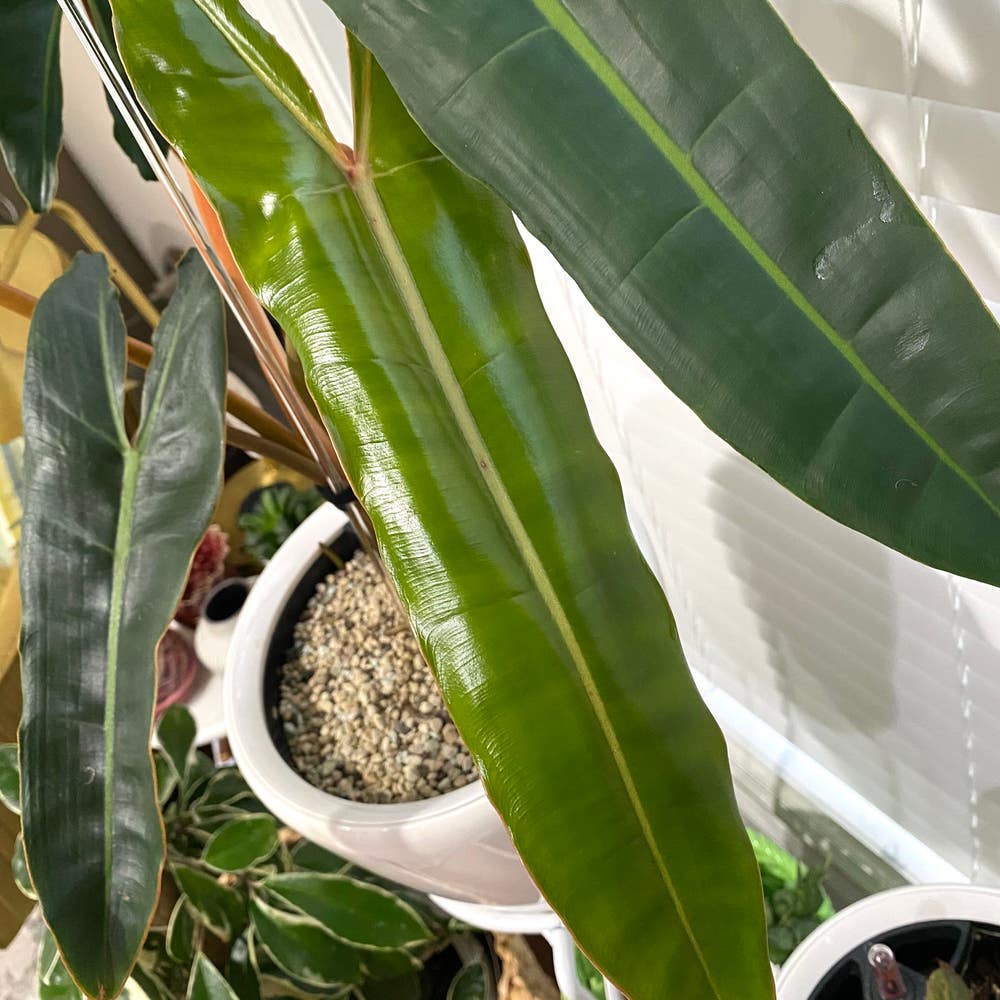
Best Potting Soil Mix for Philodendron billietiae
Philodendron billietiae
By the Greg Editorial Team
Jun 18, 2024•4 min read
This article was created with the help of AI so we can cover more plants for you. May contain errors. See one? Report it here.
- Signs of distress: Look for brown spots, yellow halos, and bad smell.
- Ideal mix: Peat moss, perlite, and pine bark for perfect potting soil.
- Regular maintenance: Refresh soil mix and ensure good drainage.
Spotting Trouble: When Your Philodendron billietiae's Soil Goes Bad
🚨 Signs of Distress in Soil
Mold and fungal foes are like uninvited guests at a garden party—annoying and harmful. If your Philodendron billietiae's leaves sport brown spots with yellow halos, or the soil smells like last week's forgotten laundry, you've got trouble brewing. Waterlogged soil feels more like a swamp than a nurturing ground, and a white, fuzzy growth on the surface is a clear distress signal.
Waterlogging woes are the silent killers of houseplants. If your Philodendron's leaves are turning yellow, shedding, or developing water blisters, it's crying out for help. A trapped pool of water at the bottom of the pot is a breeding ground for root rot—think of it as a plant's worst nightmare.
🛠️ Quick Fixes for Unhappy Soil
The scoop on repotting is simple: do it when the soil dries out faster than a gossip spreads or when growth has stalled. It's like giving your plant a new lease on life. Remember to use a pot with drainage holes—this isn't just a fancy feature; it's a lifeline for your Philodendron.
Improving drainage is not rocket science. Tips for aeration include mixing in perlite or vermiculite and ensuring the pot allows for a quick escape route for excess water. It's about balance—keeping the soil moist but not soggy, like a perfectly mixed cocktail.

Crafting the Perfect Potting Mix
🌱 The Ideal Soil Structure
Peat moss, perlite, and pine bark form the holy trinity of a Philodendron billietiae's potting mix. Peat moss is your moisture manager, keeping the soil damp without the dreaded sogginess. Perlite steps in as the aeration ace, ensuring roots can breathe easy. Pine bark adds that chunky texture, promoting drainage and preventing soil compaction.
🌿 Tailoring the Mix to Your Philodendron billietiae
Getting the mix right is like crafting a bespoke suit; it needs to fit your plant's needs perfectly. Aim for equal parts peat moss, perlite, and pine bark for a balanced base. Adjusting the mix is key: if your Philodendron billietiae seems off, don't be afraid to play with the proportions. More perlite for extra aeration, or a touch more peat for moisture? Your plant will tell you what it needs.

DIY Soil Mix: Your Philodendron billietiae Will Thank You
🌱 Gathering Your Ingredients
Peat moss, perlite, and pine bark fines are your soil mix MVPs. They're the trifecta of texture, moisture, and breathability your Philodendron billietiae craves. Add to that list a balanced, water-soluble fertilizer for that nutritional kick during the growing season.
🌿 Mixing It Up
🌲 Step 1: The Base
Start with equal parts peat moss and pine bark fines. This duo provides a moisture-retentive yet well-draining foundation.
🌬️ Step 2: The Fluff Factor
Perlite is your soil's fairy dust – sprinkle it in to keep things light and airy. Aim for a ratio of one part perlite to every two parts of your base mix.
🌱 Step 3: The Nutrient Boost
Mix in a time-release fertilizer to feed your plant slowly and steadily. Just a pinch now saves you from over-zealous spoon-feeding later.
🌪️ Step 4: The Mix Master
Don your garden gloves and mix like a DJ – evenly and thoroughly. Your goal is a uniform blend that screams 'root rave'.
🌿 Maintenance and Upkeep
🔄 Refresh Rhythm
Every couple of months, check in on your soil mix. If it's looking tired and compacted, it's time for a refresh. Fluff it up or replace the top layer to keep things fresh.
👀 The Watchful Eye
Keep an eye on drainage. If water isn't flowing through like a smooth jazz solo, it's time to reassess your mix. More perlite might just be the encore you need.
Remember, your Philodendron billietiae isn't just another pretty leaf. It's a living testament to your soil mix maestro skills. Get it right, and watch your tropical beauty thrive.

⚠️ Safety First
This content is for general information and may contain errors, omissions, or outdated details. It is not medical, veterinary advice, or an endorsement of therapeutic claims.
Always consult a qualified healthcare professional before using any plant as food, medicine, or supplement.
Never eat any plant (or feed one to pets) without confirming its identity with at least two trusted sources.
If you suspect poisoning, call Poison Control (800) 222-1222, the Pet Poison Helpline (800) 213-6680, or your local emergency service immediately.
Spotted an error? Please report it here.
Create the ultimate potting mix for your Philodendron billietiae and count on Greg's reminders 🌿 to keep your soil fresh, ensuring your plant's vibrant health and growth.