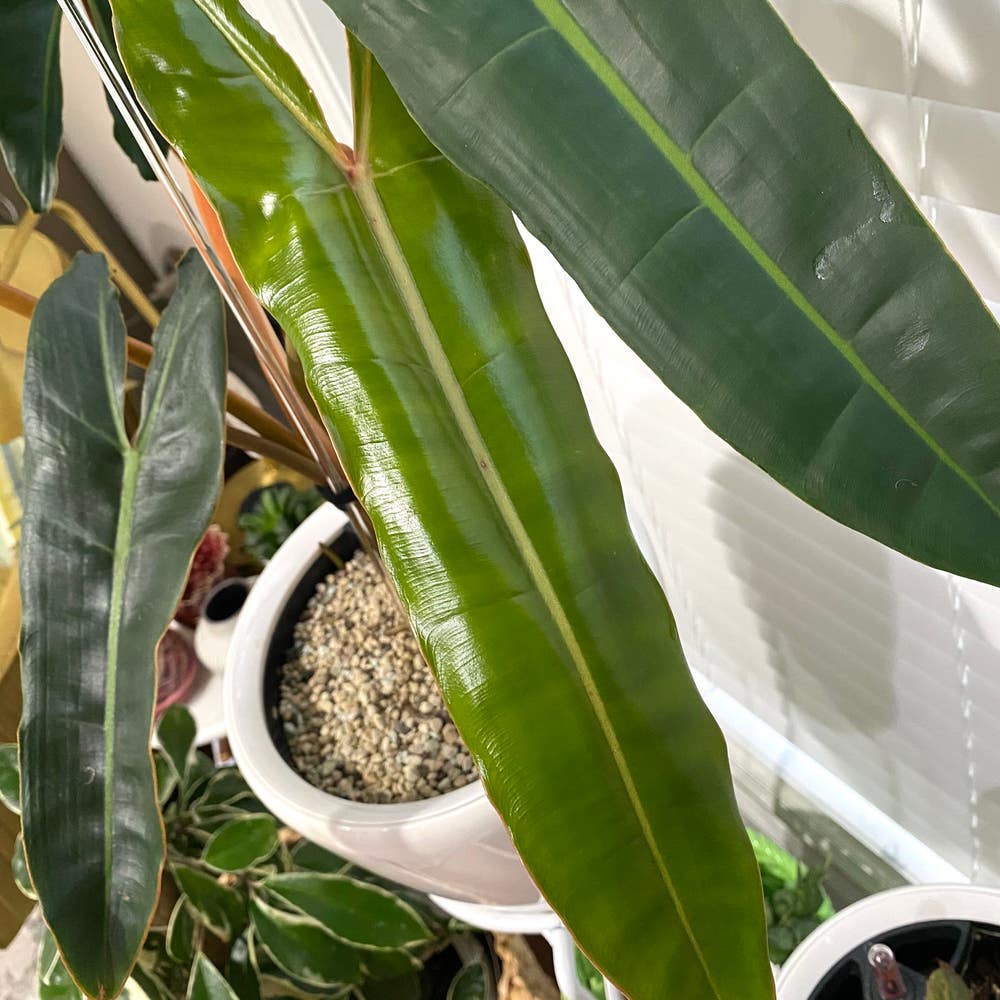
Why Are My Philodendron billietiae Leaves Dropping?
Philodendron billietiae
By the Greg Editorial Team
Jun 18, 2024•4 min read
This article was created with the help of AI so we can cover more plants for you. May contain errors. See one? Report it here.
- Leaf drop signals distress when accompanied by yellowing or easy detachment.
- 🌱 Over/underwatering? Check for squishy bases or crispy leaves.
- Bright, indirect light and 60-80% humidity are ideal for Philodendron billietiae.
Spotting the Trouble Signs
🍂 When to Worry About Leaf Drop
Leaf drop in Philodendron billietiae can be normal or a sign of distress. It's natural for older leaves to give way to new growth. However, if your plant is shedding leaves en masse, it's time to pay attention.
👀 Visual Clues and Symptoms
Yellowing leaves or those that fall off with a light touch point to overwatering, while limp or wrinkled leaves suggest underwatering. Brown spots with yellow halos may indicate leaf spot disease, a consequence of too much moisture. Conversely, leaves that appear sunburned or faded could be crying out for less light or more humidity. If you spot fine webbing or mottled leaves, you might be dealing with pests. These visual cues are your plant's SOS; don't ignore them.

Root of the Problem: Watering Woes
💧 Too Much Love: Overwatering Hazards
Yellow leaves might be your Philodendron billietiae's way of saying you're too generous with water. Overwatering can lead to root rot, a stealthy killer that thrives in soggy soil. Look out for a base that's squishier than your favorite pillow and a smell that's off-putting. Fungus on the soil isn't a quirky addition—it's a distress signal.
To save an overwatered Philodendron, hold off on the H2O and let the soil dry. If the roots have turned to mush, it's time for surgery—snip the dead parts and repot in fresh, well-draining soil. Make sure your pot has drainage holes; they're like a life jacket for your plant's roots.
🏜️ Thirsty Roots: The Underwatering Issue
If your Philodendron's leaves look more crispy than a fall leaf on a sidewalk, it's parched. Underwatering leaves your plant wilting and its leaves dropping like flies. When the top inch of soil feels like a dry desert, it's a green light to water.
Reviving a dehydrated Philodendron involves giving it a thorough drink, ensuring the water reaches all the roots. If the soil dries out faster than you can keep up, consider a soil mix that retains moisture better. And remember, a moisture meter can be your best friend, taking the guesswork out of when to water next.

Environmental Stressors: Light, Temperature, and Humidity
🌞 Finding the Sweet Spot for Sunlight
Philodendron billietiae thrives in bright, indirect sunlight. Direct rays can scorch leaves, while too little light starves the plant, leading to leaf drop. If your space lacks consistent natural light, consider grow lights to keep your green friend basking in the glow it needs.
❄️ Keeping Cool: Temperature Tips
These tropical natives prefer temperatures between 65°F and 80°F. Anything below 50°F is a no-go zone—cold drafts are the silent leaf killers. Keep your plant in a spot that's consistently warm, steering clear of radiators and air conditioners that could cause dramatic temperature swings.
💦 Humidity: Creating a Tropical Haven
Humidity is like a secret handshake for Philodendron billietiae; get it right, and you're in the club. Aim for 60-80% humidity—a pebble tray or humidifier can help. But don't turn your living room into a steam room; it's about balance, not extremes. Remember, your plant's not looking to swim, just to sip the air.

Turning Over a New Leaf: Solutions and Adjustments
💧 Watering Wisdom: Fine-Tuning Your Routine
Watering your Philodendron billietiae is less about sticking to a strict schedule and more about adapting to its needs. Check the soil before watering; if the top inch feels dry, it's time to hydrate. Integrate a soil moisture meter into your toolkit for a no-guess game. Remember, your plant's thirst changes with the seasons—water less in winter, a tad more in summer.
🌿 Environmental Harmony: Adjusting Your Plant's Surroundings
Your Philodendron billietiae craves a tropical vibe—think balmy and bright, minus the sunburn. Aim for a spot with bright, indirect light and shield it from the harsh afternoon rays. Keep the temperature consistent, ideally between 65-80°F (18-27°C). Humidity is a big deal; if your air is drier than a comedian's wit, consider a humidifier or a pebble tray to up the moisture. Rotate the plant occasionally for even growth and avoid drafts—your plant dislikes sudden chills as much as you do.
Proactive Plant Parenting: Prevention Strategies
🌱 Consistency is Key: Routine Care
Maintaining a regular care schedule is like the heartbeat of plant health. Your Philodendron billietiae thrives on predictability. Water it when the top inch of soil dries out, not on a whim. Rotate the plant to encourage even growth; it's not a sunbather, after all.
🌿 The Right Foundation: Soil and Pot Essentials
Soil mix and pot type are the unsung heroes in your plant's life story. Use a well-draining mix to prevent your Philodendron's roots from stewing in moisture like a forgotten teabag. Ensure pots have drainage holes, or you might as well gift your plant a pair of concrete shoes.
⚠️ Safety First
This content is for general information and may contain errors, omissions, or outdated details. It is not medical, veterinary advice, or an endorsement of therapeutic claims.
Always consult a qualified healthcare professional before using any plant as food, medicine, or supplement.
Never eat any plant (or feed one to pets) without confirming its identity with at least two trusted sources.
If you suspect poisoning, call Poison Control (800) 222-1222, the Pet Poison Helpline (800) 213-6680, or your local emergency service immediately.
Spotted an error? Please report it here.
Prevent leaf drop and ensure your Philodendron billietiae thrives 🌿 with Greg's tailored watering schedule and optimal environment tips based on your home's unique conditions!