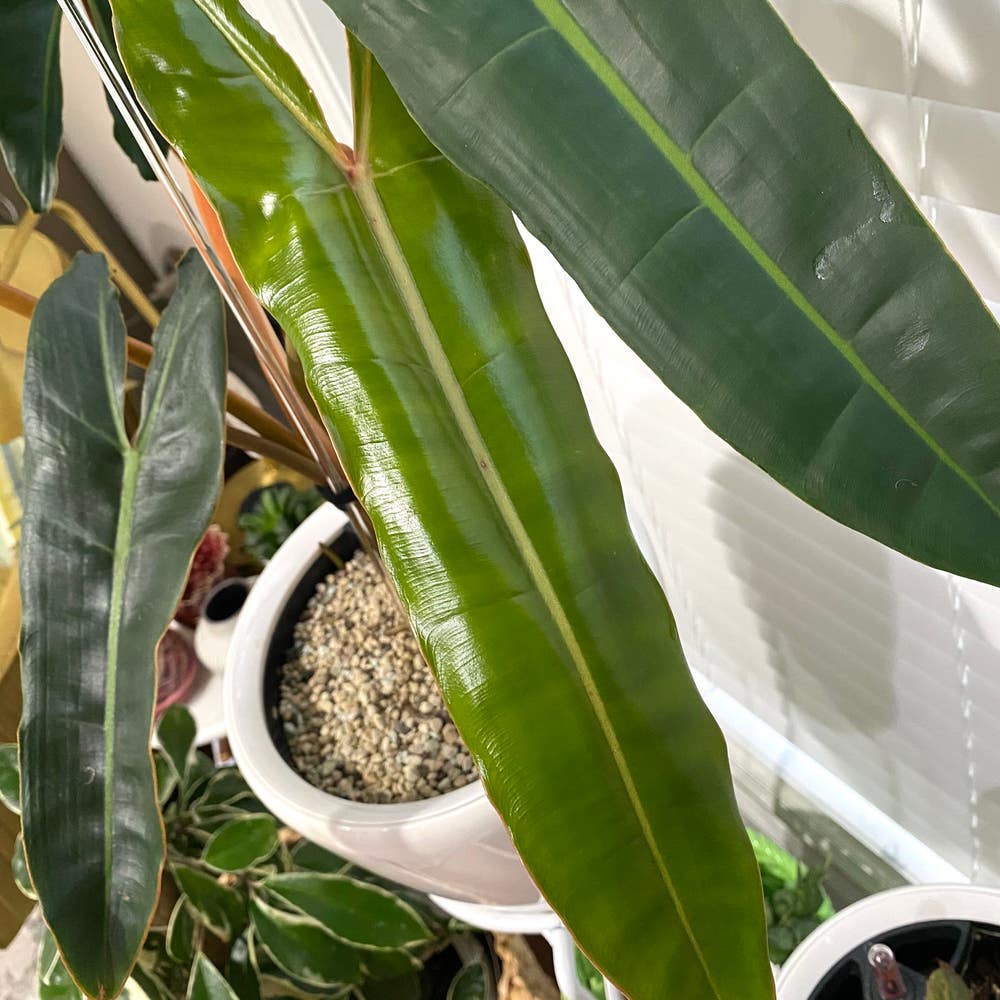
💧 Why Are My Philodendron billietiae Leaves Mushy?
Philodendron billietiae
By the Greg Editorial Team
Jun 18, 2024•4 min read
This article was created with the help of AI so we can cover more plants for you. May contain errors. See one? Report it here.
- Mushy leaves signal overwatering, root rot, and poor drainage in Philodendron billietiae.
- Prevent root rot by watering only when top inch of soil is dry.
- Repot with care using a well-draining mix and a pot with drainage holes.
Spotting the Trouble: Signs Your Philodendron billietiae Has Mushy Leaves
🍃 Visual cues: Identifying mushiness in leaves
Touch test: Gently press the leaves. If they feel squishy or collapse easily, your Philodendron billietiae is sending an SOS. Discoloration is another red flag; look for leaves turning a sad shade of yellow or sporting unsightly dark spots.
🌱 Beyond the surface: Other symptoms to watch for
Droopiness: A Philodendron billietiae's leaves should have a certain poise. If they're drooping like they've given up on life, take note. Stunted growth or mushy stems? Your plant is not just being dramatic; it's in distress. And if the soil smells like a swamp, you're probably hosting a root rot rave down below. Don't forget to check for pests; these tiny troublemakers can turn leaves to mush faster than you can say "mealybug."

The Water Woes: Tackling Overwatering and Drainage Issues
💧 Striking the Balance: How to Water Your Philodendron billietiae Correctly
Watering your Philodendron billietiae is less about sticking to a strict schedule and more about observing your plant's needs. When the top inch of soil feels dry, it's time to hydrate. This method prevents the roots from sitting in excessive moisture, which can spell disaster.
🚰 Drainage Dilemmas: Ensuring Your Pot and Soil Are Helping, Not Hurting
Drainage holes are non-negotiable. They're the escape route for excess water, preventing the dreaded soggy soil syndrome. Pair with a well-draining soil mix to create the perfect environment for your Philodendron billietiae to flourish. Remember, waterlogged roots are a one-way ticket to plant purgatory.

Root of the Problem: Dealing with Root Rot
🌱 Unearthing the Issue: How to Check for Root Rot
Root rot is the silent killer of many houseplants, and Philodendron billietiae is no exception. To inspect for this condition, remove your plant from its pot and gently brush away the soil to reveal the roots. Healthy roots are typically firm and white, while those affected by root rot appear mushy and brown, and might emit a foul odor. If the roots crumble at your touch, it's time to take action.
🌿 From the Ground Up: Steps to Take if Root Rot is Found
If root rot has infiltrated your Philodendron billietiae, it's time for some plant surgery. With sterilized shears, cut away all the rotten roots. Be ruthless; leaving any behind is like inviting termites back into your home. After the amputation, let the remaining roots air out in a dry, warm place for a few days. This pause allows the plant to form a callous over the cuts, which helps prevent further infection.
Once the roots have dried, consider a temporary water propagation to encourage new growth. Use a clear jar filled with water so you can monitor progress. When new roots sprout, it's time to move back to soil. But not just any dirt will do; choose a well-draining mix and a pot with drainage holes that don't mess around. Water only when the top inch of soil is dry, and even then, think of it as a desert oasis—precious and sparing.
Remember, overwatering is the root rot enabler. Keep your watering can in check, and your Philodendron billietiae will thank you with firm, healthy leaves.

Soil and Repotting: Refreshing Your Plant's Foundation
🌱 Soil Scrutiny: Choosing the Right Soil Mix
Soil is your Philodendron billietiae's VIP lounge; it needs to be top-notch. Get a mix that's like a backstage pass for water and air—fast-draining yet moisture-retentive. Think peat, pine bark, and perlite. No cutting corners with subpar soil; that's like serving a gourmet chef a microwave dinner.
🌿 The Repotting Process: When and How
Repotting is like moving day—it's chaotic but a fresh start. Do it every couple of years or when the roots play peek-a-boo through the drainage holes. Spring or autumn is your go-to season for this task; it's like choosing to jog during cooler hours.
🌱 When to Repot
- Roots circling the pot? It's time.
- Growth stalled? Don't wait up, repot.
🌿 How to Repot
- Choose a pot that's a size up—think snug, not swimming pool.
- Layer the bottom with pebbles; it's like ensuring good drainage plumbing.
- Fill with fresh soil mix, but don't pack it like you're stuffing a turkey. Gentle yet firm is the mantra.
- Water thoroughly to settle in and eliminate the dreaded air pockets—think of it as tucking your plant into bed.
Remember, this isn't just a chore, it's a rejuvenation ritual for your Philodendron billietiae.
⚠️ Safety First
This content is for general information and may contain errors, omissions, or outdated details. It is not medical, veterinary advice, or an endorsement of therapeutic claims.
Always consult a qualified healthcare professional before using any plant as food, medicine, or supplement.
Never eat any plant (or feed one to pets) without confirming its identity with at least two trusted sources.
If you suspect poisoning, call Poison Control (800) 222-1222, the Pet Poison Helpline (800) 213-6680, or your local emergency service immediately.
Spotted an error? Please report it here.
Revive your Philodendron billietiae from mushy leaves to magnificent greenery 🌿 with Greg's personalized watering reminders and expert care tips.