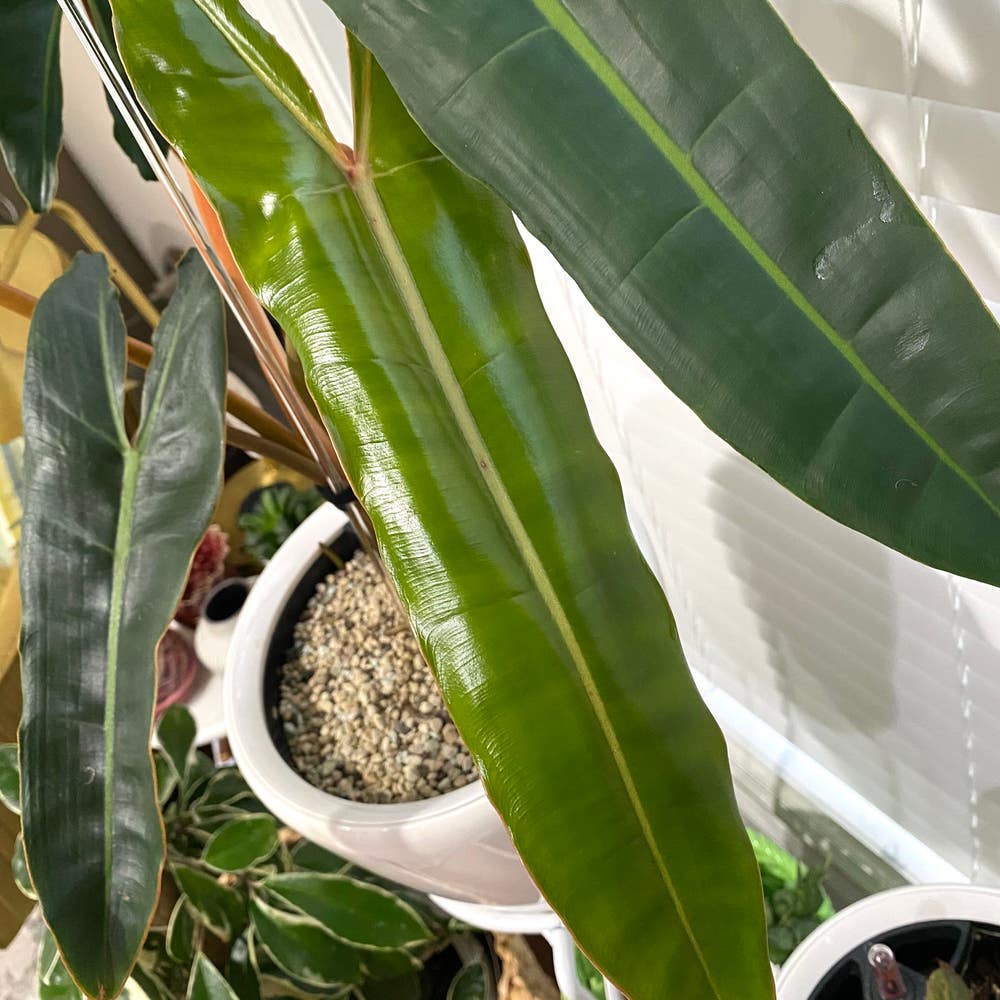
Why Are My Philodendron billietiae Leaves Curling?
Philodendron billietiae
By the Greg Editorial Team
Jun 18, 2024•3 min read
This article was created with the help of AI so we can cover more plants for you. May contain errors. See one? Report it here.
- Water wisely to prevent over/underwatering-induced leaf curl.
- 🌡️ Stable climate and humidity are crucial for healthy leaves.
- 🌤️ Bright, indirect light keeps Philodendron billietiae leaves uncurled.
Spotting the Signs: When Your Philodendron billietiae Needs Help
🌿 Recognizing Leaf Curling
Leaf curling in Philodendron billietiae can be subtle or pronounced, but it's always a sign worth your attention. Natural curling occurs as part of the plant's growth and is no cause for alarm. However, when leaves curl more than usual, it's time to play plant detective.
📊 Assessing the Severity
Assessing the severity of leaf curling involves a bit of plant intuition. Minor changes might just require a simple tweak in your care routine. But when your plant looks more like a crumpled paper ball than a tropical beauty, it's all hands on deck.

The Usual Suspects: Common Causes of Leaf Curling
💦 Thirsty Roots or Drowning?
Overwatering is the helicopter parent of plant care, smothering your Philodendron billietiae with too much love. Yellowing leaves and a heavy pot are telltale signs. Conversely, underwatering is like forgetting your friend's birthday—leaves curling upwards are the plant's way of saying, "Hey, I'm thirsty here!"
🌡️ It's Getting Hot in Here
Temperature swings are like mood swings for your plant—they're not fun for anyone. Keep your Philodendron billietiae away from drafts and heat sources. A steady climate is key; think of it as setting the thermostat for a picky guest.
🌞 Light: Finding the Sweet Spot
Direct sunlight is the fast track to crispy, curled leaves. Too little light, and they'll stretch out, reaching for a sun that's just too shy. Aim for bright, indirect light—it's the sweet spot that keeps your Philodendron billietiae's leaves flat and fabulous.

The Rescue Plan: Addressing the Curling Crisis
💧 Watering Wisdom
Consistency is your Philodendron billietiae's best friend when it comes to watering. Establish a regular watering schedule to keep the soil's moisture level just right—a balance between a desert and a swamp. Use the touch test: the soil should feel like a wrung-out sponge, moist but not waterlogged.
🌡️ Climate Control
Your tropical plant doesn't appreciate the arctic blasts of air conditioning or the scorching sahara of heaters. Aim for a steady, warm environment with room temperature being the sweet spot. If your plant's leaves could talk, they'd ask for humidity akin to a misty morning. Consider a humidifier or group plants to create a microclimate of moisture.
🌿 Let There Be (The Right Amount of) Light
Philodendron billietiae loves light, but not the kind that would make a vampire hiss. Provide bright, indirect light to avoid the leaf equivalent of a sunburn. If your plant's leaves are curling away from the light like a shy kid at a dance, it's time to dial it back. Too little light, and you'll have leaves curling up tighter than a secret. Adjust your plant's position to find that Goldilocks zone—not too much, not too little, but just right.

Keeping Trouble at Bay: Prevention Strategies
🕵️ Regular Check-Ups
Regularly monitoring your Philodendron billietiae is like being a plant detective; you're on the lookout for the slightest clue that something's amiss. Catching signs of stress early can mean the difference between a quick fix and a full-blown botanical meltdown.
🍽️ The Balanced Diet
Your plant's diet is crucial. Fertilize judiciously with a balanced mix, and avoid the temptation to overfeed—think of it as keeping your plant on a clean, lean diet. Overfertilization is the junk food of the plant world, and nobody wants an obese Philodendron.
🐜 Pest Patrol
Pests are the party crashers of the plant world. Keep an eye out during your regular check-ups and be ready to show them the door with insecticidal soap or neem oil. It's like having a bouncer for your plant—only the good bugs get to stay.
⚠️ Safety First
This content is for general information and may contain errors, omissions, or outdated details. It is not medical, veterinary advice, or an endorsement of therapeutic claims.
Always consult a qualified healthcare professional before using any plant as food, medicine, or supplement.
Never eat any plant (or feed one to pets) without confirming its identity with at least two trusted sources.
If you suspect poisoning, call Poison Control (800) 222-1222, the Pet Poison Helpline (800) 213-6680, or your local emergency service immediately.
Spotted an error? Please report it here.
Prevent those Philodendron billietiae leaves from curling by letting Greg 🌀 tailor a watering and care schedule that ensures your plant's happiness and health.