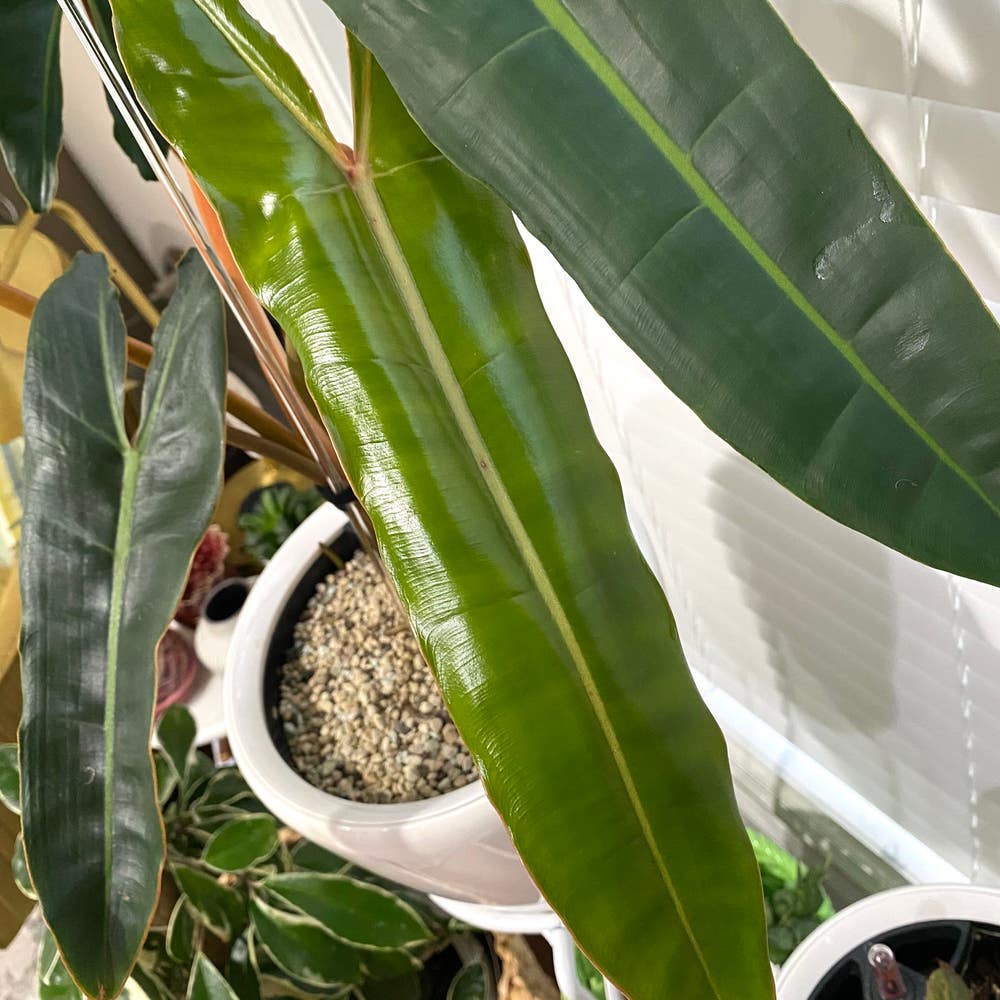
☀️ 4 Outdoor Care Hacks for Philodendron billietiae
Philodendron billietiae
By the Greg Editorial Team
Sep 29, 2024•7 min read
This article was created with the help of AI so we can cover more plants for you. May contain errors. See one? Report it here.
- 🌞 Philodendron billietiae thrives in bright, indirect sunlight; avoid leaf scorch!
- 💧 Water every 1-2 weeks; adjust based on humidity to prevent yellowing leaves.
- 🌱 Use well-draining soil and fertilize every 4-6 weeks for optimal growth.
Sunlight Needs
Optimal Sunlight Exposure 🌞
Philodendron billietiae thrives in bright, indirect sunlight. Direct sunlight can scorch its beautiful leaves, so finding the right spot is crucial.
For optimal growth, place your plant in dappled sunlight under taller plants or trees. This setup mimics its natural habitat and keeps it happy.
Signs of Insufficient or Excessive Sunlight 🚦
Watch for signs that your plant isn't getting the right amount of light. If you notice stunted growth or smaller leaves, it may be a sign of insufficient sunlight.
On the flip side, excessive sunlight can lead to leaf burn and faded coloration. Keep an eye on your plant's appearance to ensure it's thriving in its environment.
With the right sunlight conditions, your Philodendron billietiae will flourish, setting the stage for its next care needs.
Watering Requirements
General Watering Guidelines 🌧️
Philodendron billietiae thrives on consistent moisture, but it's crucial to avoid waterlogging. Water your plant every 1-2 weeks, adjusting based on rainfall and humidity levels.
Signs of Overwatering and Underwatering 🚨
Keep an eye out for yellowing leaves, which often signal overwatering and potential root rot. Conversely, if you notice wilting leaves and dry soil, it's a clear indication of underwatering.
Understanding these watering needs will help you keep your Philodendron healthy and vibrant. Now, let’s explore the ideal soil preferences for optimal growth.
Soil Preferences
Ideal Soil Composition 🌱
For your Philodendron billietiae to thrive, it needs well-draining, rich organic soil. A recommended mix is 50% potting soil, 30% perlite, and 20% compost, ensuring both moisture retention and aeration.
Soil pH Levels ⚗️
The optimal pH range for this plant is between 5.5 and 7.0. This range allows for the best nutrient absorption, keeping your plant healthy and vibrant.
Choosing the right soil is crucial for the overall health of your Philodendron. With the right mix and pH, you set the stage for robust growth and lush foliage.
Next, let’s explore the fertilization guidelines to keep your plant nourished and thriving.
Fertilization Guidelines
Fertilization Schedule 🌱
To keep your Philodendron billietiae thriving, fertilize every 4-6 weeks during the growing season, which spans spring and summer. This regular feeding helps support robust growth and vibrant foliage.
Recommended Fertilizers 🧪
Opt for a balanced, water-soluble fertilizer with an NPK ratio of 10-10-10. This ensures your plant receives an equal mix of essential nutrients for optimal health.
Signs of Nutrient Deficiency ⚠️
Watch for yellowing leaves, which often indicate a nitrogen deficiency. If you notice browning leaf edges, it could signal a potassium deficiency, requiring immediate attention.
By following these fertilization guidelines, you can ensure your Philodendron billietiae remains lush and healthy. Next, let’s explore the best planting options for your outdoor space.
Planting Options
Container Planting: Benefits and Drawbacks 🌱
Benefits
Container planting offers remarkable mobility. You can easily relocate your Philodendron billietiae to find the perfect sunlight or protect it from harsh weather.
Additionally, it allows for control over soil quality and drainage. You can customize the soil mix to suit your plant's needs, ensuring optimal growth conditions.
Drawbacks
However, container planting has its limitations. The limited root space can restrict growth, making it essential to choose an appropriately sized pot.
Moreover, containers require more frequent watering. Without the surrounding soil to retain moisture, you'll need to keep a close eye on your plant's hydration levels.
Ground Planting: Benefits and Drawbacks 🌍
Benefits
Ground planting provides more space for root expansion. This can lead to healthier, more robust plants as they have room to grow.
It also offers natural moisture retention from the surrounding soil. This can be especially beneficial during dry spells, reducing the need for constant watering.
Drawbacks
On the flip side, ground planting comes with challenges. You have less control over soil quality and drainage, which can affect your plant's health.
Additionally, plants in the ground are more vulnerable to pests and diseases. Regular monitoring and preventive measures become crucial to keep your Philodendron thriving.
Understanding these planting options will help you make informed decisions for your Philodendron billietiae. Next, let’s explore effective protection strategies to keep your plant healthy and vibrant.
Protection Strategies
☔️ Weather Protection Techniques
To keep your Philodendron billietiae thriving, consider using shade cloth during extreme heat. This simple addition can prevent leaf scorch and maintain the plant's vibrant appearance.
Mulching around the base is another effective strategy. It helps retain soil moisture and regulates temperature, creating a more stable environment for your plant.
🐞 Pest and Disease Management
Common Outdoor Pests
Outdoor pests can be a nuisance for your Philodendron. Watch for aphids, spider mites, and mealybugs, which often leave behind sticky residue and webbing.
Control methods include using neem oil or insecticidal soap. You can also introduce beneficial insects that prey on these pests, creating a natural balance in your garden.
Disease Prevention
Regular inspections are key to preventing diseases. Look for signs of fungal infections or root rot, which can quickly compromise your plant's health.
Ensure proper air circulation around your Philodendron to avoid overcrowding. This simple step can significantly reduce the risk of disease and keep your plant flourishing.
As you implement these protection strategies, you'll be better equipped to nurture your Philodendron billietiae through various challenges. Next, let’s explore seasonal care tips to ensure your plant thrives year-round.
Seasonal Care
🌱 Spring Care Tips
As the days grow longer, it's time to kickstart your Philodendron billietiae's growth. Begin fertilization to give your plant the nutrients it craves after winter dormancy.
Inspect your plant for pests, as they can emerge with the warmer weather. A quick check can save you from bigger problems down the line.
☀️ Summer Care Tips
Summer heat means your plant will need more water. Increase your watering frequency to keep the soil consistently moist.
Keep an eye out for signs of sunburn, such as faded leaves. If you notice any, consider adjusting your plant's placement to provide some relief.
🍂 Fall Care Tips
As temperatures start to drop, gradually reduce your watering. This helps your plant acclimate to the changing conditions.
Now's the time to prepare for winter by checking for pests and diseases. A little proactive care can make a big difference.
❄️ Winter Care Tips
Frost can be a real threat, so protect your plants accordingly. Bring containers indoors or cover ground plants to shield them from the cold.
During winter, reduce both fertilization and watering frequency. Your plant will appreciate the rest as it enters dormancy.
With these seasonal care tips, your Philodendron billietiae will thrive year-round. Next, let’s explore climate zone considerations to ensure your plant is in the best environment possible.
Climate Zone Considerations
🌍 Suitable Climate Zones
Philodendron billietiae thrives in USDA zones 10-11, making it perfect for warm, tropical environments. However, it is sensitive to frost, so extra care is needed in cooler areas.
🌦️ Adjustments for Different Climates
In cooler climates, container planting is a smart choice. It allows for easy mobility, letting you move your plant to sunnier spots or indoors during chilly nights.
For added winter protection, consider using frost cloths or greenhouses. These methods help shield your plant from harsh temperatures while maintaining a cozy environment for growth.
Understanding your climate zone is crucial for the health of your Philodendron. With the right adjustments, you can enjoy a thriving plant year-round, no matter where you live.
Next, let’s dive into common problems and solutions to keep your Philodendron billietiae flourishing.
Common Problems and Solutions
🐛 Identifying Outdoor Pests
Regular inspections are key to keeping your Philodendron billietiae healthy. Look out for common pests like aphids, spider mites, and mealybugs, which can wreak havoc on your plant.
Sticky traps can be a game-changer for monitoring pest populations. They help you catch these nuisances early, preventing a larger infestation.
🦠 Addressing Diseases Common in Outdoor Settings
Recognizing symptoms of root rot and fungal infections is crucial for your plant's health. Yellowing leaves or a mushy root system often indicate trouble.
Implement preventive measures by practicing proper watering techniques and maintaining good soil management. This proactive approach can save your plant from serious issues down the line.
With these strategies in place, your Philodendron will thrive, ready to face any challenges that come its way.
⚠️ Safety First
This content is for general information and may contain errors, omissions, or outdated details. It is not medical, veterinary advice, or an endorsement of therapeutic claims.
Always consult a qualified healthcare professional before using any plant as food, medicine, or supplement.
Never eat any plant (or feed one to pets) without confirming its identity with at least two trusted sources.
If you suspect poisoning, call Poison Control (800) 222-1222, the Pet Poison Helpline (800) 213-6680, or your local emergency service immediately.
Spotted an error? Please report it here.
Keep your Philodendron billietiae thriving outdoors 🌞 with Greg's tailored watering alerts and expert care tips that ensure your plant flourishes all year long!