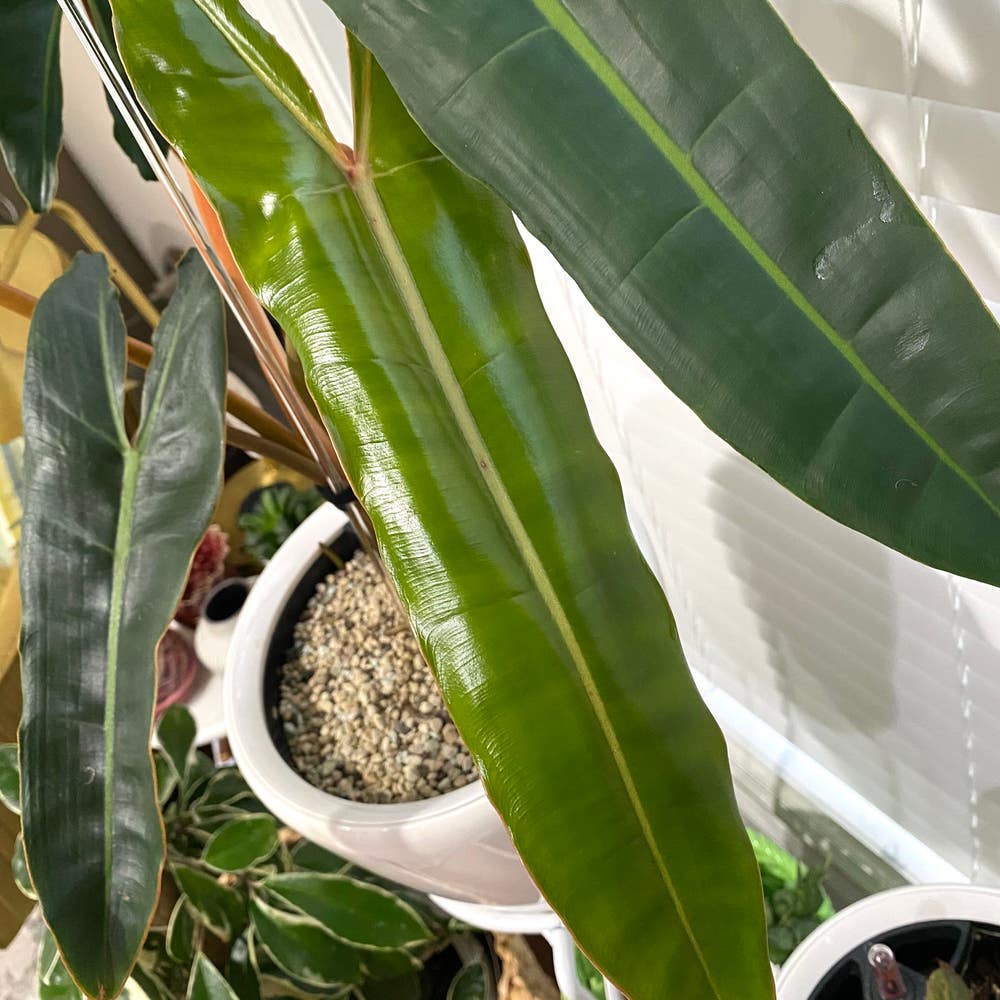
What Temperature Does My Philodendron billietiae Need?
Philodendron billietiae
By the Greg Editorial Team
Jun 18, 2024•3 min read
This article was created with the help of AI so we can cover more plants for you. May contain errors. See one? Report it here.
- 🌡️ Optimal temperature: 70-85°F day, 65-75°F night for Philodendron billietiae.
- Consistency prevents stress: avoid temperature swings and drafts.
- Seasonal care adjustments necessary, with attention to humidity.
The Perfect Temperature Sweet Spot
🌡️ Native Clues to Ideal Temperatures
Philodendron billietiae thrives in the tropical warmth of its native habitat. To keep your indoor specimen flourishing, mimic these conditions by maintaining a consistent, warm environment.
The Numbers Game: Optimal Temperature Range
During the day, aim for a temperature range of 70-85°F (21-29°C). At night, a slight dip to 65-75°F (18-24°C) is beneficial, simulating the natural drop in the tropics. Consistency is key—avoid fluctuations that can stress the plant.
Why Consistency is Key
Consistent temperatures prevent the plant from experiencing shock. Sudden changes can lead to poor growth or leaf damage. Keep your Philodendron billietiae away from drafts and direct heat sources to maintain a stable environment.

When Things Get Too Hot or Too Cold
🌡️ Telltale Signs Your Philodendron is Feeling the Heat
Philodendrons are drama-free until temperatures soar. Leaf discoloration is your first hint; yellow leaves are the plant's way of saying, "I'm too hot!" Brown spots or edges? That's your Philodendron whispering, "Turn down the thermostat, will you?" Wilting leaves are a silent scream for cooler conditions, and if your plant starts shedding leaves like a dog in summer, it's definitely time to take action.
❄️ The Chilly Warning Signs
Conversely, when your Philodendron starts to feel like it's stuck in a freezer, it'll let you know. Drooping leaves indicate it's not just you that's cold; your plant is shivering too. If you notice blackened leaf surfaces or curling leaves, it's the plant's equivalent of bundling up in a blanket. And remember, just because your Philodendron isn't visibly shaking, doesn't mean it's not silently suffering from the cold. Keep it away from drafts and chilly windows, or you might as well be sending it on an Arctic expedition without a coat.

Keeping Your Philodendron Cozy
🌬️ Battling the Drafts and Sudden Changes
Drafts and temperature fluctuations are the nemeses of your Philodendron billietiae. To shield your plant from these unseen villains, position it where the air is as steady as your love for greenery. Avoid placing it near doors, windows, or anywhere it might receive an unexpected gust of cold air.
🌞 Seasonal Adjustments for Year-Round Happiness
As the seasons shift, so should your care tactics. Winter whispers for a reduction in watering and a vigilant eye on indoor heating sources that could parch your Philodendron. Come summer, dial up the hydration but keep those sunbeams in check—too much direct light can lead to a plant meltdown. Remember, your Philodendron's comfort zone is a consistent, tropical-esque environment, no matter the weather outside.

Quick Touch on Humidity
💦 Humidity's Role in Philodendron billietiae Care
Humidity might not be the main act, but it's the supporting character that can make or break your Philodendron billietiae's performance. Aim for a humidity level around 50% to keep those leaves lush without turning your living room into a rainforest or a desert.
🌡️ The Symbiotic Dance of Humidity and Temperature
Remember, warm air can hold more moisture, so as the thermostat climbs, so does your plant's thirst. Keep a hygrometer close—it's your secret weapon against the invisible humidity ninja that's always lurking.
🛠️ Tools of the Trade
No need to eyeball it when you can monitor with gadgets. A hygrometer is like the plant world's Fitbit—keeping you in the loop so you can adjust with a humidifier or dehumidifier as needed. It's all about that sweet spot.
🌿 Grouping for Humidity
If you're not into tech, try the old-school trick: group plants together. They'll share humidity like teenagers sharing gossip, creating a microclimate that's just right for your Philodendron billietiae.
⚠️ Safety First
This content is for general information and may contain errors, omissions, or outdated details. It is not medical, veterinary advice, or an endorsement of therapeutic claims.
Always consult a qualified healthcare professional before using any plant as food, medicine, or supplement.
Never eat any plant (or feed one to pets) without confirming its identity with at least two trusted sources.
If you suspect poisoning, call Poison Control (800) 222-1222, the Pet Poison Helpline (800) 213-6680, or your local emergency service immediately.
Spotted an error? Please report it here.
Keep your Philodendron billietiae basking in just the right tropical warmth with Greg's custom reminders to maintain consistent temperatures 🌡 for your green companion's best health.