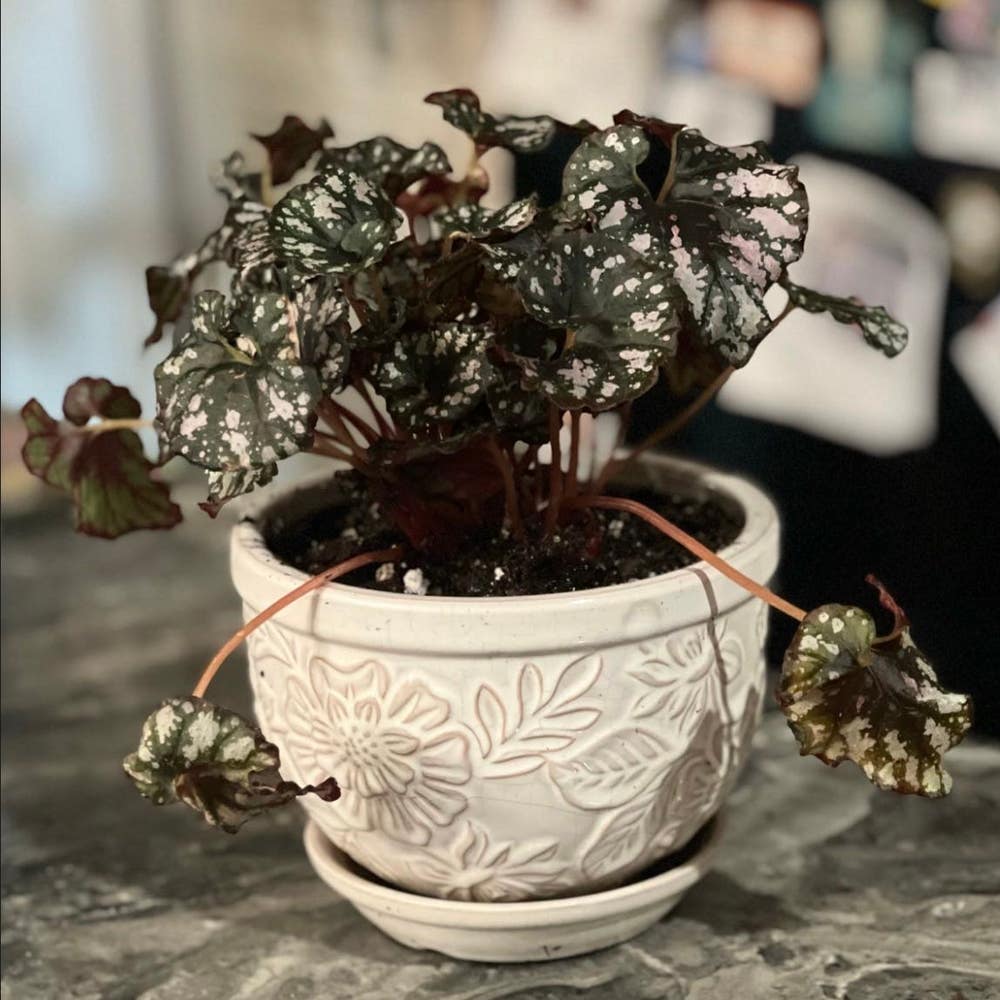
Why Are My Painted-leaf Begonia Leaves Curling?
Begonia rex
By the Greg Editorial Team
Jun 18, 2024•4 min read
This article was created with the help of AI so we can cover more plants for you. May contain errors. See one? Report it here.
- Thirst and overwatering both lead to Begonia leaf curl; balance is essential.
- Climate and light affect leaves; maintain consistent environment and lighting.
- 🌱 Persistent curling? Consider soil health, repotting, or professional advice.
Pinpointing the Culprits of Curling Leaves
💧 Lack of Water: The Thirsty Leaf Dilemma
Crispy edges and a droopy demeanor are telltale signs your Painted-leaf Begonia is thirsty. When the top inch of soil feels like a desert, it's time to hydrate. Consistency is key—water when dry, but don't let it turn into a waiting game.
💦 Too Much Love: The Overwatering Conundrum
Yellowing leaves and a soggy soil feel are your Begonia's way of saying, "I'm drowning in affection." Aim for moist, not marshy, and ensure your pot has drainage worthy of a lifeboat to prevent root rot.
🌡️ Climate Shock: When Temperatures and Humidity Go Wild
Leaves curling like party streamers can signal a Begonia in climate shock. These tropical beauties crave stability. To avoid turning your plant into a drama queen, maintain a consistent temperature and humidity level—it's like setting the stage for a leafy paradise.
🌞 Let There Be Light (But Not Too Much)
Direct sunlight can turn leaves into crispy critters, while too little light leaves them stretching out like yoga enthusiasts. Your goal? Find that sweet spot where the light is just enough to keep your Begonia's leaves flat and uncurled. Adjust your Begonia's suntan schedule to avoid the extremes of a tanning bed or a cave.

Turning Over a New Leaf: Solutions to Unfurl the Curl
💧 Fine-Tuning Watering Techniques
Watering your Painted-leaf Begonia isn't rocket science, but it does require some finesse. Consistency is your best friend here. Start by checking the top inch of soil; if it's dry, it's time for a drink. If it's still damp, give it a breather. The soak and dry method is a crowd-pleaser—water thoroughly, then let the soil dry out before the next watering. And don't just pour and hope for the best; aim for even moisture distribution.
For those who love a good gadget, a moisture meter can take the guesswork out of the equation. Or, go old school and use the finger test. Either way, your Begonia will thank you for not drowning it in love or leaving it parched.
🌡 Stabilizing Your Begonia's World
Temperature and humidity swings are like a bad rollercoaster ride for your Begonia. Aim for the Goldilocks zone: not too hot, not too cold. Keep the thermostat steady and consider a humidifier or pebble tray to keep the air just moist enough. Air circulation is the invisible dance partner here, so make sure your plant isn't suffocating in stagnant air. A gentle fan can work wonders.
☀️ Illuminating the Path to Perfect Light
Light is like a double-edged sword for your Begonia. Too much, and you've got a crispy critter; too little, and you'll witness an unwanted stretching session. Find that sweet spot of bright, indirect light where your Begonia can bask without the risk of sunburn. Rotate the plant regularly to ensure all sides get their moment in the sun—fair is fair, after all.
As the seasons change, so should your plant's position. Shorter days might call for a spot closer to the window, while the intense summer sun might necessitate a step back. It's all about balance and keeping an eye on those leaves for feedback. If they're still curling, it's time to reassess your lighting strategy.

When Leaves Resist: Advanced Troubleshooting
Despite your best efforts, sometimes Painted-leaf Begonia leaves keep curling like a stubborn ribbon. It's time to put on your detective hat and delve deeper.
🕵️ Investigating Persistent Curling Issues
If you've ticked all the boxes—watering, light, humidity—and your Begonia still looks like it's bracing for a tornado, soil and roots could be the culprits. A soil test can reveal nutrient imbalances or pH issues that may be cramping your plant's style.
🚨 When to Seek Professional Advice
When your plant's leaves are more wrinkled than a linen shirt in a suitcase, it might be time to call in the pros. A local horticulturist can spot things you might miss, like sneaky pests or diseases that love to play hide and seek.
🌱 Considering Repotting
Roots tangled like earphones in your pocket signal it's repotting o'clock. Choose a new pot that's the right size—not too tight, not too loose—and with proper drainage. Fresh soil and a careful root trim can give your Begonia a new lease on life.
Remember, sometimes plants are just drama queens. But with a little sleuthing and some expert backup, you can usually get to the root of the problem.

⚠️ Safety First
This content is for general information and may contain errors, omissions, or outdated details. It is not medical, veterinary advice, or an endorsement of therapeutic claims.
Always consult a qualified healthcare professional before using any plant as food, medicine, or supplement.
Never eat any plant (or feed one to pets) without confirming its identity with at least two trusted sources.
If you suspect poisoning, call Poison Control (800) 222-1222, the Pet Poison Helpline (800) 213-6680, or your local emergency service immediately.
Spotted an error? Please report it here.
Revive your Begonia's curled leaves 🍃 by harnessing Greg's tailored care reminders for the perfect balance of water, light, and love.