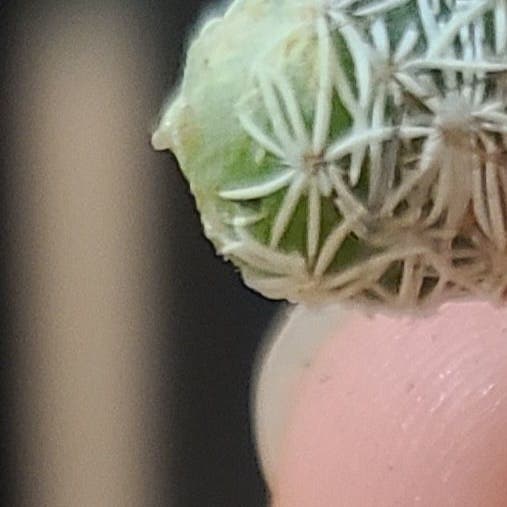
How Should Coryphantha pallida Be Cut Back?
Coryphantha pallida
By the Greg Editorial Team
Apr 13, 2024•3 min read
This article was created with the help of AI so we can cover more plants for you. May contain errors. See one? Report it here.
Perfect your Coryphantha's bloom with timely spring pruning—here's how! 🌵✂️
- 🌱 Spring pruning promotes growth, avoid winter as the plant is dormant.
- ✂️ Use sharp, sanitized tools for clean cuts and disease prevention.
- 🌼 Prune for health and blooms, shaping and dead material removal are key.
Timing Your Pruning Perfectly
📅 Seasonal Considerations
Spring is prime time for pruning Coryphantha pallida. This cactus variety, like many others, enters a growth spurt as temperatures rise. Early summer also works, but it's like catching the last train – doable, but not ideal.
During winter, the plant often hits the snooze button, entering dormancy. It's a no-go for pruning; think of it as the plant's off-season, where it conserves energy and isn't prepared for a trim.
Signs It's Time to Prune
Your Coryphantha pallida will drop hints when it's ready for a haircut. Look for overgrown sections that seem to beg for attention. If it's starting to resemble a wild hedge more than a cactus, it's time.
Yellowing or dead material? That's your plant's version of a white flag, signaling surrender to age or damage. Snip these away to reroute resources to healthier parts of the plant. Remember, it's not just about looks; it's about plant health.
Choosing Your Pruning Tools
🔪 Essential Pruning Gear
Pruning Coryphantha pallida? Arm yourself with the right gear. Sharp pruning shears or scissors are non-negotiable; they're the difference between a clean cut and a plant's cry for help.
🧼 Sanitizing Your Tools
Before you start, dunk your tools in a sterilizing solution. Think of it as a pre-op scrub—essential and utterly non-negotiable. Whether it's isopropyl alcohol or a bleach concoction, make sure those shears are as sterile as a surgeon's scalpel. After each cut, give them a quick wipe. It's like hand sanitizer for your plant's health.
Remember, you're not just pruning; you're preventing a botanical epidemic. So, clean those tools between plants, and ideally, between each snip. It's a hassle, sure, but so is plant triage. Keep your tools dry post-op to prevent rust and store them with care. Sharp edges are great for plants, not so much for unsuspecting fingers.
The Pruning Process
🌱 Where to Make the Cut
Pruning Coryphantha pallida isn't a hack job; it's surgical precision. Identify the nodes, those little bumps on the stem where leaves and branches sprout. Your mission: snip just above these points.
🌿 Techniques for Precision
Sharp shears are non-negotiable; they make for clean, quick healing cuts. Angle those blades at 45 degrees to prevent water from settling on the wound, which invites all sorts of fungal drama. And remember, less is more—trimming more than 25% of your plant is like giving it a buzz cut when all it needed was a trim.
Pruning for Beauty and Bloom
🌵 Shaping Coryphantha pallida
To shape your Coryphantha pallida, think like a minimalist artist. Each cut is a deliberate stroke to enhance the plant's form. Trim any wayward spines to maintain a tidy silhouette. This isn't just about looks; it's strategic sculpting for plant health.
🌸 Encouraging Flowering
Pruning isn't just a haircut for your cactus; it's a ticket to the bloom show. Remove spent flowers and dead material to channel energy into new blooms. It's a simple equation: less dead weight equals more vibrant flowers. Keep your cuts clean and your cactus will thank you with a floral encore.
⚠️ Safety First
This content is for general information and may contain errors, omissions, or outdated details. It is not medical, veterinary advice, or an endorsement of therapeutic claims.
Always consult a qualified healthcare professional before using any plant as food, medicine, or supplement.
Never eat any plant (or feed one to pets) without confirming its identity with at least two trusted sources.
If you suspect poisoning, call Poison Control (800) 222-1222, the Pet Poison Helpline (800) 213-6680, or your local emergency service immediately.
Spotted an error? Please report it here.
Prune your Coryphantha pallida to perfection this spring with Greg's tailored guidance 🌵, ensuring each cut promotes a thriving, blooming cactus.