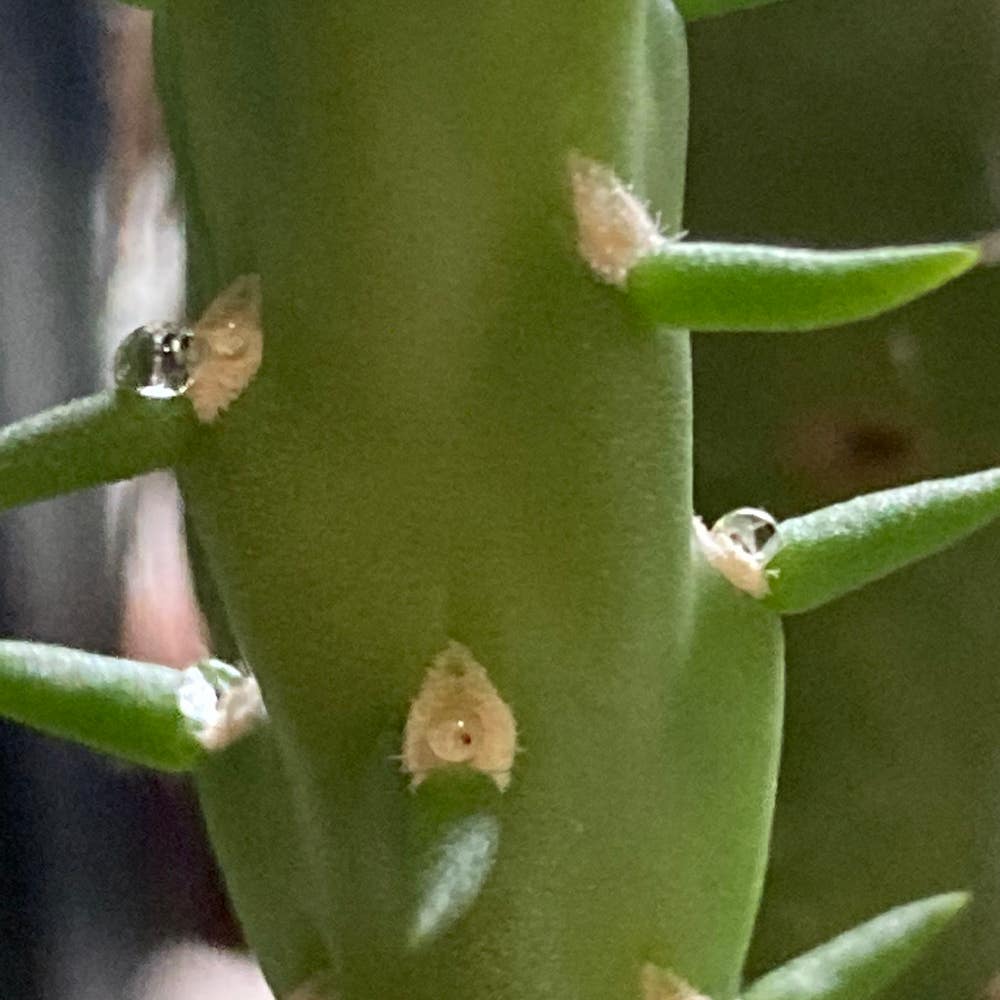
🌵 9 Plants That Love Growing with Cylindropuntia bigelovii
Cylindropuntia bigelovii
By the Greg Editorial Team
Jul 28, 2024•4 min read
This article was created with the help of AI so we can cover more plants for you. May contain errors. See one? Report it here.
Transform your garden into a desert oasis 🌵 by pairing Cylindropuntia bigelovii with its ideal, easy-care companions!
- Cylindropuntia bigelovii thrives with certain companions, enhancing garden health and aesthetics.
- Agave, Echinocereus, and Yucca offer mutual benefits like pest and disease resistance.
- Avoid incompatible plants to prevent negative impacts on Cylindropuntia bigelovii's growth.
Ideal Plant Companions
🌵 Agave americana
Agave americana thrives alongside Cylindropuntia bigelovii, sharing a love for arid environments and minimal water needs. This pairing is a match made in xeriscaping heaven, both flaunting resilience in dry, sandy areas.
- Similar care needs: Both species require little maintenance and infrequent watering.
- Shared environmental preferences: They are well-suited for hot, sunny climates and poor soil conditions.
🌺 Echinocereus engelmannii
Echinocereus engelmannii, with its vibrant flowers, not only adds a pop of color but also serves as a line of defense against pests, fostering a symbiotic relationship with Cylindropuntia bigelovii.
- Pest management benefits: Its presence can deter common pests, promoting a healthier garden.
- Aesthetic harmony: The contrasting shapes and textures enhance garden diversity and visual interest.
🌵 Opuntia basilaris
The beavertail cactus, Opuntia basilaris, is another desert dweller that stands shoulder to shoulder with Cylindropuntia bigelovii, offering mutual support and shared disease resistance.
- Disease resistance: Both plants are hardy against common cacti diseases, ensuring a robust garden.
- Mutual support: They can grow in proximity without competing for resources, exemplifying a peaceful coexistence.
🌵 Yucca filamentosa
Yucca filamentosa's spiky silhouette provides a striking visual contrast to Cylindropuntia bigelovii's teddy bear-like appearance, while also repelling pests with its formidable foliage.
- Visual contrast: The differing textures and forms create a dynamic landscape.
- Pest-repellent properties: Yucca's natural defenses help protect neighboring plants from pest infestations.
Enhancing Garden Diversity
🌺 Penstemon eatonii
Penstemon eatonii, with its striking red flowers, is a magnet for hummingbirds and beneficial pollinators. It's a match made in heaven for Cylindropuntia bigelovii, offering:
- A splash of color to the garden's palette.
- Attraction of pollinators, enhancing the ecosystem's vibrancy.
🌿 Artemisia tridentata
Artemisia tridentata, known for its silvery foliage, brings a different set of perks:
- Soil enrichment, fostering a healthy growing environment.
- Natural pest deterrent, thanks to its aromatic leaves.
🌱 Bouteloua gracilis
Lastly, Bouteloua gracilis serves as a lush carpet at the feet of Cylindropuntia bigelovii, providing:
- A verdant ground cover that minimizes erosion.
- A habitat for local fauna, contributing to biodiversity.
Aesthetic and Practical Pairings
🌼 Encelia farinosa
Encelia farinosa, with its silvery foliage and bright yellow flowers, offers a striking visual counterpoint to the spiny structure of Cylindropuntia bigelovii. Both plants thrive in arid conditions, sharing a love for sun-baked soils and minimal water needs, making them a drought-tolerant duo that's as practical as it is picturesque.
- Visual harmony through contrasting textures and colors.
- Shared drought tolerance, simplifying care and water usage.
🌵 Ferocactus wislizeni
The bold, barrel-shaped form of Ferocactus wislizeni adds a sculptural element to the garden, complementing the slender, vertical lines of Cylindropuntia bigelovii. Their similar water requirements and high heat tolerance mean they can coexist comfortably, reducing maintenance and ensuring a cohesive desert landscape.
- Sculptural shapes that create visual interest.
- Compatible water and sunlight needs for a low-maintenance pairing.
Incompatible Plants
While Cylindropuntia bigelovii enjoys the company of many desert dwellers, some plants are better kept at a distance. Here's why certain plants don't make the cut:
- High-Moisture Plants: Cylindropuntia bigelovii thrives in arid conditions. Plants that require frequent watering or inhabit moist environments can introduce excess humidity, potentially leading to root rot in your cactus.
- Invasive Species: Some plants, like the boxing glove cactus, can out-compete Cylindropuntia bigelovii for resources, leading to its decline.
- Plants Prone to Pests and Diseases: Avoid companions susceptible to pests and diseases like mealybugs, scale insects, and fungal infections, which can easily spread to your cactus.
- Highly Flammable Plants: Given that Cylindropuntia bigelovii is not particularly flammable, planting it near species with high flammability can pose a fire hazard.
Remember, the key to a harmonious garden is selecting plants with similar care requirements and environmental preferences.
⚠️ Safety First
This content is for general information and may contain errors, omissions, or outdated details. It is not medical, veterinary advice, or an endorsement of therapeutic claims.
Always consult a qualified healthcare professional before using any plant as food, medicine, or supplement.
Never eat any plant (or feed one to pets) without confirming its identity with at least two trusted sources.
If you suspect poisoning, call Poison Control (800) 222-1222, the Pet Poison Helpline (800) 213-6680, or your local emergency service immediately.
Spotted an error? Please report it here.
Discover the joy of a thriving desert garden by pairing your Cylindropuntia bigelovii with the perfect plant pals, and let Greg's community 🌵 inspire your green thumb success!