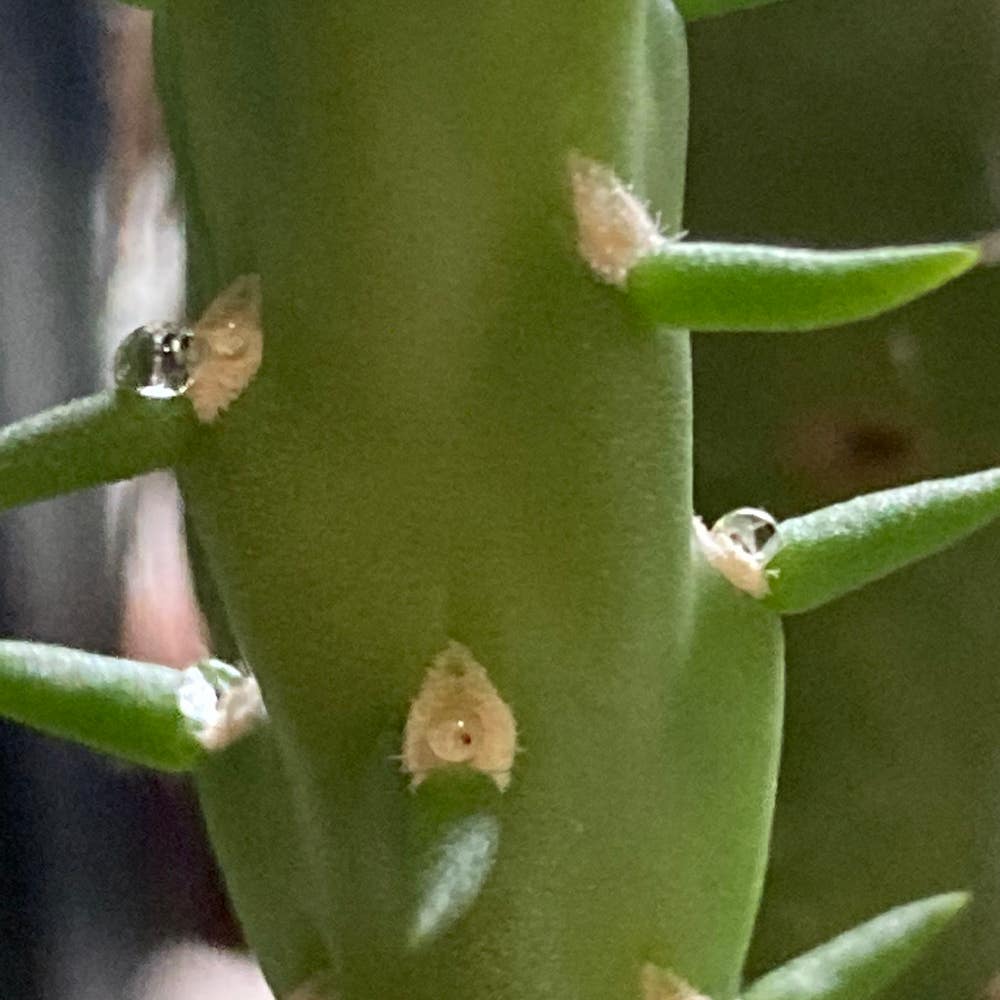
🌵 How to Fix Brown Spots on Your Cylindropuntia bigelovii
Cylindropuntia bigelovii
By the Greg Editorial Team
Jul 28, 2024•4 min read
This article was created with the help of AI so we can cover more plants for you. May contain errors. See one? Report it here.
Decode 🕵️♂️ and cure your cactus's brown spots for a thriving, spot-free Cylindropuntia bigelovii! 🌵
- 🌵 Brown spots signal stress, pests, or disease in Cylindropuntia bigelovii.
- 💦 Adjust watering, protect from harsh sun to prevent spots.
- 🌿 Regular care and monitoring ensure a healthy, spot-free cactus.
Identifying Brown Spots
🕵️♂️ Visual Signs
Brown spots on Cylindropuntia bigelovii can be as varied as the reasons behind them. Here's what to look for:
- Uniform spots often suggest environmental factors like too much direct sunlight.
- Irregular, scattered spots could be a red flag for pests or diseases.
- Texture varies; they can be dry and crispy or soft and soggy.
- A yellow or black halo surrounding a spot is a sign to take a closer look.
🕵️♂️ Common Causes
The causes of brown spots on your Teddy Bear Cholla can be as diverse as the desert itself:
- Environmental stress, such as extreme temperatures or improper watering.
- Pests that leave behind telltale marks or damage.
- Fungal infections, which may show up as dark concentric circles or powdery halos.
- Bacterial infections, presenting as water-soaked lesions, sometimes with a yellow border.
Treating Brown Spots
🚿 Adjusting Watering Habits
Watering your Cylindropuntia bigelovii is more art than science; it's about reading the soil, not the calendar. Here's how to get it right:
- Wait until the soil is completely dry before giving your cactus another drink. This might mean watering only once every couple of weeks.
- When you do water, do it thoroughly, allowing excess water to drain away to avoid soggy soil conditions.
🌞 Environmental Control
Your cactus loves the sun, but like all good things, too much can be harmful. Protect it from extreme sun exposure:
- Provide bright, indirect sunlight to prevent sunburn.
- During the hottest part of the day, use shade cloth or relocate your plant to a spot with filtered light.
🐜 Pest Management
Pests can be stealthy invaders, leaving brown spots as their calling card. To keep them at bay:
- Inspect your cactus regularly for signs of infestation.
- If pests are spotted, isolate your plant and treat it with an appropriate insecticide, following the instructions carefully.
💉 Disease Treatment
Fungal and bacterial infections can turn into a brown spot nightmare. Here's how to fight back:
- At the first sign of infection, remove affected areas with sterilized tools.
- Apply a fungicide, opting for organic options like a baking soda and soap mixture or go for copper-based treatments if necessary.
- Ensure good air circulation around your plant to keep the conditions dry and unfriendly for spores to thrive.
Nutrient Management
💡 Recognizing Deficiencies
Brown spots on your Cylindropuntia bigelovii can often be a distress signal for nutrient deficiencies. Look out for these tell-tale signs:
- Yellowing leaves, especially around the edges, which may indicate a lack of nitrogen.
- Pale leaves with brown spots could point to a magnesium shortage.
- Stunted growth or smaller than usual new foliage suggests a potential lack of essential nutrients.
🍽️ Fertilization Practices
Getting the fertilization right is key to addressing nutrient deficiencies:
- Use a balanced, water-soluble fertilizer to provide a spectrum of macro and micro-nutrients.
- Apply chelated iron if your plant shows signs of iron deficiency, which can be recognized by chlorosis in new leaves.
- Consider organic options like compost or manure to enrich the soil without the risk of over-fertilization.
- Stick to a regular fertilization schedule, and adjust based on the plant's response and seasonal growth patterns.
- Conduct soil tests periodically to tailor your fertilization strategy to your plant's specific needs.
Preventing Future Issues
🌵 Consistent Care Routine
Establishing a regular care routine is pivotal in keeping your Teddy Bear Cholla spot-free. Like a well-oiled machine, your cactus thrives on predictability. Here's how to keep it in peak condition:
- Water only when the top inch of soil is dry, mimicking natural desert rainfall patterns.
- Provide bright, indirect light to prevent sunburn while ensuring enough photosynthesis.
- Prune damaged segments promptly with sterilized tools to halt the spread of any potential issues.
🔍 Monitoring and Adaptation
Vigilance is your ally in the quest for a healthy cactus. Keep a keen eye on your plant and be ready to adapt your care strategy with the changing seasons or signs of stress.
- Conduct weekly inspections for early detection of any discoloration or damage.
- Adjust watering and lighting as necessary, especially during seasonal transitions.
- Keep a log of your plant's condition and care adjustments to track what works and what doesn't.
By embracing these practices, you're not just avoiding brown spots; you're nurturing a resilient and vibrant Cylindropuntia bigelovii.
⚠️ Safety First
This content is for general information and may contain errors, omissions, or outdated details. It is not medical, veterinary advice, or an endorsement of therapeutic claims.
Always consult a qualified healthcare professional before using any plant as food, medicine, or supplement.
Never eat any plant (or feed one to pets) without confirming its identity with at least two trusted sources.
If you suspect poisoning, call Poison Control (800) 222-1222, the Pet Poison Helpline (800) 213-6680, or your local emergency service immediately.
Spotted an error? Please report it here.
Nurture a spotless Cylindropuntia bigelovii by following Greg's custom care plan and tapping into a community that helps you keep those pesky spots at bay 🌵.