🌵 5 Facts About Teddy Bear Cholla Lifecycle
Cylindropuntia bigelovii
By the Greg Editorial Team
Jul 28, 2024•5 min read
This article was created with the help of AI so we can cover more plants for you. May contain errors. See one? Report it here.
Unveil the secrets of the Teddy Bear Cholla's life cycle and its key role in desert ecosystems. 🌵
- 🌵 Seeds or cuttings start the lifecycle, with specific care needed for germination.
- 🌞💧 Environmental factors crucial for germination and growth of Teddy Bear Cholla.
- 🌸 Flowering is key for reproduction, with lifespan reaching up to 15 years.
Germination Process
🌱 Seed and Cutting Development
Teddy Bear Cholla embarks on its life journey through two primary paths: seeds and cuttings. Here's how each method unfolds:
- Seeds: Sow them in a sterile, well-draining mix, just beneath the surface. Keep the soil temperature cozy, between 65-75°F, and maintain consistent moisture—think mist, not drench. Germination is a waiting game, ranging from 3 to 45 days.
- Cuttings: Select vigorous stems and snip cleanly below a node. Let the cut end callous over for a day or two before planting. Rooting takes place in a warm, bright, and slightly moist environment.
🌿 Influencing Factors
The success of germination isn't just about planting; it's influenced by a suite of environmental factors:
- Temperature and Light: Consistent warmth and bright, indirect light are crucial for both seeds and cuttings to thrive.
- Moisture: Balance is key. Too much water invites mold, while too little dries out the seeds. Aim for damp, not soggy, soil.
- Air Circulation: Good airflow helps prevent moisture-related issues, ensuring a healthy start for the seedlings or cuttings.
Seedling Growth
🌱 Early Development
The Teddy Bear Cholla seedling is a marvel of resilience, sprouting in conditions that would challenge less hardy species. During this initial growth phase, the seedlings exhibit a tenacity that's essential for survival in their arid habitats. Typically, this stage can extend over several months, with the seedlings slowly but steadily establishing their root systems and preparing for the harsh realities of desert life.
🌵 Appearance Changes
As the seedlings mature, they undergo remarkable transformations. Here's what to watch for:
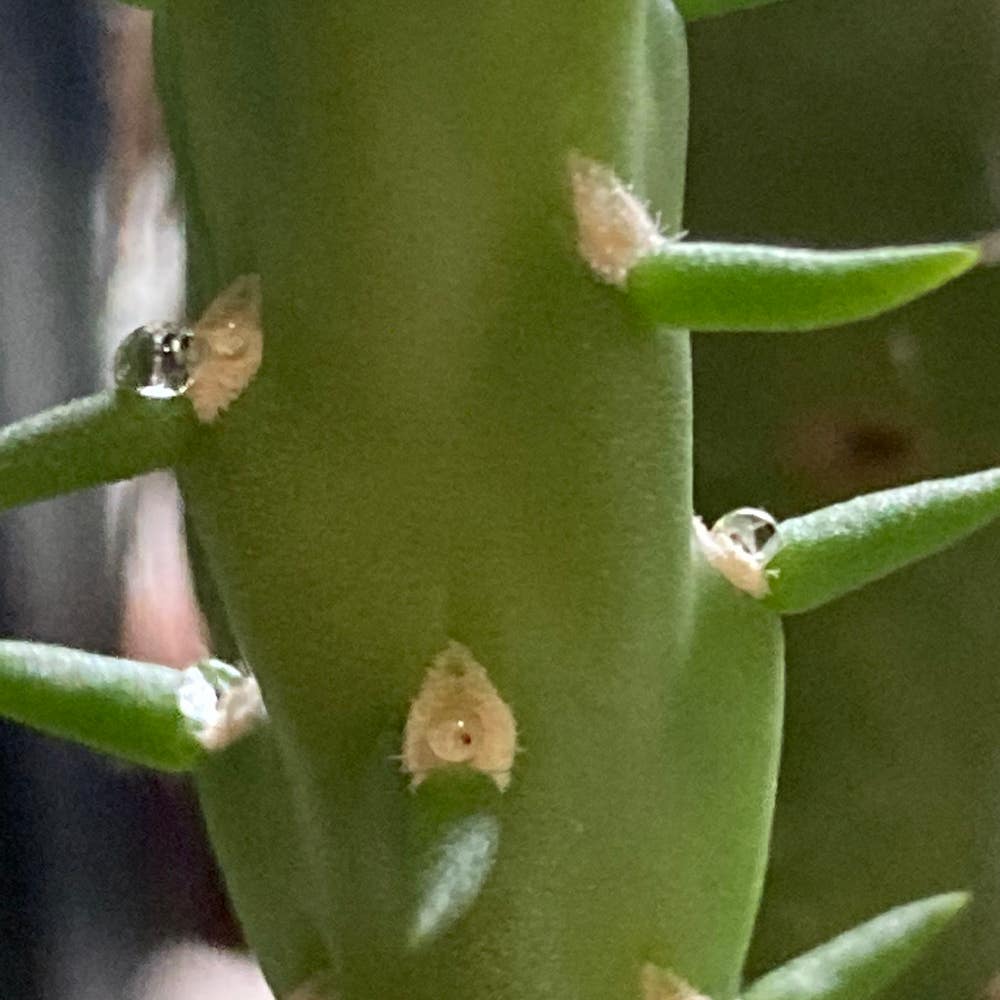
- The emergence of spiky protuberances, hinting at the iconic cholla silhouette.
- A gradual shift from a tender green to a more robust hue, signaling increased hardiness.
- The development of the first segments, which will later become the building blocks of the cactus's complex structure.
These milestones mark the seedling's progression into the next exciting phase of growth, setting the stage for the vegetative expansion that defines the Teddy Bear Cholla's journey to maturity.
Vegetative Expansion
🌱 Segment Formation
The Teddy Bear Cholla's vegetative stage is marked by the development of its distinctive cylindrical segments. These segments are the building blocks of the cholla's structure, each one capable of becoming a new plant if detached. During this phase, the cholla's growth rate can be influenced by several factors, including water availability, soil quality, and temperature.
- Typical timeframe for segment formation ranges from a few weeks to several months.
- Key factors affecting growth rate:
- Adequate sunlight exposure.
- Soil drainage and fertility.
- Infrequent but deep watering patterns.
📈 Growth Patterns
Teddy Bear Cholla's growth patterns are a fascinating dance of expansion and adaptation. As the plant matures, these patterns reveal the cholla's strategy for thriving in harsh desert environments.
- Growth patterns include both vertical height increase and horizontal spread.
- Contributions to overall maturation time:
- Rapid segment production during favorable conditions.
- Slower growth during periods of drought or extreme heat.
- Ability to store water efficiently, allowing for bursts of growth following rainfall.
Flowering and Reproduction
🌸 Blooming Phase
The Teddy Bear Cholla's blooming phase is a visual spectacle, marked by the emergence of vibrant flowers that beckon pollinators. This stage is critical for the plant's reproductive cycle, setting the stage for seed formation. The flowering typically unfolds in the warmer months, with the duration and timing being pivotal to successful pollination and seed set.
🌱 Reproductive Success
- Pollination strategies, whether self-fertilizing or reliant on external pollinators, greatly influence the Teddy Bear Cholla's reproductive success.
- Seed dispersal is facilitated by various means, including the detachment of spiny segments that hitch rides on unsuspecting passersby.
- Environmental conditions, such as temperature and rainfall, play a significant role in the viability of the seeds and the subsequent spread of the species.
Maturation and Lifespan
Reaching Full Growth
Teddy Bear Cholla cacti, known for their dense spines resembling a soft teddy bear from a distance, mature at a deliberate pace. They typically reach their full size within 10 to 15 years, standing proud at one to two meters tall. The journey to maturity is marked by the development of a woody base as lower branches die off, a natural progression as the plant ages.
- Factors that can accelerate growth include:
- Ample sunlight, mimicking their native desert conditions.
- Sufficient space to grow, as cramped conditions can stunt development.
- Occasional stress, such as cooler temperatures, which can promote growth spurts.
🕰️ Lifespan Expectancy
The average lifespan of a Teddy Bear Cholla is quite impressive, with many living well beyond 30 years. As they age, they undergo several stages of maturity:
- Seedling to juvenile: Establishing root systems and initial segment formation.
- Juvenile to adult: Rapid segment growth and the beginning of flowering.
- Adult to senior: Slower growth, continued flowering, and segment loss at the base.
Understanding these stages is crucial for conservationists and enthusiasts alike, ensuring these unique cacti thrive for generations.
⚠️ Safety First
This content is for general information and may contain errors, omissions, or outdated details. It is not medical, veterinary advice, or an endorsement of therapeutic claims.
Always consult a qualified healthcare professional before using any plant as food, medicine, or supplement.
Never eat any plant (or feed one to pets) without confirming its identity with at least two trusted sources.
If you suspect poisoning, call Poison Control (800) 222-1222, the Pet Poison Helpline (800) 213-6680, or your local emergency service immediately.
Spotted an error? Please report it here.
Nurture your Teddy Bear Cholla from a spiky seedling to a majestic mature 🌵 with Greg's tailored care plans, ensuring each growth phase is met with the perfect amount of sun, soil, and water.