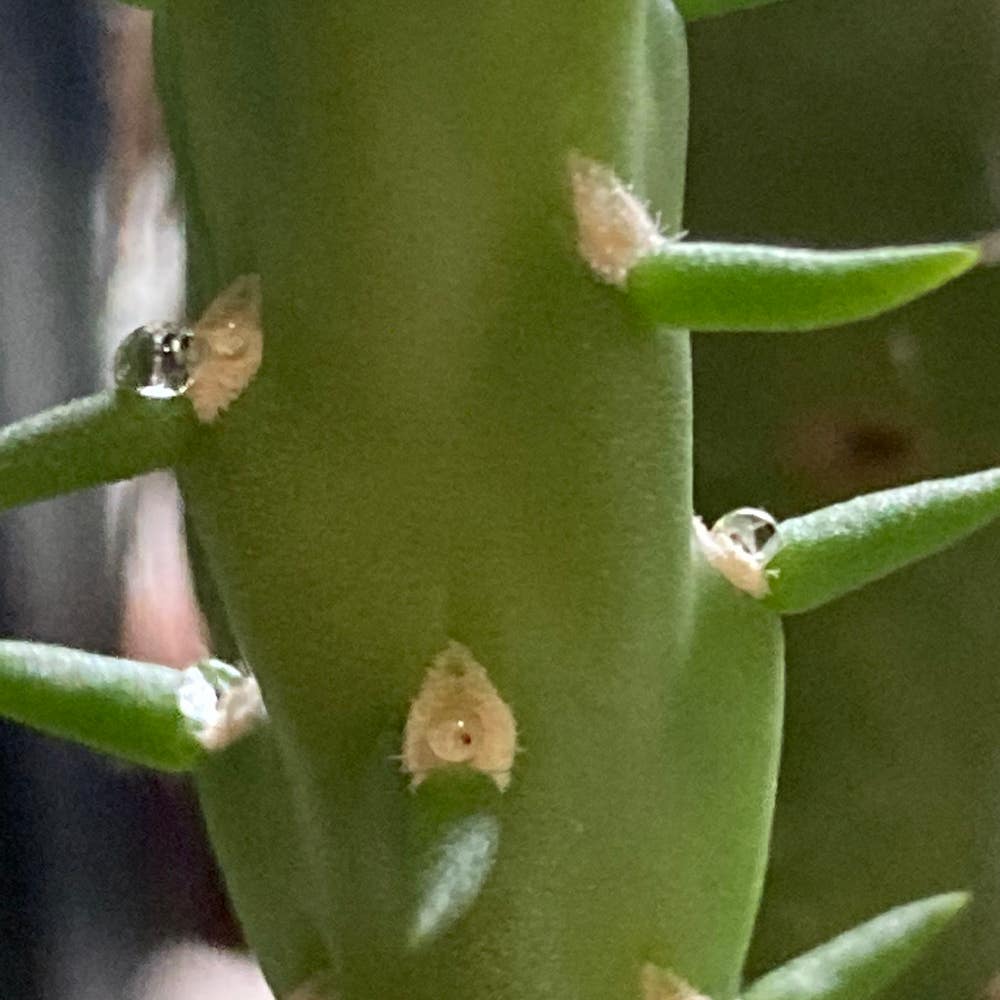
🌵 Reasons Why Your Cylindropuntia bigelovii Won't Flower
Cylindropuntia bigelovii
By the Greg Editorial Team
Jul 28, 2024•4 min read
This article was created with the help of AI so we can cover more plants for you. May contain errors. See one? Report it here.
Transform your cactus into a blooming masterpiece 🌵🌸 with these tailored care and pruning strategies.
- 🌞 Sunlight is key: Ensure 6+ hours of direct light for Cylindropuntia bigelovii blooms.
- 💧🌡️ Stable climate and watering: Prevent bud drop for better flowering.
- ✂️ Prune wisely: Enhance bloom cycle with proper pruning techniques.
Insufficient Flowering
🌵 Identifying the Issue
Is your Cylindropuntia bigelovii shy to show off its flowers? You're not alone. Look out for signs like a lack of buds or an abundance of foliage without any blooms. These could be distress signals that your cactus needs a bit more TLC.
☀️ Sunlight and Bloom Cycle
Sunlight is like a wake-up call for your cactus's bloom cycle. Without enough of those golden rays, your Cylindropuntia bigelovii might as well be asleep. Here's how to get it basking in the glory of the sun:
- Ensure it gets at least six hours of direct sunlight daily.
- Position it in a spot where it can soak up bright, indirect light for the rest of the day.
🌿 Nutrient-Induced Flowering
Just like a gourmet meal can't be made without the right ingredients, your cactus can't flower without the proper nutrients. Here's the scoop on feeding your Cylindropuntia bigelovii:
- Nitrogen is necessary, but too much can lead to all leaf, no bloom.
- Phosphorus and potassium are like the secret sauce for flower development.
- Use a balanced cactus fertilizer, but don't overfeed—more isn't always better.
Fertilization strategies for a floral fiesta:
- Start with a soil test to pinpoint any nutrient deficiencies.
- Apply a cactus-specific fertilizer according to package instructions, typically during the growing season.
- Cut back on feeding during dormant periods to avoid nutrient overload.
Bud Drop Dilemma
Recognizing Bud Drop
🌼 Bud drop in Cylindropuntia bigelovii can sneak up on you. Watch for buds that yellow, wither, or fall off before they get a chance to bloom. This is your cactus crying out for help.
Temperature and Stability
🌡️ Temperature swings are like kryptonite to your cactus's buds. To prevent bud drop, maintain a steady climate. Think of it as setting the thermostat for your plant's comfort, not just your own.
- Avoid placing your cactus near heaters or air conditioners.
- Shield the plant from cold drafts and hot blasts.
- Consider using a thermometer to monitor the ambient temperature around your cactus.
Watering and Root Health
💧 Watering is a balancing act that affects your cactus's root health and its ability to hold onto buds. Here's how to keep the scales tipped in favor of blooming:
- Water deeply but infrequently to encourage strong root growth.
- Allow the soil to dry out slightly between waterings.
- Use a moisture meter or your finger to check soil moisture before watering.
Remember, consistency is key. Your Cylindropuntia bigelovii's bloom cycle depends on a stable environment and careful attention to watering.
Abnormal Flowers
Spotting Abnormalities
Abnormal flower development in Cylindropuntia bigelovii can be quite the head-scratcher. Look out for signs like:
- Distorted or irregular flower shapes
- Unusual coloration or patterns
- Reduced size or stunted growth
🐜 Pest Management
Pests can turn your cactus blooms into a buffet. Keep an eye out for:
- Mealybugs and scale insects, which can cause discoloration and wilting
- Spider mites that might leave fine webbing and yellowed foliage
- Combat these invaders with neem oil, insecticidal soap, or a strong water spray
Soil pH and Flower Quality
Soil pH isn't just a number; it's a key player in your cactus's performance. It can affect:
- Flower color: Off pH can lead to faded or incorrect hues
- Flower size: Too acidic or alkaline soils can stunt flower growth To dial in the right pH:
- Test your soil to establish a baseline
- Adjust with sulfur to lower pH or lime to raise it, aiming for a slightly acidic to neutral range
Pruning for Flower Success
🌸 Pruning Impact
Pruning is a pivotal factor in the flowering of Cylindropuntia bigelovii, functioning as a directional tool for the plant's resources. Proper pruning encourages the plant to channel energy into bloom production rather than vegetative growth.
- Strategic removal of certain sections can lead to a more prolific bloom cycle.
- Timing is crucial; prune after the flowering phase to set the stage for future growth.
🌺 Best Practices for Pruning to Enhance the Bloom Cycle
To maximize the bloom potential of your Cylindropuntia bigelovii, consider these best practices:
- Prune to maintain an open structure, which improves light penetration and air circulation.
- Avoid over-pruning; never remove more than one-third of the plant at a time.
- Target your pruning; focus on removing spent blooms and leggy stems to promote new flower buds.
- Be mindful of the plant's age; younger plants can handle more aggressive pruning compared to older ones.
- After pruning, provide care by ensuring adequate watering and fertilization to support recovery and growth.
⚠️ Safety First
This content is for general information and may contain errors, omissions, or outdated details. It is not medical, veterinary advice, or an endorsement of therapeutic claims.
Always consult a qualified healthcare professional before using any plant as food, medicine, or supplement.
Never eat any plant (or feed one to pets) without confirming its identity with at least two trusted sources.
If you suspect poisoning, call Poison Control (800) 222-1222, the Pet Poison Helpline (800) 213-6680, or your local emergency service immediately.
Spotted an error? Please report it here.
Ensure your Cylindropuntia bigelovii flourishes 🌵 with Greg's tailored care plans, ensuring perfect sunlight, nutrients, and watering reminders for those elusive blooms.