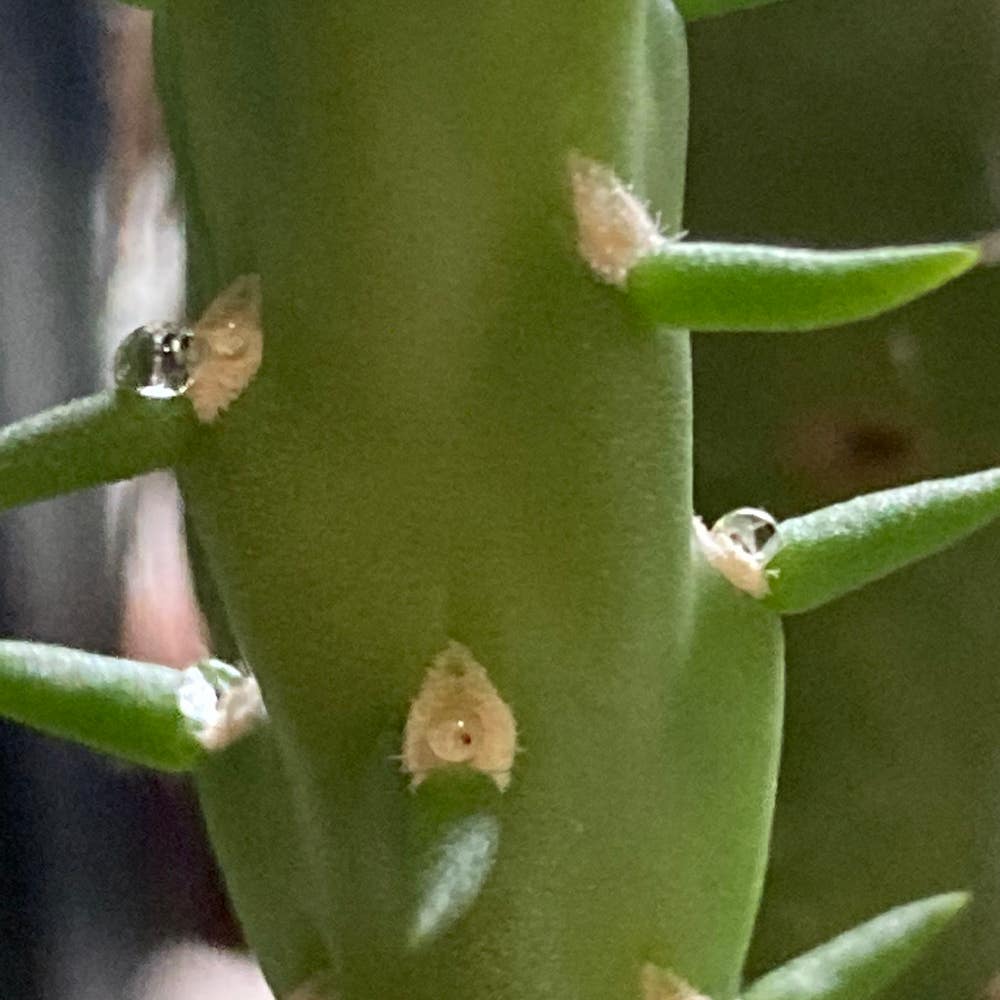
🌵 Best Tips for Dropping Leaves on Cylindropuntia bigelovii
Cylindropuntia bigelovii
By the Greg Editorial Team
Jul 28, 2024•5 min read
This article was created with the help of AI so we can cover more plants for you. May contain errors. See one? Report it here.
Stop leaf drop 🍂 in its tracks and keep your Cylindropuntia bigelovii thriving with expert care strategies.
- Environmental stress, pests, diseases trigger Cylindropuntia bigelovii leaf drop.
- Proper watering and light are crucial to prevent leaf drop.
- Regular inspections and pruning maintain health and prevent leaf issues.
Identifying Leaf Drop
🌿 Recognizing Symptoms
- Look for sudden changes in the plant's appearance, such as a noticeable reduction in leaves.
- Symptoms to watch for include:
- Leaves that detach easily with a gentle tug.
- Discoloration or wilting, indicating the plant's distress.
- Changes in leaf texture, such as mushiness or brittleness.
🕵️ Common Causes
- Environmental stress, pests, and diseases are the main culprits behind leaf drop.
- Specific issues to consider:
- Overwatering leading to mushy leaves and potential root rot.
- Underwatering resulting in brittle leaves.
- Pests such as spider mites and mealybugs, which leave behind web-like strings or fluffy deposits.
- Diseases that manifest as black or brown spots on leaves.
Environmental Stressors
💧 Watering Issues
Overwatering can turn your Cylindropuntia bigelovii's roots into a soggy mess, leading to leaf drop. On the other hand, underwatering can stress your plant out, leaving the soil too dry. Here's how to strike the right balance:
- Water deeply but infrequently, allowing the soil to dry out slightly between waterings.
- Ensure proper drainage to prevent water from pooling around the roots.
🌞 Light and Temperature
Cylindropuntia bigelovii is like a Goldilocks when it comes to light and temperature—it wants conditions just right. Too much direct sunlight can scorch its leaves, while insufficient light can cause them to weaken and drop. Temperature swings are equally troublesome. Here's how to keep things stable:
- Provide bright, indirect light to maintain vibrant color without the risk of sunburn.
- Keep temperatures consistent, avoiding the shock of sudden changes.
Pests and Diseases
🐛 Pest Identification
Cylindropuntia bigelovii, also known as the Teddy Bear Cholla, can fall victim to various pests that cause its leaves to drop. Here's who to watch out for:
- Mealybugs: Look for white, cottony masses on the stems.
- Scale insects: Small, raised bumps on the plant may indicate their presence.
- Spider mites: Yellowing and stippling of the leaves are common symptoms.
Regular inspections can help catch these critters early. If you spot them, a swab of rubbing alcohol or a spray of insecticidal soap can be effective treatments.
🦠 Disease Prevention
Diseases can also lead to leaf drop in your Cylindropuntia bigelovii. Here's how to keep your plant healthy:
- Fungal diseases: These may manifest as wilting or discoloration. Prevent them by avoiding overwatering and ensuring good air circulation.
- Bacterial Soft Rot: Often due to excessive moisture. Keep the soil well-drained and the plant dry.
- Viral infections: These can distort leaves and stunt growth. Unfortunately, there's no cure, so prevention is key. Keep pests at bay and quarantine new plants to avoid the spread of viruses.
Act swiftly if you notice signs of disease, removing affected parts and considering fungicides for severe cases. Remember, a healthy plant is less susceptible to pests and diseases, so consistent care is crucial.
Care and Prevention Strategies
💧 Watering Best Practices
Watering your Cylindropuntia bigelovii is more about rhythm than routine. Here's how to keep the beat:
- Check the soil moisture before watering; the top inch should be dry to the touch.
- Water deeply but infrequently, allowing the plant to hydrate thoroughly without becoming waterlogged.
- Adjust for the seasons: less in the cool months, more when it's warmer.
- Morning watering is ideal, giving the plant time to absorb moisture before the heat of the day.
- Use a moisture meter if you're unsure about when to water, it's like having a plant whisperer at your fingertips.
☀️ Optimizing Light and Temperature
Your Cylindropuntia bigelovii loves the spotlight, but not too hot or too cold. Here's how to set the stage:
- Bright, indirect light is the sweet spot; direct sunlight can be too intense.
- Avoid drafts and sudden temperature changes to prevent stress.
- Maintain a stable environment; think of your plant's comfort like your own when setting the thermostat.
- In the heat of summer, ensure good airflow to keep your plant from overheating.
Maintenance and Recovery
🌱 Soil and Drainage
Healthy soil is the foundation of a thriving Cylindropuntia bigelovii. To prevent leaf drop, focus on soil that offers excellent drainage. Here's how to ensure your soil is up to par:
- Opt for a well-draining soil mix, rich in organic matter to facilitate aeration and water flow.
- Water deeply, then allow the soil to dry out before the next watering to encourage deep root growth and prevent root rot.
✂️ Pruning and Care
Regular pruning is vital for the recovery and maintenance of Cylindropuntia bigelovii. It's not just about aesthetics; it's about directing energy to the healthiest parts of the plant. Here are some pruning tips:
- Remove damaged or diseased sections with clean, sharp tools to promote healthy growth.
- After pruning, ensure the plant has enough water and nutrients to recover, akin to post-surgery care.
Remember, consistent care is key. Keep an eye on your plant for signs of stress and adjust your practices accordingly to keep those leaves firmly in place.
⚠️ Safety First
This content is for general information and may contain errors, omissions, or outdated details. It is not medical, veterinary advice, or an endorsement of therapeutic claims.
Always consult a qualified healthcare professional before using any plant as food, medicine, or supplement.
Never eat any plant (or feed one to pets) without confirming its identity with at least two trusted sources.
If you suspect poisoning, call Poison Control (800) 222-1222, the Pet Poison Helpline (800) 213-6680, or your local emergency service immediately.
Spotted an error? Please report it here.
Avoid the dreaded leaf drop and keep your Cylindropuntia bigelovii thriving 🌵 with Greg's personalized care reminders tailored to your desert beauty's unique needs!