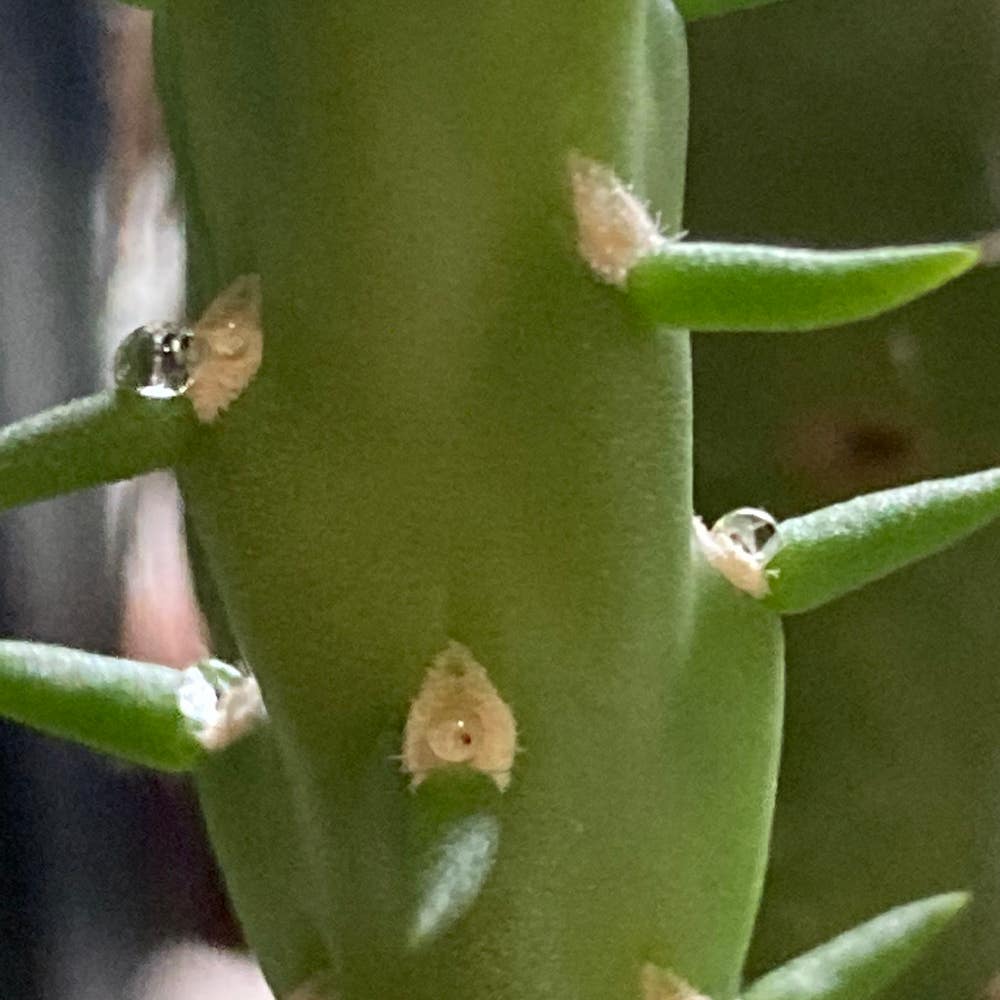
🌵 How and When to Cut Back Your Cylindropuntia bigelovii
Cylindropuntia bigelovii
By the Greg Editorial Team
Jul 28, 2024•4 min read
This article was created with the help of AI so we can cover more plants for you. May contain errors. See one? Report it here.
Safeguard your cactus's vigor and shape with timely, precise pruning 🌵✂️.
- 🌵 Prune for health and beauty: Essential for vigor, shape, and preventing overgrowth.
- 🌞 Early spring or post-bloom: Optimal times to encourage growth and robust flowering.
- ✂️ Safety first with sharp tools: Wear protection, cut at 45° angles, and sterilize tools.
Pruning Basics
Pruning your Cylindropuntia bigelovii isn't just about aesthetics; it's crucial for the plant's health and vigor. Let's get to the point—safely.
🌵 Understanding the Pruning Needs of Cylindropuntia bigelovii
- Regular pruning helps maintain shape and encourages new growth.
- Remove dead or damaged segments to prevent disease and pest infestations.
- Pruning can control size and prevent your cactus from overgrowing its space.
🦔 Safety First: Preparing to Prune a Spiny Plant
- Wear thick gloves and use tongs to handle the cactus, avoiding a painful encounter with its spines.
- Eye protection is non-negotiable; those spines can launch unexpectedly.
- Ensure your tools are sharp and clean to make precise cuts and reduce the risk of infection.
- Disinfect tools before and after use with rubbing alcohol or a household disinfectant.
Optimal Pruning Times
Identifying the best season for pruning is like syncing your gardening schedule with the plant's internal clock. For Cylindropuntia bigelovii, early spring is prime time. This is when the plant is ramping up for growth and can recover quickly from pruning.
- Early spring pruning sets the stage for robust flowering.
- Pruning post-bloom allows for shaping and encourages future growth.
Recognizing growth stages and flowering cycles is crucial. Cylindropuntia bigelovii communicates its readiness through its lifecycle.
- 🌱 Prune when new growth appears, signaling the plant's resilience.
- After flowering, an intensive prune can invigorate the plant for its next growth cycle.
- Monitor the plant for stress or pests post-pruning, as these can hinder recovery and bloom.
Pruning Techniques
Pruning your Cylindropuntia bigelovii isn't just about shaping; it's about the plant's health and vigor. Here's how to get it right:
Step-by-Step Guide to Pruning Cylindropuntia bigelovii
- Start by inspecting your plant for dead or damaged segments—these should be your first to go.
- Identify the nodes, the points where segments join. They're crucial for encouraging new growth.
- Using sharp, sanitized pruning shears, make your cuts at a 45-degree angle just above the nodes to prevent water accumulation and disease.
- Be conservative with your cuts to avoid over-pruning; never remove more than one-third of the plant at a time.
- After each cut, step back and assess the plant's shape to ensure a balanced, natural appearance.
Where to Make the Cut: Nodes and Segments
- Aim just above a node when cutting; this is where new growth will sprout.
- If you're looking to encourage branching, make your cuts on segments that are too long or out of place.
- Remember, each cut is a signal to your plant, directing where to grow next, so choose your spots wisely.
Deadheading Benefits
Deadheading, the removal of spent flowers, is a crucial step in maintaining the vigor of your Cylindropuntia bigelovii.
🌸 The Why and How of Deadheading Cylindropuntia bigelovii
- Stimulates new growth and flower production by redirecting energy from seed formation to vegetative development.
- Enhances the plant's appearance, keeping it looking fresh and tidy.
- Reduces the likelihood of pests and diseases by minimizing decaying plant matter.
To deadhead your Teddy Bear Cholla, follow these steps:
- Wear thick gloves and use long-handled tongs to grasp the spent blooms.
- Cut the flower stem at its base with sharp, sanitized pruning shears.
🛠️ Tools and Techniques for Safe Deadheading
- Use tools specifically designed for cacti to ensure safety and precision.
- Clean your tools before and after use to prevent the spread of disease.
- Dispose of removed flowers properly to keep the area around your plant clean.
Aesthetic Pruning
Aesthetic pruning is about more than just good looks; it's a crucial step in maintaining the health and vigor of your Cylindropuntia bigelovii. Here's how to shape your plant without sacrificing its well-being.
🌵 Shaping Your Cylindropuntia bigelovii
- Start by removing any branches that clash with your desired shape. Aim for a balanced, open structure that allows light and air to reach all parts of the plant.
- Rotate your Cylindropuntia bigelovii regularly to promote even growth, minimizing the need for heavy pruning later on.
⚖️ Balancing Beauty and Plant Health
- Always prune with sterilized, sharp tools to prevent disease and ensure clean cuts.
- Follow the "three Ds" rule: remove anything dead, diseased, or directionless to keep your plant healthy and attractive.
- Trim strategically, keeping the natural form of the plant in mind. Over-pruning can be as harmful as neglect, so be patient and make micro snips for fine-tuning.
- Remember, a well-shaped Cylindropuntia bigelovii is not only a visual delight but also a sign of a well-cared-for plant.
⚠️ Safety First
This content is for general information and may contain errors, omissions, or outdated details. It is not medical, veterinary advice, or an endorsement of therapeutic claims.
Always consult a qualified healthcare professional before using any plant as food, medicine, or supplement.
Never eat any plant (or feed one to pets) without confirming its identity with at least two trusted sources.
If you suspect poisoning, call Poison Control (800) 222-1222, the Pet Poison Helpline (800) 213-6680, or your local emergency service immediately.
Spotted an error? Please report it here.
Ensure your Cylindropuntia bigelovii stays healthy and shapely 🌵 with strategic pruning, and count on Greg to guide you through the best times and techniques!