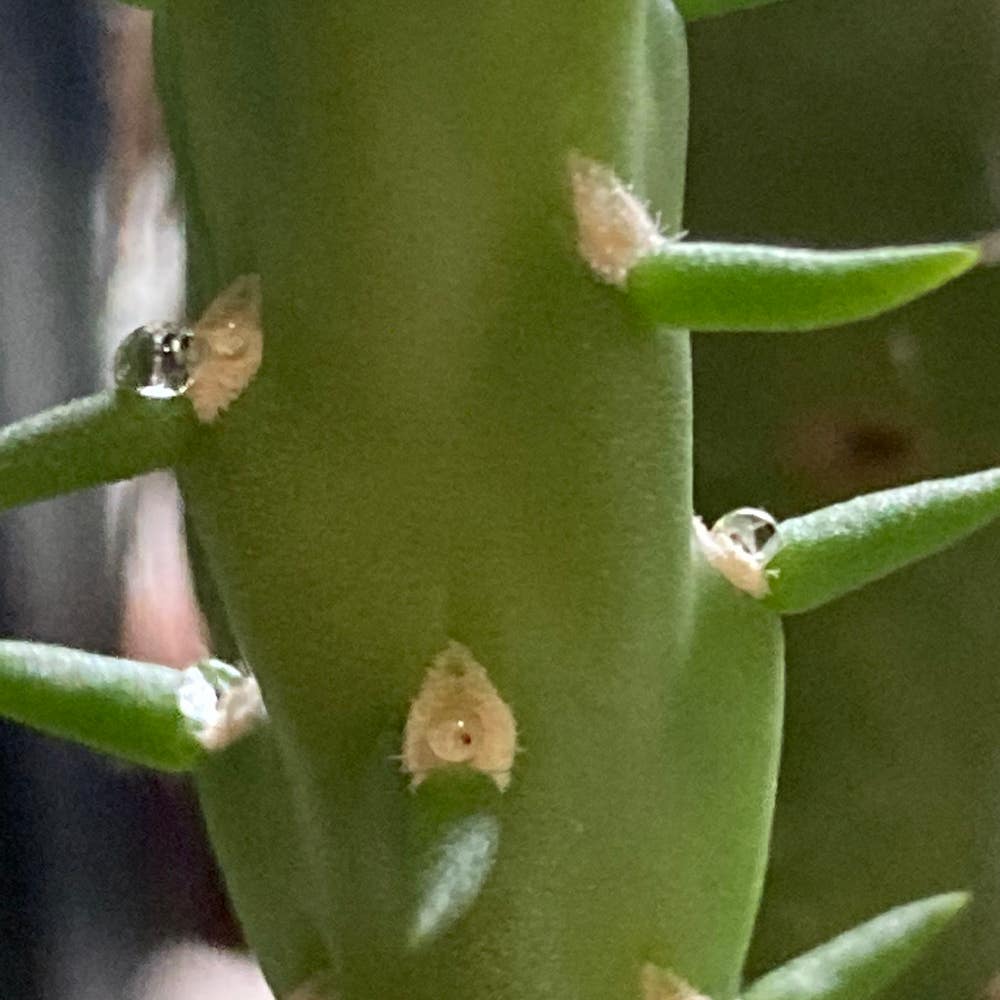
Best Tips for Droopy Leaves on Cylindropuntia bigelovii
Cylindropuntia bigelovii
By the Greg Editorial Team
Jul 28, 2024•3 min read
This article was created with the help of AI so we can cover more plants for you. May contain errors. See one? Report it here.
Stop the droop! 🌵 Master your Cylindropuntia bigelovii's care for perkier plants. 💧
- 💧 Water wisely to prevent droopy leaves from underwatering or overwatering.
- 🌡️☀️ Optimize environment with well-draining soil and correct temperature/light.
- ✂️ Prune and monitor regularly for healthy growth and early problem detection.
Causes of Droopiness
💧 Watering Issues
Water is the lifeblood of Cylindropuntia bigelovii, but it's all about balance. Underwatering can leave your plant's leaves lacking turgor pressure, causing them to droop in a silent plea for hydration. The soil will feel bone-dry, and the leaves may become crispy, much like a plant's version of thirst.
Conversely, overwatering is like giving your plant too much of a good thing. It can lead to swollen, discolored leaves and, more critically, root rot. This is when the roots, overwhelmed by moisture, begin to decay. If the soil feels more like a swamp than a desert, it's time to cut back on the water and consider repotting in well-draining soil.
🌡️ Environmental Stress
Temperature and sunlight are the stage and spotlight for Cylindropuntia bigelovii's performance. Extreme temperatures can stress your plant, causing leaves to lose their firmness and droop. It's like the plant's own version of a heatwave exhaustion or a cold snap shock.
Sunlight, on the other hand, is a balancing act. Too little, and your plant's leaves might droop from lack of energy. Too much, and they might wilt under the harshness, similar to how we might seek shade on a sunny day. Aim for a spot that offers bright, indirect light to keep your Cylindropuntia bigelovii's leaves reaching skyward without getting sunburned.
Treating Droopy Leaves
Adjusting Watering Habits
Watering is more art than science when it comes to Cylindropuntia bigelovii. Here's how to strike the perfect balance:
- Water when the top inch of soil feels dry to the touch, aiming for moist but not waterlogged conditions.
- Establish a consistent watering routine, adjusting for seasonal changes in plant needs.
Signs of proper hydration include:
- Firm, upright leaves.
- Soil that is dry on top but retains some moisture beneath the surface.
🌞 Optimizing Growing Conditions
Creating the right environment is crucial for preventing droopiness:
- Use a well-draining soil mix to avoid water stress.
- Position your plant where it receives bright, indirect sunlight and maintain stable temperatures.
Pruning for Health
Pruning can promote vigorous growth and prevent droopiness:
- Trim during the growing season to encourage new, healthy growth.
- Remove any damaged or diseased sections to prevent the spread of issues that can cause drooping.
Preventing Future Issues
🔄 Consistent Care Routine
Establishing a consistent care routine is like setting a rhythm for your Cylindropuntia bigelovii's life. It's about syncing with the plant's needs and your daily habits to create a harmonious growth environment.
- Craft a care schedule that includes regular watering, feeding, and pruning.
- Perform routine checks for early signs of droopiness or stress in your plant.
🌍 Environmental Management
Your Cylindropuntia bigelovii's environment is its universe. Maintaining the right conditions is crucial for preventing droopy leaves and ensuring overall plant health.
- Keep humidity and air circulation at optimal levels to support robust leaf health.
- Make seasonal adjustments to your care routine to accommodate changes in temperature and light.
⚠️ Safety First
This content is for general information and may contain errors, omissions, or outdated details. It is not medical, veterinary advice, or an endorsement of therapeutic claims.
Always consult a qualified healthcare professional before using any plant as food, medicine, or supplement.
Never eat any plant (or feed one to pets) without confirming its identity with at least two trusted sources.
If you suspect poisoning, call Poison Control (800) 222-1222, the Pet Poison Helpline (800) 213-6680, or your local emergency service immediately.
Spotted an error? Please report it here.
Ensure your Cylindropuntia bigelovii stands tall and thrives 🌵 with Greg's custom care schedule, tackling hydration to sunlight with ease!