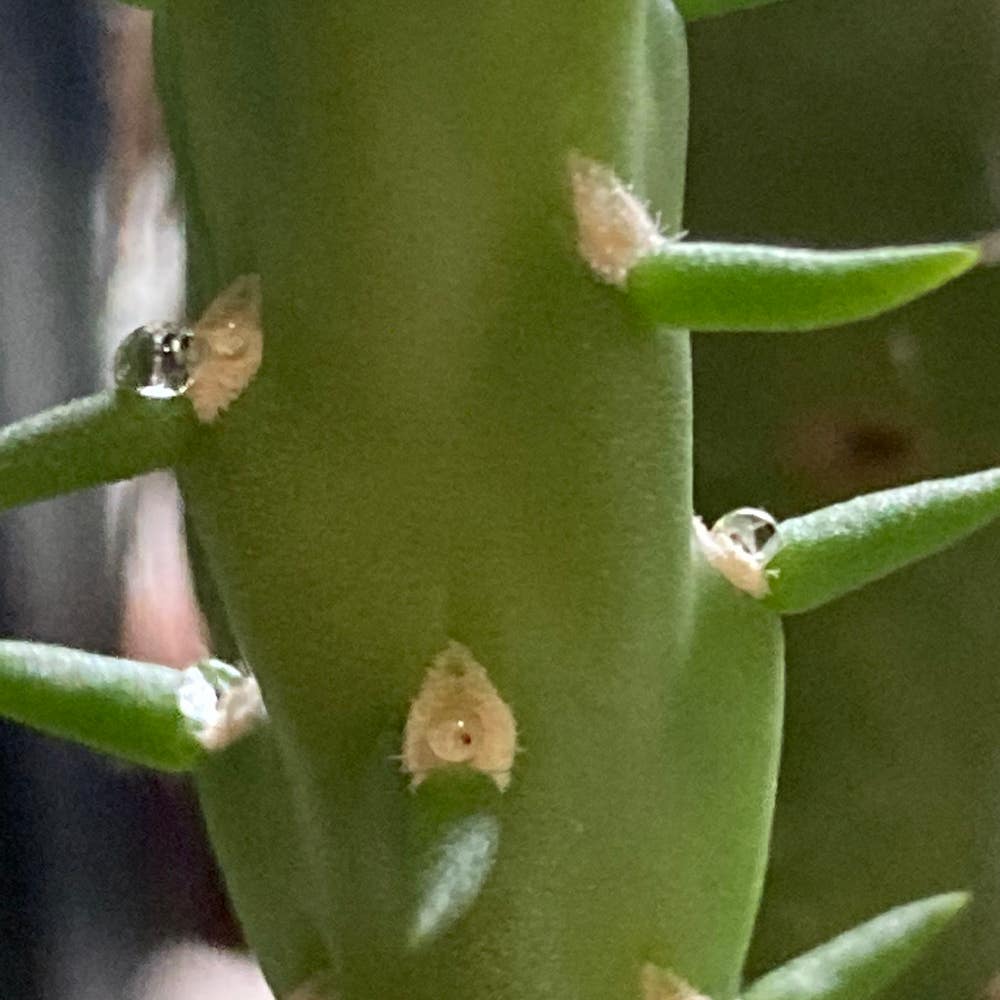
🌵 Why Your Cylindropuntia bigelovii Leaves Are Falling Over
Cylindropuntia bigelovii
By the Greg Editorial Team
Jul 28, 2024•5 min read
This article was created with the help of AI so we can cover more plants for you. May contain errors. See one? Report it here.
Ensure your 'Teddy Bear' cactus 🌵 stands proud with these vital stability and care secrets!
- 🌵 Insufficient support and rapid growth may cause leaves to fall over.
- 💧 Water wisely—overwatering and underwatering both lead to droopy leaves.
- ✂️ Prune and support for balance; adjust light and temperature for stability.
Identifying the Cause
🛠️ Insufficient Support
Cylindropuntia bigelovii, with its unique structure, may sometimes struggle to keep its leaves upright.
- The plant's rapid growth can lead to a top-heavy form that requires additional support.
- Consider using stakes or other structures to provide stability, much like a scaffold for a building.
💧 Watering Issues
Watering practices are crucial in maintaining the structural integrity of your Cylindropuntia bigelovii.
- Overwatering can lead to root rot, weakening the plant's foundation and causing leaves to droop.
- Conversely, underwatering deprives the plant of necessary moisture, resulting in dry, brittle leaves that lack the strength to stand.
🌞 Light and Temperature
The right balance of sunlight and temperature is essential for a sturdy Cylindropuntia bigelovii.
- Insufficient light causes the plant to stretch towards the light source, which can weaken the leaves and make them prone to falling over.
- Extreme temperatures or direct sunlight can scorch the leaves, damaging their structure and stability.
Structural Solutions
🌿 Providing Support
Cylindropuntia bigelovii, with its unique structure, may sometimes need a bit of help to stay upright. Here's how to give it the support it needs:
- Stakes: Use stakes made of bamboo or small dowels for a simple and effective solution. Insert them close to the main stem and secure the plant with soft ties, allowing some movement.
- Trellises: For larger plants, a trellis can provide extensive support, encouraging upward growth and stability.
- Plant clips or ties: These can be gently attached to the plant and stake, offering support without damaging the plant. Be careful not to tie them too tightly.
🌱 Pruning for Balance
Pruning is essential for maintaining the plant's balance and preventing leaves from falling over. Here's how to prune your Cylindropuntia bigelovii:
- Remove Excess Weight: Snip off any damaged or excessively heavy branches to redistribute the plant's energy and maintain its shape.
- Encourage Growth: By pruning above the woody parts, you promote new growth and help the plant focus its resources on healthy leaves.
- Use the Right Tools: Always use clean, sharp tools to make precise cuts and avoid damaging the plant.
Environmental Optimization
🚿 Adjusting Watering Practices
Watering your Cylindropuntia bigelovii correctly is crucial to prevent leaves from falling over. Here's how to get it right:
- Water based on the plant's environment, not a set schedule. More water may be needed in a sunny, warm location and less in a cooler, shaded spot.
- In high humidity, reduce watering frequency since the air's moisture helps the plant stay hydrated.
- Adjust watering with the seasons—less in winter when growth slows, and more in summer during active growth periods.
- Aim for the soil, not the leaves, to avoid fungal diseases and ensure the roots receive adequate moisture.
🌞 Regulating Sunlight and Temperature
Creating the ideal conditions for your Cylindropuntia bigelovii will help keep it upright and healthy:
- Provide bright, indirect light to avoid leaf scorch and drooping. Rotate the plant for even light exposure.
- Avoid dramatic temperature fluctuations. Keep the plant in a stable environment, away from cold drafts and excessive heat.
- Consider using shade cloths in summer to protect from intense sunlight and during winter, move the plant to a well-lit, warm area.
- Monitor the plant's response to environmental changes and adjust your care routine accordingly.
Root and Soil Health
Assessing Root Health
🔍 Root health is crucial for keeping your Cylindropuntia bigelovii upright. Here's how to check for issues:
- Gently remove the plant from its pot and inspect the roots. Healthy roots are firm and white, not soft or discolored.
- Sniff the roots. A foul odor can indicate rot, a serious problem that needs immediate attention.
- After any necessary treatment, ensure the plant receives ample sunlight and proper ventilation to prevent future issues.
Soil Quality and Drainage
🌱 The right soil and drainage are non-negotiable for your plant's stability:
- Choose a well-draining potting mix to prevent waterlogged roots.
- Make sure your pots have drainage holes and that they're not obstructed.
- Test soil moisture before watering to avoid overwatering—your plant's roots need air as much as they need water.
- Periodically check the soil's nutrient content; a balanced diet is key for strong roots.
Pest and Disease Control
Identifying Pests and Diseases
- Watch for symptoms like sticky residue, discolored leaves, or unusual leaf texture changes.
- Common pests include aphids, spider mites, and whiteflies, which can sap nutrients and cause leaves to droop.
- Diseases such as root rot, stem blight, leaf spot, and powdery mildew can also lead to leaf drop.
- Regular inspections of leaves, stems, and soil can help catch these issues early.
🛡️ Treatment and Prevention
- Remove affected leaves and apply organic treatments like neem oil or insecticidal soap for pests.
- For fungal diseases, remove the infected parts and use a suitable fungicide.
- Prevent infestations by practicing good hygiene, such as keeping the plant area clean and avoiding overwatering.
- Ensure proper soil drainage and quarantine new plants to prevent the spread of diseases.
⚠️ Safety First
This content is for general information and may contain errors, omissions, or outdated details. It is not medical, veterinary advice, or an endorsement of therapeutic claims.
Always consult a qualified healthcare professional before using any plant as food, medicine, or supplement.
Never eat any plant (or feed one to pets) without confirming its identity with at least two trusted sources.
If you suspect poisoning, call Poison Control (800) 222-1222, the Pet Poison Helpline (800) 213-6680, or your local emergency service immediately.
Spotted an error? Please report it here.
Keep your Cylindropuntia bigelovii upright 🌵 with Greg's tailored care reminders, ensuring it never loses its poise due to watering woes or light lapses!