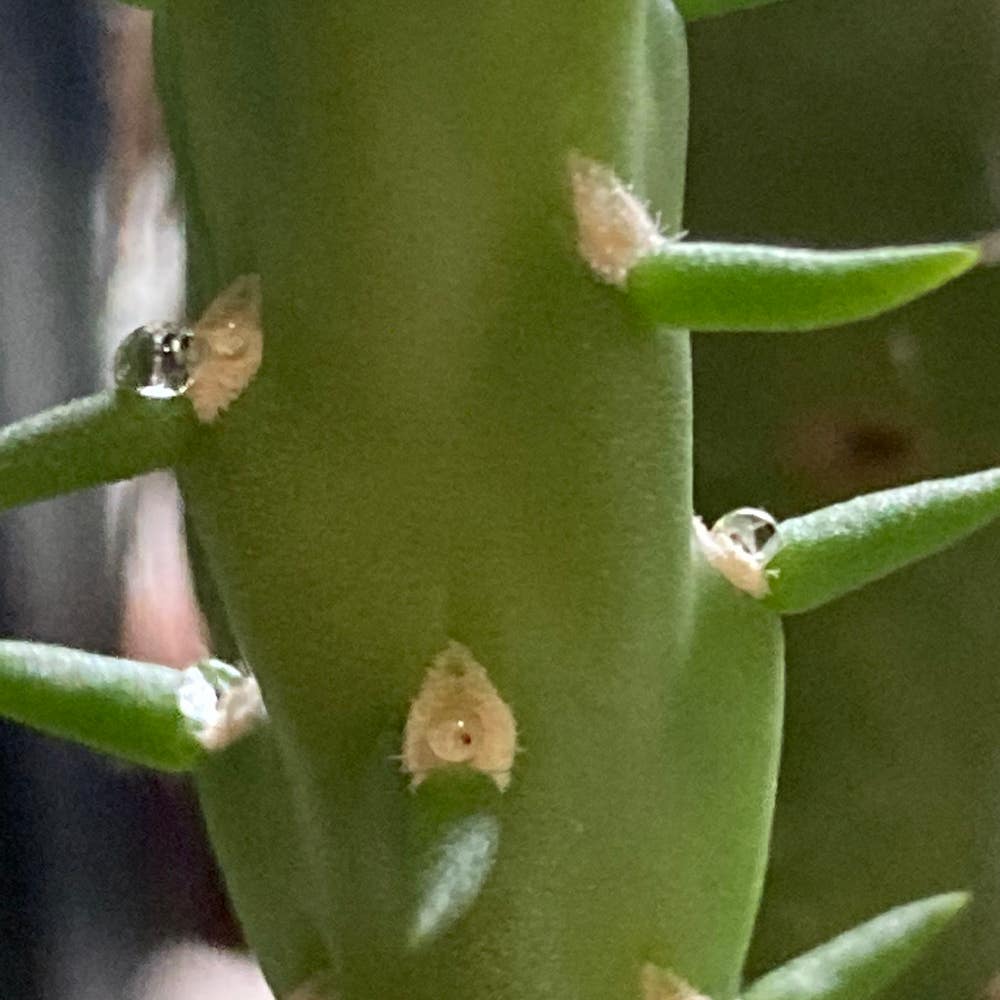
🌵 How to Cure Curling Leaves on Your Cylindropuntia bigelovii
Cylindropuntia bigelovii
By the Greg Editorial Team
Jul 28, 2024•3 min read
This article was created with the help of AI so we can cover more plants for you. May contain errors. See one? Report it here.
Revive your Cylindropuntia bigelovii 🌵 by tackling leaf curl with these expert care tips!
- 🌡️🌞 Temperature, light, water, soil, pests cause leaf curl in Cylindropuntia bigelovii.
- 💦🐜 Adjust care and environment to fix and prevent leaf curl.
- 🔄 Regular care and monitoring ensure plant health and resilience.
Identifying Causes of Leaf Curl
🌡️ Temperature and Light Stress
- Cylindropuntia bigelovii thrives in stable conditions; extreme temperature fluctuations and drafts can lead to leaf curl.
- Direct sunlight can be too intense, causing leaves to curl as a shield, while insufficient light makes leaves stretch and curl towards the light source.
💧 Watering Issues
- The balance of moisture is crucial: overwatering leads to root rot and leaf curl, while underwatering prompts leaves to curl inwards in an effort to conserve water.
- Water quality matters; high mineral content in tap water can negatively affect the plant, contributing to leaf curl.
🌱 Soil and Drainage
- Soil that retains too much water or lacks aeration can suffocate roots, causing leaves to curl.
- The right soil pH is necessary for nutrient uptake, with imbalances potentially leading to leaf curl.
🐛 Pest Problems
- Pests like spider mites can be stealthy, hiding under leaves and causing curling; look for subtle signs like webbing.
- Treat infestations with insecticidal soap or neem oil to prevent pests from causing further leaf curl.
Correcting Curling Leaves
🌡️ Adjusting Temperature and Light
- Identify the ideal temperature range for your Cylindropuntia bigelovii, typically between 65-75°F, and maintain it to prevent stress from temperature fluctuations.
- Ensure the plant receives bright, indirect light, moving it away from direct sunlight if necessary to avoid leaf burn and curling.
💧 Optimizing Watering Practices
- Adopt the soak and dry method: water deeply, then allow the soil to dry out completely before watering again.
- Use moisture meters to gauge when it's time to water, adjusting your schedule to the plant's needs rather than sticking rigidly to a calendar.
🌱 Improving Soil Conditions
- Ensure the potting mix is well-draining to prevent waterlogged roots, which can cause leaf curl.
- Repot the plant every couple of years with fresh soil to maintain nutrient levels and soil structure.
🐜 Eradicating Pests
- Regularly inspect your Cylindropuntia bigelovii with a magnifying glass for early detection of pests.
- If pests are found, use an appropriate insecticide or neem oil to eliminate them and prevent further leaf curling.
Preventing Future Leaf Curl
🌿 Routine Care Schedule
A consistent care routine is like a steady heartbeat for your Cylindropuntia bigelovii, keeping it robust and resilient. Here's how to establish one:
- Watering: Set a regular watering schedule, adjusting only for seasonal humidity and temperature changes.
- Feeding: Fertilize with a balanced, water-soluble solution every few months, but remember, moderation is key.
- Pruning: Regularly remove damaged foliage to promote new growth and prevent disease, akin to maintaining good hygiene.
- Monitoring: Keep an eye out for subtle changes in leaf color or texture, which can be early indicators of stress.
🌱 Acclimation and Placement
To prevent stress that can lead to leaf curling, consider these best practices for plant placement and acclimation:
- Gradual Introduction: When changing locations, do it slowly to avoid environmental shock.
- Stable Environment: Choose a spot with consistent light and temperature to keep your plant from experiencing dramatic shifts.
- Regular Rotation: Rotate your plant periodically to ensure even growth and prevent one-sided leaf droop.
⚠️ Safety First
This content is for general information and may contain errors, omissions, or outdated details. It is not medical, veterinary advice, or an endorsement of therapeutic claims.
Always consult a qualified healthcare professional before using any plant as food, medicine, or supplement.
Never eat any plant (or feed one to pets) without confirming its identity with at least two trusted sources.
If you suspect poisoning, call Poison Control (800) 222-1222, the Pet Poison Helpline (800) 213-6680, or your local emergency service immediately.
Spotted an error? Please report it here.
Keep your Cylindropuntia bigelovii thriving 🌵 with Greg's environmental monitoring that ensures perfect watering, light, and temperature to prevent those pesky leaf curls.