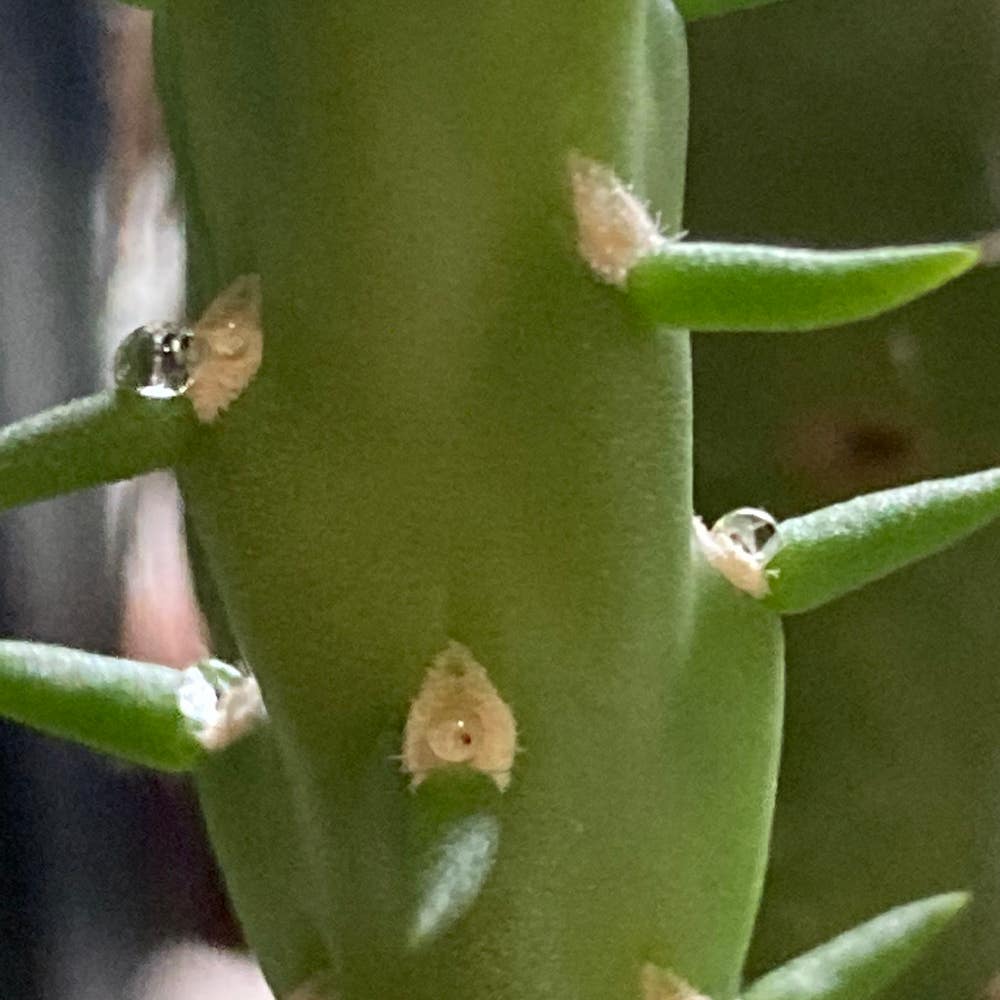
🌵 How to Cure Yellow Leaves on Your Cylindropuntia bigelovii
Cylindropuntia bigelovii
By the Greg Editorial Team
Jul 28, 2024•4 min read
This article was created with the help of AI so we can cover more plants for you. May contain errors. See one? Report it here.
Turn your Cylindropuntia bigelovii's frown 🌵 upside down by tackling yellow leaves with our expert guide!
- 🌵 Over/underwatering and nutrients cause yellow leaves; adjust water and fertilization.
- 🕵️♂️ Diagnose by checking soil, roots, and plant appearance for distress signs.
- 🛡️ Prevent with consistent care, monitoring, and adapting to your plant's signals.
Identifying Causes of Yellowing
Yellow leaves on your Cylindropuntia bigelovii can be alarming, but pinpointing the cause is the first step to recovery.
💧 Water-Related Stress
- Overwatering: Look for yellow leaves that feel limp or mushy, a sign the roots may be drowning.
- Underwatering: Dry, crispy leaves and soil that's as parched as a desert indicate your plant is thirsty.
💡 Nutrient Imbalances
- Deficiencies: Yellowing often starts when your plant lacks nitrogen, iron, or magnesium—think of it as a poor diet for your cactus.
- Excesses: Over-fertilizing can lead to nutrient burn, turning leaves yellow as if they've had too much of a good thing.
🐜 Pest and Disease Influence
- Pests: Leaf miners and other critters can turn leaves yellow as they damage plant tissues.
- Diseases: Watch for yellow leaves with spots or patterns, which could signal issues like black spot or fungal infections.
Step-by-Step Diagnosis
🌱 Soil and Root Examination
To get to the root of the issue, start by feeling the soil. If it's soggy days after watering, that's a red flag. Here's how to check for soil and root health:
- Grab a handful of soil. If it clings like wet clay, it's too moist.
- Gently remove the plant from its pot to inspect the roots. Healthy roots are firm and white, not soft or discolored.
- Sniff the roots. Any foul odor is a telltale sign of rot.
🌵 Plant Observation
Next, take a close look at your Cylindropuntia bigelovii:
- Examine the leaves for size, shape, and color deviations.
- Check for spots, marks, or pests that could indicate disease or nutrient issues.
- Observe the plant's growth compared to previous checks to spot any stunting or irregularities.
Treating Yellow Leaves
💧 Watering Adjustments
Yellow leaves on your Cylindropuntia bigelovii often cry out for watering adjustments. Here's how to get it just right:
- Ditch the rigid watering schedule. Instead, check the soil moisture a couple of inches down; if it's dry, it's time to water.
- Adapt to your environment. More heat means your plant might be thirstier, so increase watering frequency accordingly.
- Avoid overcorrection. A steady sip is better than a gulp to prevent overwatering.
🌿 Nutrient Correction
Balancing your plant's diet is key to combating yellow leaves:
- Use a balanced fertilizer, and apply it only when the soil is moist.
- Conduct a soil test to pinpoint deficiencies and adjust your fertilization strategy.
- Remember, moderation is crucial. Overfeeding can cause nutrient burn, which can also lead to yellowing.
🦠 Pest and Disease Management
Pests and diseases can turn leaves yellow too. Here's what to do:
- Keep an eye out for common pests and signs of disease.
- Maintain dry conditions where necessary to prevent fungal and bacterial growth.
- Treat any infections with appropriate fungicides or bactericides, and prune away affected foliage to prevent spread.
Preventing Yellow Leaves
🌵 Consistent Care Routine
Establishing a consistent care routine is crucial for keeping your Cylindropuntia bigelovii vibrant and healthy. Think of it as a wellness plan tailored to your plant's unique needs.
- Water your plant following a regular schedule, adjusting for seasonal humidity and temperature changes.
- Provide bright, indirect light to prevent sunburn while ensuring your cactus gets enough energy.
- Apply a balanced fertilizer regimen, avoiding the extremes of over or underfeeding.
🩺 Ongoing Monitoring
Regular plant check-ups are the equivalent of preventative medicine for your Cylindropuntia bigelovii. By staying alert to subtle changes, you can preempt issues before they escalate.
- Inspect your plant weekly for signs of stress, such as changes in leaf color or texture.
- Be responsive to your plant's distress signals, tweaking care practices as necessary.
- Keep an eye on environmental stability, ensuring that your plant isn't exposed to drastic changes in temperature or light.
⚠️ Safety First
This content is for general information and may contain errors, omissions, or outdated details. It is not medical, veterinary advice, or an endorsement of therapeutic claims.
Always consult a qualified healthcare professional before using any plant as food, medicine, or supplement.
Never eat any plant (or feed one to pets) without confirming its identity with at least two trusted sources.
If you suspect poisoning, call Poison Control (800) 222-1222, the Pet Poison Helpline (800) 213-6680, or your local emergency service immediately.
Spotted an error? Please report it here.
Ensure your Cylindropuntia bigelovii stays vibrant 🌵 with Greg's tailored care reminders, helping you nip yellow leaves in the bud for a thriving desert buddy.