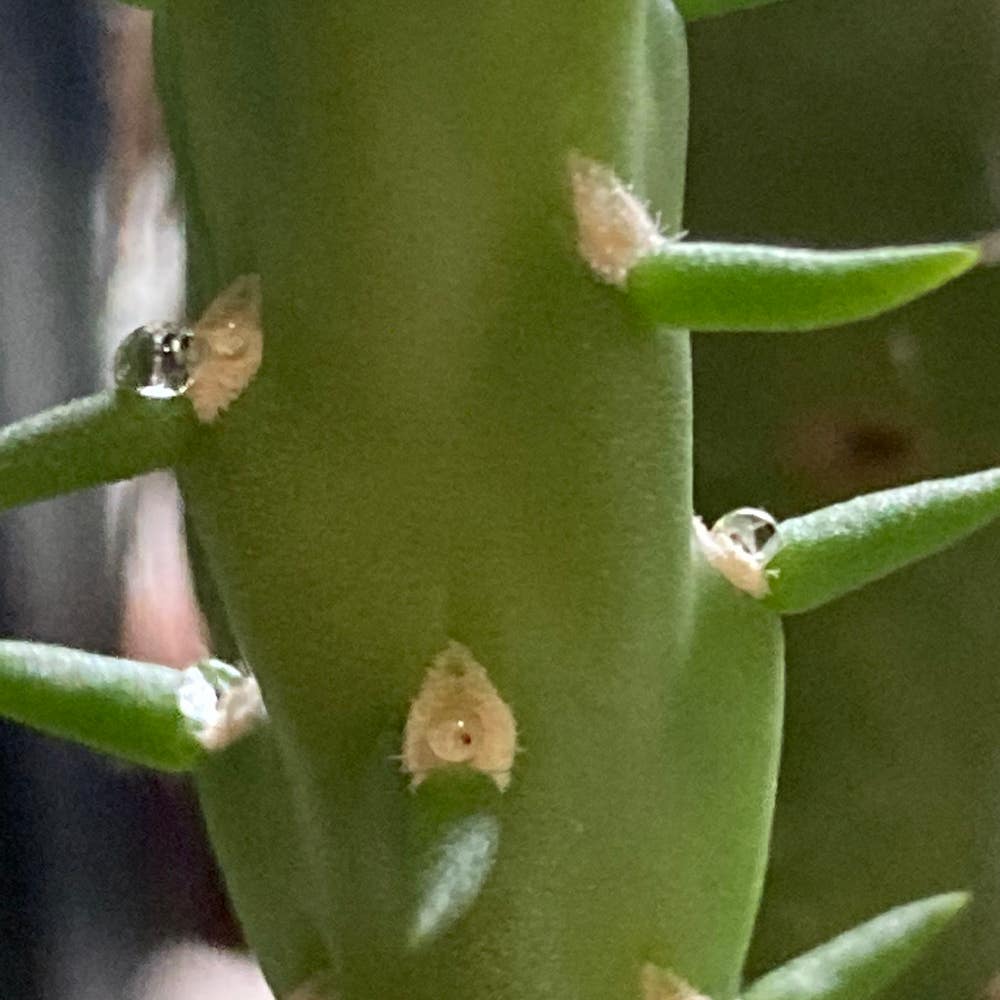
Best Practices for Repotting Cylindropuntia bigelovii
Cylindropuntia bigelovii
By the Greg Editorial Team
Jul 28, 2024•4 min read
This article was created with the help of AI so we can cover more plants for you. May contain errors. See one? Report it here.
Ensure your cactus thrives 🌵 by mastering the timely art of repotting!
- 🌵 Roots circling or poking out? Time to repot your Cylindropuntia bigelovii.
- 🧤 Use gloves, tongs, or newspaper to handle spines safely during repotting.
- 🪴 Terracotta or clay pots with well-draining soil ensure a happy cactus post-repot.
Recognizing Repotting Time
🌱 Root Check
- Gently remove your Cylindropuntia bigelovii from its pot to check for roots that are circling or appearing through drainage holes.
- Roots should be firm and white, not brown and mushy. If they're tightly packed, it's a clear signal for more space.
📈 Growth Monitoring
- Observe your plant's growth rate; a noticeable slowdown can mean it's time to repot.
- Watch for leaves that are less vibrant or wilting despite proper watering, as these can be subtle hints of a cramped root system.
💧 Drainage Observation
- If water zips through the pot without retention, it's a sign the roots may have taken over the soil space.
- A sinking plant or compacted potting mix also suggests poor drainage, indicating it's time for a fresh start with new soil.
Repotting Step-by-Step
🌵 Preparation
Before diving into the repotting of your Cylindropuntia bigelovii, it's crucial to have everything you need at hand. This preparation will make the process smoother and safer for both you and the plant.
- Clear a workspace and cover it with newspaper or a tarp to catch soil spills.
- Gather your tools: gloves, a new pot with drainage holes, fresh cactus potting mix, a trowel, and pruning shears.
- Sanitize your tools to prevent the spread of disease.
- Ensure the new pot is about 2 inches larger in diameter than the old one to give your plant room to grow.
🌵 Safe Removal
The spiny nature of Cylindropuntia bigelovii requires careful handling during removal from its current pot. Protecting yourself and the plant is paramount.
- Wear thick gloves or use a folded towel to grasp the plant when removing it from the pot.
- Water the plant lightly the day before to make the roots more pliable.
- Tilt the pot and gently coax the plant out. If it's stubborn, run a knife or spatula around the inside edge to help loosen the roots.
🌵 Transplanting
Now that your Cylindropuntia bigelovii is out, it's time to settle it into its new home.
- Place a layer of cactus potting mix at the bottom of the new pot.
- Inspect the root ball, trimming any dead or excessively long roots to promote healthy growth.
- Set the plant in the center of the new pot at the same depth it was previously.
- Fill in around the roots with more potting mix, tapping the pot to settle the soil without compacting it too much.
Selecting Pot and Soil
🏺 Pot Material Choices
Choosing the right pot for your Cylindropuntia bigelovii isn't just about aesthetics; it's about breathability and moisture management. Let's break it down:
- Terracotta: The MVP of moisture control. Its porous nature allows the soil to breathe, reducing the risk of waterlogging and root rot.
- Clay: Similar to terracotta, clay pots offer good breathability and a classic look.
- Plastic: The lightweight option. It retains moisture longer, which can be beneficial or detrimental, depending on your watering routine.
Remember, no matter the material, drainage holes are non-negotiable—they're the safety net against overwatering.
🌱 Soil Mix Essentials
Now, let's talk dirt. Cylindropuntia bigelovii thrives in a well-draining soil mix that mimics its natural, arid habitat. Here's a mix that will make your cactus happy:
- Base: Start with a succulent or cactus mix as your foundation.
- Add-ins: Jazz it up with perlite or sand to improve drainage and prevent any soggy soil situations.
This combo ensures your spiky friend has the perfect balance of nutrients and drainage to flourish.
Overcoming Repotting Challenges
Handling Spines
🌵 Repotting Cylindropuntia bigelovii can be a prickly affair, quite literally. To handle its spiny nature without turning your hands into pincushions, here's what you need:
- Thick gloves, preferably leather or specialized cactus handling gloves, to protect your hands.
- Tongs or folded newspaper to grip and maneuver the plant safely.
- A drop cloth or newspaper to catch any fallen spines and make cleanup a breeze.
Minimizing Transplant Shock
🌱 Transplant shock can make your Cylindropuntia bigelovii sulk, but with these techniques, you can help it bounce back:
- Repot during a growth phase, avoiding the blooming or dormant periods.
- Keep the new environment similar to the old one in terms of light and temperature.
- Water gently after repotting; the soil should be moist but not soggy.
- Avoid fertilizing for at least a month to give your plant time to settle in.
- Monitor your plant closely for the first few weeks and adjust care as needed.
⚠️ Safety First
This content is for general information and may contain errors, omissions, or outdated details. It is not medical, veterinary advice, or an endorsement of therapeutic claims.
Always consult a qualified healthcare professional before using any plant as food, medicine, or supplement.
Never eat any plant (or feed one to pets) without confirming its identity with at least two trusted sources.
If you suspect poisoning, call Poison Control (800) 222-1222, the Pet Poison Helpline (800) 213-6680, or your local emergency service immediately.
Spotted an error? Please report it here.
Repot your Cylindropuntia bigelovii with confidence and avoid transplant shock 🌵 by following Greg's tailored growth and environment tracking for a perfect transition.