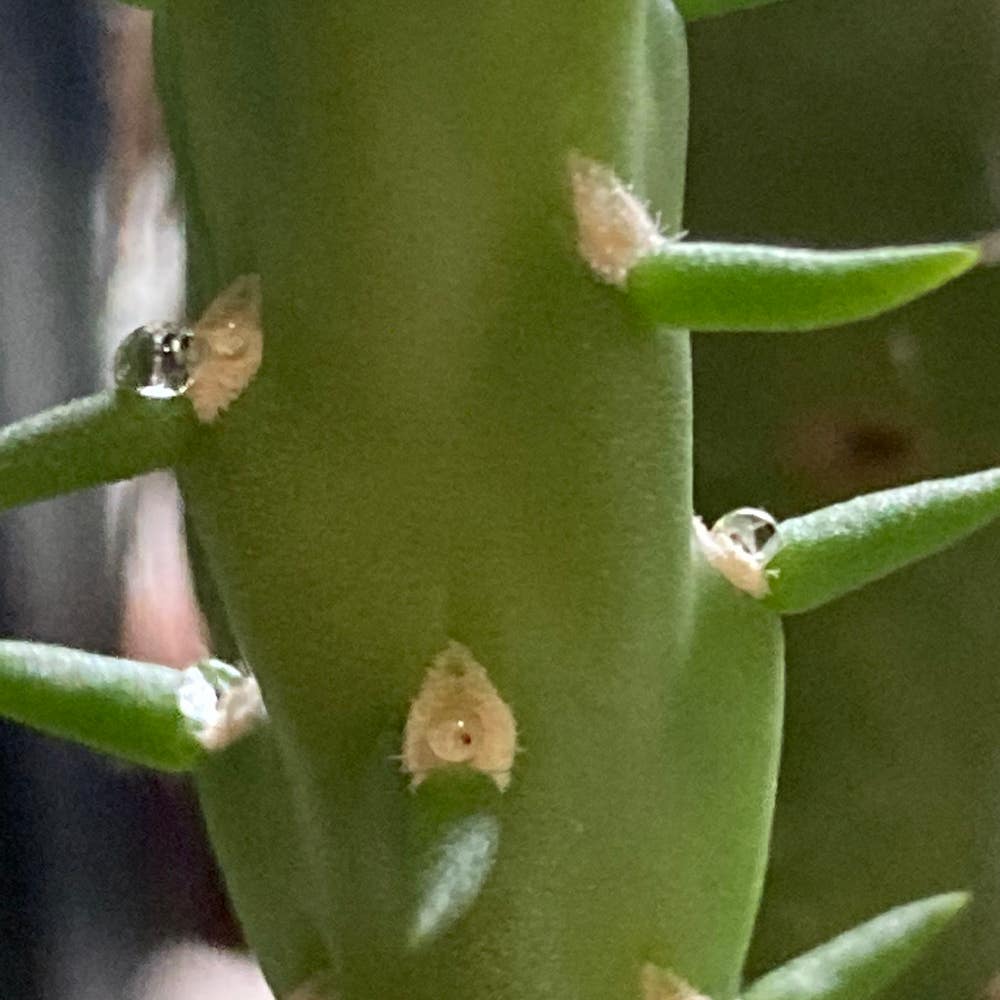
🌵 Cylindropuntia bigelovii Wilting? Here's What to Do
Cylindropuntia bigelovii
By the Greg Editorial Team
Jul 28, 2024•5 min read
This article was created with the help of AI so we can cover more plants for you. May contain errors. See one? Report it here.
Bring your Cylindropuntia bigelovii back to life 🌵 with these fail-proof revival strategies!
- Water wisely—adjust watering to prevent over/underwatering wilting.
- Shade from heat—mitigate heat stress with proper placement and ventilation.
- Inspect and adapt—check soil, roots, and environment to diagnose wilting causes.
Wilting Causes
💧 Water Imbalance
Water stress in Cylindropuntia bigelovii can manifest as either overwatering or underwatering. Here's how to tell the difference:
- Overwatering: Look for yellowing leaves, a sign of distress. The soil will feel soggy, and the plant may appear wilted despite the wet soil.
- Underwatering: The plant will have dry, brittle leaves and the soil will pull away from the pot's edge, indicating a thirst for moisture.
Adjust your watering practices by ensuring the soil is dry to the touch before watering again, and always drain excess water to prevent root rot.
🌡️ Heat Exposure
Cylindropuntia bigelovii can suffer from heat stress, especially during hot spells. Recognize the signs:
- Leaves may appear limp and lose their firmness.
- Discoloration or dry, brittle texture can indicate too much direct sunlight.
Mitigate heat stress by moving your plant to a cooler, shaded area and ensuring good air circulation around it.
🦠 Disease Unlikelihood
While diseases are rare in Cylindropuntia bigelovii, it's important to be vigilant. Here's what to look out for:
- Unusual spots or lesions on leaves and stems could signal a problem.
- A sudden decline in plant vitality, such as drooping or yellowing leaves, may not necessarily be disease-related.
Focus on non-disease causes of wilting first, as pathogenic wilt is less common in this species. If you suspect a disease, consult a plant expert for a definitive diagnosis.
Diagnosis Steps
Visual Inspection
- Begin by examining the entire Cylindropuntia bigelovii for signs of distress, such as discolored or wilted leaves and unusual plant posture.
- Note the condition of both older and younger leaves, and check for any abnormalities in the stems and buds.
🌿 Soil and Roots Check
- Feel the soil; it should be neither bone-dry nor excessively damp. Use a soil moisture meter for a more precise assessment.
- Gently remove the plant from its pot to inspect the roots. Healthy roots should be firm and a light color, not black or mushy.
🌞 Environmental Factors
- Review the plant's exposure to light and temperature, ensuring it's not subjected to extreme conditions.
- Consider the plant's placement and whether recent environmental changes might be contributing to the wilting.
Revival Strategies
💧 Watering Adjustments
Proper hydration is essential for a Cylindropuntia bigelovii's comeback. Here's how to get it right:
- Check the soil moisture before watering; the top inch should be dry to the touch.
- For dehydrated plants, consider bottom watering to allow the roots to take up moisture gradually.
🌡️ Temperature Control
Cylindropuntia bigelovii can wilt under extreme temperatures. Keep it cool with these tips:
- Move your plant to a location with a more suitable temperature range.
- Provide shade and ensure good airflow to combat heat stress.
✂️ Pruning and Care
Pruning can encourage a swift recovery. Follow these steps:
- Use sterilized shears to trim away any damaged leaves, redirecting energy to healthy growth.
- If the plant is severely stressed, repotting with fresh, well-draining soil can promote root health.
Prevention Tips
💧 Watering Routine
Preventing wilting in your Cylindropuntia bigelovii starts with mastering the watering schedule. Here's how to get it right:
- Establish a consistent watering routine, considering your plant's unique needs and the current season.
- Use tools like moisture meters or the trusty finger test to gauge soil moisture before watering.
🌿 Environmental Stability
A stable environment keeps your Cylindropuntia bigelovii happy and wilt-free. To maintain this stability:
- Gradually acclimate your plant to changes in light and temperature to prevent shock.
- Choose a location that mimics the plant's natural habitat, with plenty of light and good air circulation.
Seeking Help
🌿 Expert Consultation
Sometimes, despite all your efforts, your Cylindropuntia bigelovii might still show signs of distress. It's crucial to recognize when it's time to seek professional help.
- If your plant's condition doesn't improve after adjusting water and heat conditions, consult a local nursery or plant specialist.
- Nurseries and plant clinics can offer a quick diagnosis, much like an emergency room for your plant.
- For immediate advice, consider using apps like Greg or PictureThis, which connect you with botanical experts at the tap of a screen.
Local gardening clubs and online forums can also be treasure troves of information. They provide a platform for sharing experiences and solutions that might be specific to your plant's issues.
- Reach out to gardening groups or plant care communities like Terrarium Tribe for collective wisdom.
- Don't hesitate to post pictures and ask for advice on platforms such as Reddit's houseplant discussion group.
Remember, seeking help is a proactive step towards the health of your Cylindropuntia bigelovii, not a sign of defeat. Experts and fellow enthusiasts are usually more than willing to assist, and their guidance can be invaluable in reviving your cherished plant.
Encouraging Conclusion
Rest assured, your Cylindropuntia bigelovii's wilting leaves don't spell the end. With the right approach, your spiny friend can bounce back, ready to add its unique texture to your space once again.
- Remember, plants like these are survivors, having adapted to thrive in challenging environments. Your care and attention can make all the difference.
- Stay vigilant with your watering routine, mindful of heat exposure, and quick to adjust your plant's environment when needed.
By embracing these proactive care measures, you're setting the stage for a robust Cylindropuntia bigelovii. Here's to the satisfaction of watching your plant flourish under your guardianship!
⚠️ Safety First
This content is for general information and may contain errors, omissions, or outdated details. It is not medical, veterinary advice, or an endorsement of therapeutic claims.
Always consult a qualified healthcare professional before using any plant as food, medicine, or supplement.
Never eat any plant (or feed one to pets) without confirming its identity with at least two trusted sources.
If you suspect poisoning, call Poison Control (800) 222-1222, the Pet Poison Helpline (800) 213-6680, or your local emergency service immediately.
Spotted an error? Please report it here.
Revive your wilting Cylindropuntia bigelovii 🌵 by tapping into Greg's community wisdom and tailored care plans for a desert champion in your home.