🌵 Cylindropuntia bigelovii: Not an Invasive Plant
Cylindropuntia bigelovii
By the Greg Editorial Team
Jul 28, 2024•4 min read
This article was created with the help of AI so we can cover more plants for you. May contain errors. See one? Report it here.
Embrace Cylindropuntia bigelovii 🌵, the eco-friendly cactus that beautifies without overpowering your garden.
- 🌵 Cylindropuntia bigelovii is non-invasive, meeting specific ecological criteria.
- 💧 Survives arid conditions, contributing to local biodiversity without out-competing.
- 🌼 Unique appeal and low maintenance make it a sustainable garden choice.
Defining Non-Invasiveness
In the gardening world, a plant's invasiveness is a hot topic. To be deemed non-invasive, a species must tick certain boxes. Here's a breakdown of those criteria:
- The plant should not be nonindigenous to the area.
- It must not have the potential to naturalize and spread rapidly in regions where it's not native.
- The species should not be able to out-compete native flora or exist in high numbers outside of managed habitats.
- It should not be widespread or form dense populations that could dominate ecosystems.
🌵 Cylindropuntia bigelovii, commonly misunderstood, actually meets the non-invasive criteria:
- It's indigenous to the southwestern United States and parts of Mexico, fitting seamlessly into local ecosystems.
- Its growth is self-limiting, lacking the aggressive spread characteristic of invasive species.
- It does not out-compete other plants; rather, it coexists, contributing to biodiversity.
- It's not found in high densities that could threaten other species' survival.
Understanding these points helps clarify why Cylindropuntia bigelovii is a responsible choice for gardeners seeking an eco-friendly addition to their landscapes.
Natural Growth Patterns
Cylindropuntia bigelovii, commonly known as the teddy bear cholla, exhibits a growth pattern that is both fascinating and well-suited to its native desert habitats. In these environments, the plant's segmented stems allow it to thrive under extreme conditions.
Growth in Varied Environments:
- In the wild, it typically grows in arid regions with well-drained soil.
- In gardens, it can be cultivated in rockeries or cactus beds, mimicking its natural setting.
Natural Growth Limitations:
- Water scarcity in its native habitat naturally curbs excessive spread.
- Its slow growth rate means it doesn't quickly overrun areas, unlike some invasive species.
The plant's ability to store water in its stems and roots is a key adaptation for survival during prolonged dry spells. The spines, while intimidating, serve a dual purpose: they protect the plant from herbivores and minimize water loss by shading the stem and reducing air movement.
- Pollination and Seed Dispersal:
- Flowers bloom in response to environmental cues, ensuring synchronization with pollinator activity.
- The resulting fruits contain seeds that are primarily dispersed by wildlife, adding a natural check on rapid spread.
Understanding these patterns is crucial for gardeners who wish to cultivate Cylindropuntia bigelovii responsibly, ensuring it remains a sustainable and non-invasive addition to their landscapes.
Cultivating Responsibly
Integrating Cylindropuntia bigelovii into your garden requires a blend of creativity and caution. Here's how to do it with finesse:
Design Integration:
- Use Cylindropuntia bigelovii as a focal point in rockeries or dry garden areas, capitalizing on its unique texture and form.
- Pair with other drought-tolerant plants to create a water-wise landscape that requires minimal maintenance.
- Consider container planting to control growth and add mobility, allowing you to shift the plant's position as needed.
Growth Management:
- Water moderately from spring to fall, allowing the soil to dry completely before the next watering, mimicking its natural arid conditions.
- Suspend watering in winter to prevent root rot, especially for potted specimens.
- Monitor for pests like scale insects and address promptly to maintain plant health.
- Ensure good air circulation and avoid overwatering to reduce the risk of fungal diseases.
- Quarantine new plants to prevent disease spread before integrating them with established specimens.
🌵 By following these tips, you'll ensure that Cylindropuntia bigelovii thrives in your garden without becoming unruly. Remember, responsible cultivation is key to enjoying this plant's beauty and ecological benefits.
Unique Plant Qualities
Cylindropuntia bigelovii stands out in the cactus family with its distinct features. Unlike its relatives, which may exhibit a wide range of characteristics, this species maintains a consistent aesthetic that's both striking and manageable.
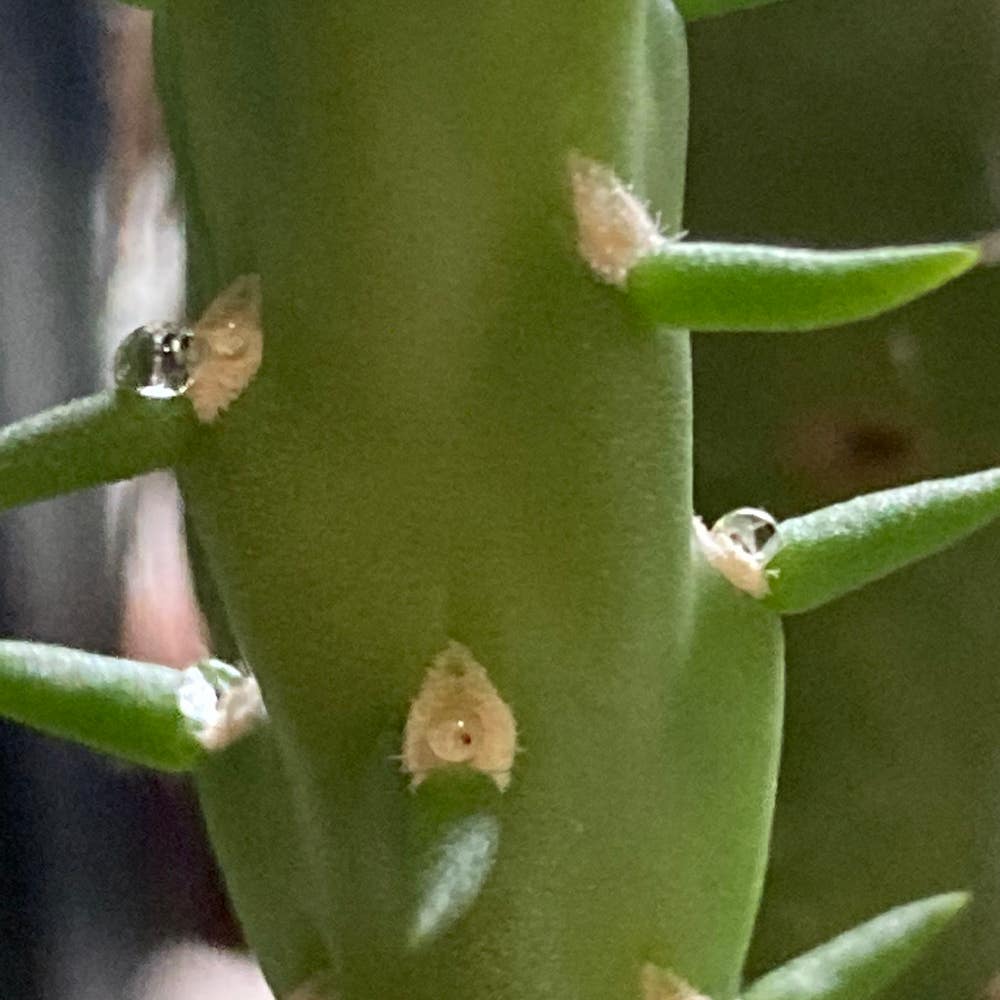
- Visual Appeal: Its cylindrical segments, covered in small humps, create a rope-like texture that's visually fascinating.
- Floral Display: The purple or purplish-red flowers are not just showy; they're conversation starters.
- Wildlife Benefits: Special value to native bees, this cactus is more than just a pretty face in the ecosystem.
In garden settings, Cylindropuntia bigelovii offers unique advantages.
- Drought Tolerance: It thrives in arid conditions, making it an ideal choice for water-wise gardens.
- Maintenance: Low maintenance needs mean it's perfect for gardeners who appreciate beauty without the fuss.
- Design Versatility: Whether as a focal point or part of a desert-themed landscape, it adds texture and interest to any garden design.
⚠️ Safety First
This content is for general information and may contain errors, omissions, or outdated details. It is not medical, veterinary advice, or an endorsement of therapeutic claims.
Always consult a qualified healthcare professional before using any plant as food, medicine, or supplement.
Never eat any plant (or feed one to pets) without confirming its identity with at least two trusted sources.
If you suspect poisoning, call Poison Control (800) 222-1222, the Pet Poison Helpline (800) 213-6680, or your local emergency service immediately.
Spotted an error? Please report it here.
Cultivate your teddy bear cholla to thrive in harmony with local ecosystems, and let Greg 🌵 guide you in creating a biodiverse, water-wise garden with minimal fuss.