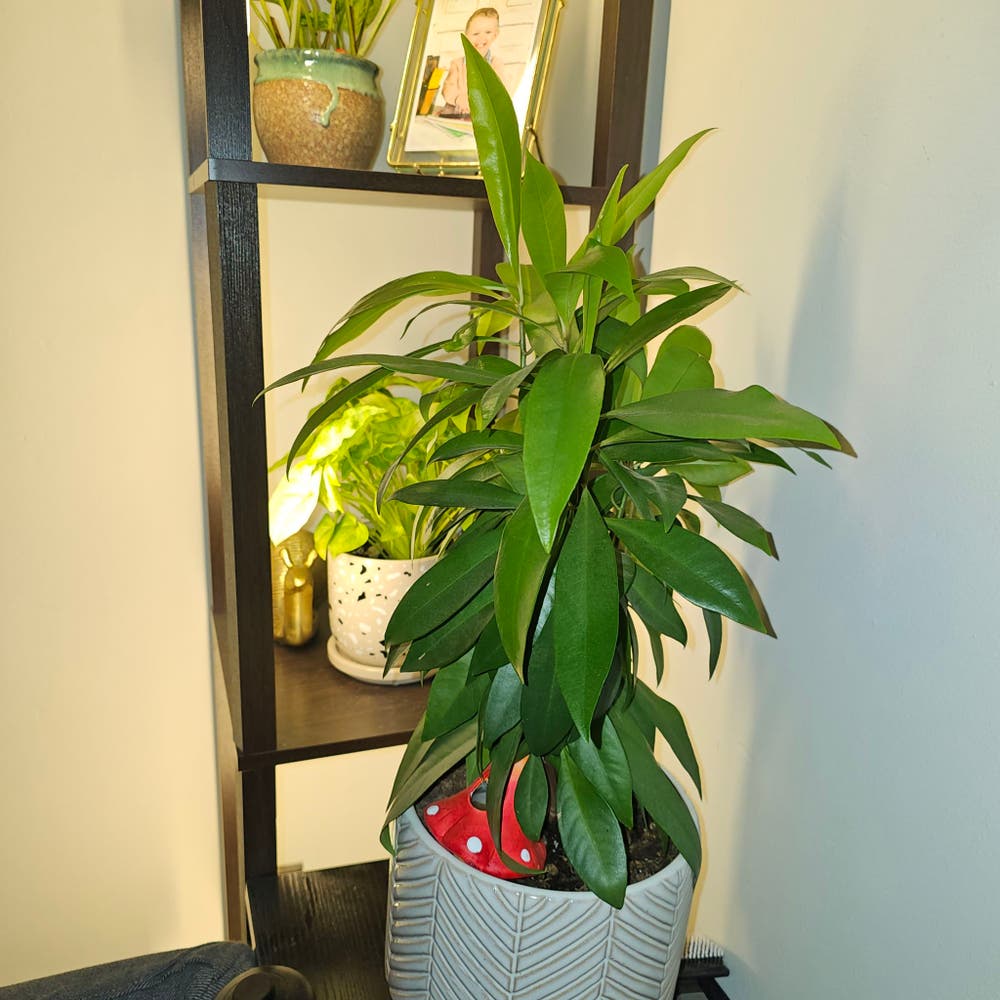
Black Spots on My Shoebutton Leaves
Ardisia elliptica
By the Greg Editorial Team
Jun 17, 2024•7 min read
This article was created with the help of AI so we can cover more plants for you. May contain errors. See one? Report it here.
Banish black spots 🍂 from your Shoebutton leaves with these proven plant-saving strategies!
- Fungal or bacterial infections cause black spots, damaging leaves.
- Prevent with proper watering, air circulation, and humidity control.
- Early detection and isolation are key to managing black spots.
Identifying Black Spots on Shoebutton Leaves
🚨 Characteristics of Black Spots
Black spots on Shoebutton leaves can be a red flag for plant health. Fungal infections typically present as irregularly shaped spots that vary in size and color. In contrast, bacterial spots are often more uniform and may have a yellow halo. Both can lead to tissue death, known as necrosis, which is irreversible damage to the leaf.
📈 Progression and Impact on Leaf Health
As the disease progresses, black spots can grow and merge. A fungal infection might produce tiny black fruiting bodies within the spots. Bacterial infections can cause the spots to become wet and slimy. Affected leaves may yellow and drop prematurely, which can weaken the plant over time. It's crucial to monitor new growth; healthy new leaves suggest improved conditions, but persistent black spots on new foliage indicate an ongoing problem.

Common Causes of Black Spots
Let's cut to the chase: environmental factors are like the stage for a drama where black spots are the stars. Too much moisture? You're setting up a fungal fiesta. Overzealous watering and poor air circulation are like sending out engraved invitations to pathogens like Cercospora, ready to leave their mark on your Shoebutton leaves.
🌿 Environmental Stressors
Sunburn isn't just for humans; plants can get it too. If your Shoebutton is basking in the sun like it's on a tropical vacation, it might protest with black spots. Temperature swings and low humidity can also make your plant go into a sulk, showing its displeasure through those dreaded spots.
👩🌾 Plant Care Practices
Now, let's talk about your plant parenting skills. Overwatering is a no-go. It's the equivalent of feeding your plant junk food—too much of a good thing can be harmful. And air circulation? It's like the plant's personal space—without it, things get stuffy and diseases like Pseudomonas leaf spot move in.
✂️ Pruning and Sanitation
Grab those sterilized shears and get snipping. Removing affected leaves is like cutting off the supply line to an invading army—it stops the spread. And cleanliness? It's not just for your hands. Keeping your gardening tools clean is like having a good antivirus—essential for keeping your plant healthy.
💧 Watering and Humidity Control
Balance is key. Water your Shoebutton like it's a delicate soup, not a drowned salad. And humidity? Think of it as the plant's comfort blanket—too much or too little, and it's going to throw a fit.
In a nutshell, black spots are your Shoebutton's way of saying, "Hey, I'm not okay!" It's on you to read the signs and act. Keep the environment in check, be a responsible plant parent, and those black spots will be history.

Integrated Management of Black Spots
In the fight against black spots on Shoebutton leaves, early detection is your best defense. Regularly inspect your plants, looking for the telltale signs of infection: small, dark lesions on the foliage. These spots, a mix of dead tissue and pathogen presence, signal it's time to act.
🕵️♂️ Early Detection
Symptom recognition is crucial. Black spots surrounded by yellowing indicate a fungal adversary, while a more uniform darkening might suggest bacterial trouble. Keep an eye out for these changes; they're the red flags of plant distress.
🚨 Immediate Treatment Steps
Once you've spotted trouble, isolate the affected plant. This quarantine helps prevent the disease from spreading to your other green buddies. Next, with sterilized scissors in hand, remove the infected leaves. Think of it as excising the problem, giving your plant a clean bill of health.
🏥 Post-Removal Care
After the affected leaves hit the compost bin (far away from your plants, of course), it's time for some TLC. If you're dealing with a fungus among us, consider a fungicide. Go for something gentle, like neem oil, to avoid nuking your plant's ecosystem. For bacterial blights, bactericides can help, but always read the label—your plant's life depends on it.
Remember, new growth is a high-five from your plant, signaling you're on the right track. Keep up the good work, and those black spots will be nothing but a bad memory.

Cultural Practices and Chemical Treatments
💧 Watering Wisdom
Water smartly. Shoebutton plants dislike soggy feet. Ensure the top layer of soil dries out before watering again. This practice helps prevent the onset of black spots by reducing excessive moisture where pathogens thrive.
💨 Airflow and Humidity Hacks
Boost air circulation around your Shoebutton. Space out plants and consider a gentle fan to keep the air moving. Humidity is a fungus's best friend, so keep it in check—aim for a balance that keeps your plant happy without turning its habitat into a moldy paradise.
🌞 Sunlight and Shade
Bright, indirect sunlight is the sweet spot. It helps keep the leaves dry and disease at bay, without scorching the delicate foliage of your Shoebutton.
✂️ Pruning with Purpose
Get snippy with infected leaves. Use sterilized shears and remove them promptly to prevent spread. Dispose of these leaves properly—think quarantine, not compost.
💊 Chemical Allies
When cultural practices aren't enough, fungicides and bactericides enter the scene. Read labels carefully and apply preventatively, adhering to a strict schedule. Remember, overuse can lead to resistance; rotate products if necessary.
🧼 Sanitation is Key
Cleanliness is your plant's best defense. Disinfect tools and pots, and never reuse soil that's been compromised. It's like washing your hands, but for your plants.
🌍 Environmental Management
Lastly, keep an eye on your plant's environment. Adjust as needed because a happy plant is a healthy plant, and a healthy plant is less likely to get black spots. It's all about creating an environment where pathogens don't want to throw a party.
Long-Term Prevention Strategies
🌱 Plant Spacing and Pruning
Spacing is crucial; it's like giving your plants their personal space to breathe and thrive. Overcrowding is a no-go—it invites trouble, like fungal and bacterial soirées you don't want an invite to. Pruning isn't just a haircut for your plants; it's a strategic move. Do it during the late dormant season to avoid disease and keep your plants in fighting form.
🦸 Sanitation: The Unsung Hero
Sanitation is the stealth ninja of plant care. It's all about keeping it clean—tools, pots, benches, your hands—everything. Think of it as hygiene for horticulture. If you've had bacterial issues before, it's time to get serious with sanitizers and maybe even some preventative bactericides, but don't go overboard. More isn't always better.
💧 Watering Wisdom
Watering is an art and a science. Balance is key. Too much and you're drowning them, too little and they're parched. Aim for just right. And timing? Morning is golden—leaves dry out before any microbial parties start. Drip or ground irrigation is your friend here; overhead showers can sometimes lead to unwanted leaf wetness.
🌍 Environmental Management
Your plants are like Goldilocks; they want everything just right. Light, temperature, humidity—keep these stable to avoid shocking your green buddies. Mulching is a slick move too; it's like a cozy blanket for your plants' feet, keeping moisture consistent and the soil temp regulated. Plus, it's a buffet for beneficial soil organisms.
🛡️ Embrace the Preventative Mindset
Finally, prevention is your plant's best life insurance. Keep an eye out for the early signs of trouble and act fast. It's not just about slapping on a fix; it's about creating an environment where problems are less likely to arise in the first place. That's smart gardening, and your plants will thank you for it.
⚠️ Safety First
This content is for general information and may contain errors, omissions, or outdated details. It is not medical, veterinary advice, or an endorsement of therapeutic claims.
Always consult a qualified healthcare professional before using any plant as food, medicine, or supplement.
Never eat any plant (or feed one to pets) without confirming its identity with at least two trusted sources.
If you suspect poisoning, call Poison Control (800) 222-1222, the Pet Poison Helpline (800) 213-6680, or your local emergency service immediately.
Spotted an error? Please report it here.
Prevent black spots on your Shoebutton leaves with Greg's early alerts 🚨, ensuring you nail the perfect watering and pruning schedule for a healthy, spot-free plant.