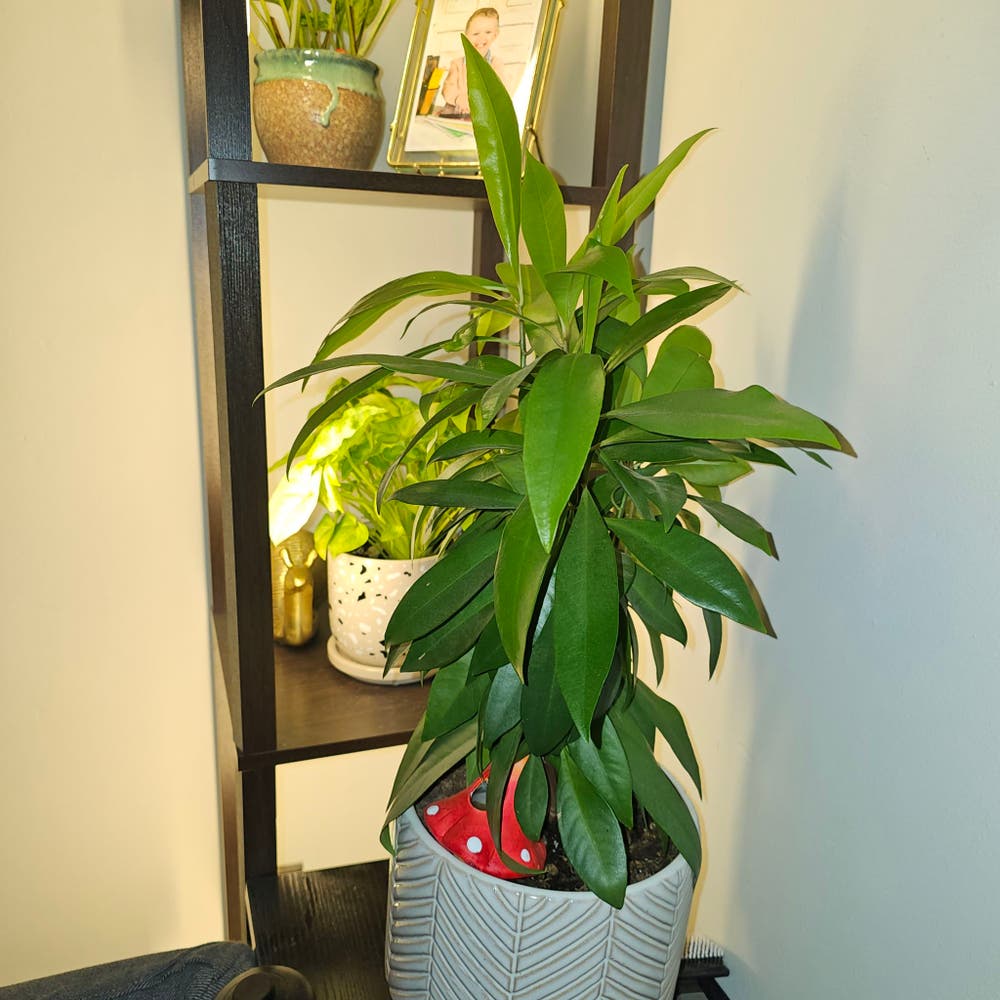
💧 Why Are My Coralberry Leaves Mushy?
Ardisia elliptica
By the Greg Editorial Team
Jun 17, 2024•4 min read
This article was created with the help of AI so we can cover more plants for you. May contain errors. See one? Report it here.
Rescue your Coralberry from mushy doom 🍂 with our fail-safe overwatering fixes!
- 🚨 Mushy leaves signal overwatering; yellow leaves and heavy pots are clues.
- 🍄 Fungal diseases present with brown spots, yellow halos, and musty odors.
- 🌱 Fix with proper drainage, pruning, and a copper-based fungicide if needed.
Spotting Trouble: Signs Your Coralberry Leaves Are Too Mushy
🌊 Telltale Symptoms of Overwatering
Overwatered Coralberry leaves are soggy tragedies. They turn yellow, wilt, and fall off at a touch. If the soil feels like a swamp, you've overdone it. Yellowing leaves and a heavy pot are your clues to ease up on the H2O.
🍄 Recognizing Fungal Foes
Fungal diseases are the party crashers following overwatering. Brown spots or yellow halos on leaves, along with a musty smell, signal it's time for a fungal smackdown. Soft, mushy stems are a distress call from your plant.
🚰 When Poor Drainage Takes a Toll
Poor drainage is like a bad relationship—it's suffocating. If the soil is more wet sponge than nurturing earth, your Coralberry is sending an SOS. Ensure your pot isn't holding water hostage; roots need to breathe, not swim.

First Aid for Mushy Leaves
🌊 Rescuing Roots from Drowning
If your Coralberry's roots are gasping for air, it's triage time. Slip on those gloves and gently remove the plant from its pot. Snip away the soggy roots with sterilized shears—think of it as a life-saving haircut.
🍄 Fungus Among Us: Battling Back with Treatment
Fungal foes got your Coralberry down? Act swiftly. Remove the infected leaves and apply a copper-based fungicide. Follow the label like it's the law to avoid an ecological misdemeanor.
🚰 Drainage Drama: Quick Fixes for Waterlogged Soil
When your Coralberry's soil is more waterlogged than a sunken ship, it's time for a soil swap. Opt for a mix that drains faster than a bathtub. Ensure your pot has enough drainage holes to make a colander jealous. If the pot's bottom is like a sealed vault, it's time for an upgrade—your plant's life depends on it.

Turning the Tide: How to Stop the Squish
💧 Fine-Tuning Your Watering Technique
Moisture mastery begins with the touch test. Your soil should mimic a well-wrung sponge—damp but not dripping. Wait for the top inch to dry before the next watering session. If you're tech-savvy, a moisture meter can be your guide; otherwise, trust your fingertips.
Adjust your watering to your home's humidity levels and the seasons. Plants drink less in winter, so ease up on the aqua. Overwatering isn't just a faux pas; it's the fast track to mushy leaf mayhem.
🌱 Soil and Pot Tweaks for Better Drainage
Drainage holes are your plant's lifeline. Ensure your pot has more holes than a detective story has plot twists. If they're clogged, unclog them—your plant's health depends on it.
Choose a pot that's cozy but not cramped. Terracotta pots are the MVPs here, wicking away excess moisture like a pro. For soil, think light and airy. Mix in perlite or coarse sand to keep it well-draining and to prevent root rot.
A gritty layer at the bottom of the pot can act as a drainage booster. This extra step keeps water from pooling and gives roots the breathing room they crave.

Keeping the Mush at Bay: Long-Term Strategies
💧 Crafting the Perfect Watering Schedule
Consistency is king when it comes to watering. Ditch the rigid schedule; your Coralberry doesn't wear a watch. Instead, monitor the soil. If the top inch is dry, it's time to water. Use tech if you must—apps and smart devices aren't just for step counting. They can help you nail the watering sweet spot.
✂️ Pruning for Health: More Than Just a Trim
Pruning isn't just about aesthetics; it's about health. Get rid of mushy leaves like you're cutting out junk food from your diet. It's tough love, but your plant will thank you. Keep the foliage dry—think of it as avoiding the splash zone. And remember, timing is crucial. Prune when your plant is ready, not just when you're in the mood for a snip.
⚠️ Safety First
This content is for general information and may contain errors, omissions, or outdated details. It is not medical, veterinary advice, or an endorsement of therapeutic claims.
Always consult a qualified healthcare professional before using any plant as food, medicine, or supplement.
Never eat any plant (or feed one to pets) without confirming its identity with at least two trusted sources.
If you suspect poisoning, call Poison Control (800) 222-1222, the Pet Poison Helpline (800) 213-6680, or your local emergency service immediately.
Spotted an error? Please report it here.
Avoid the mushy-leaf mishap in your Coralberry by letting Greg's personalized watering reminders 🌱 keep your plant's moisture just right.