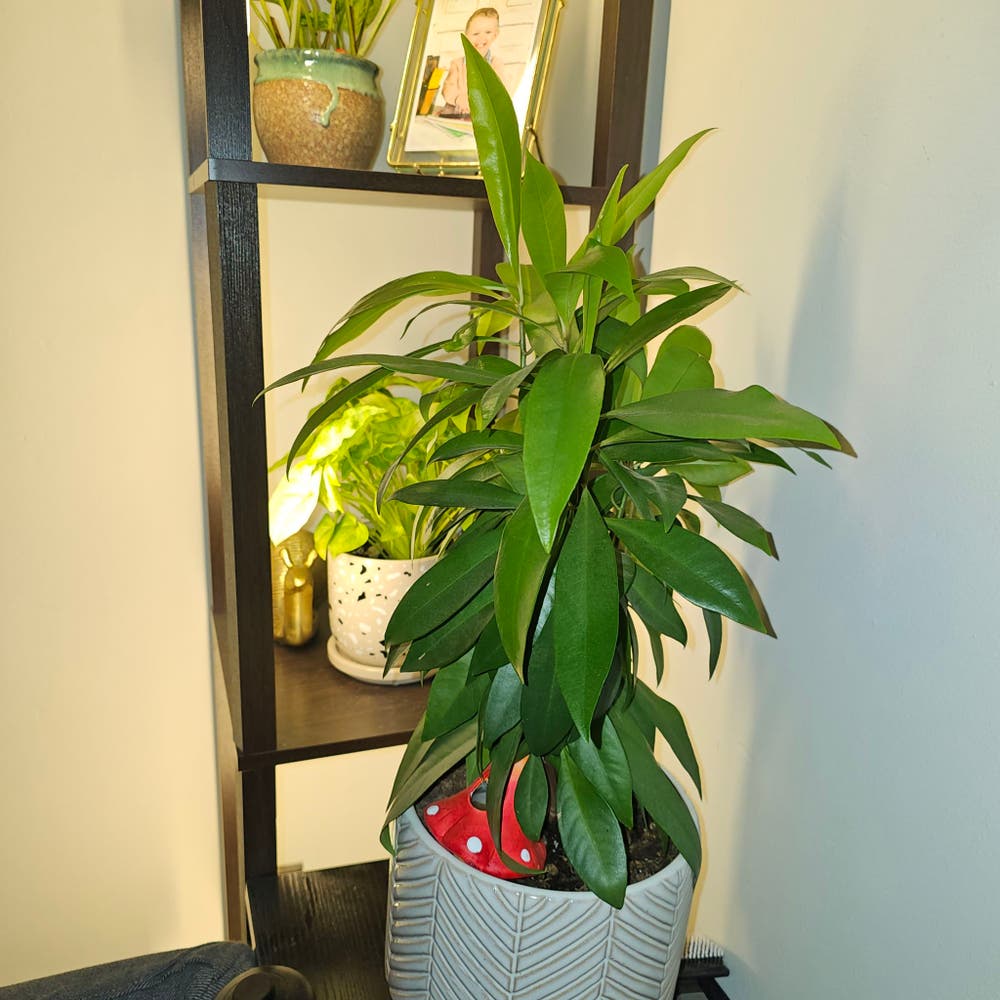
How Much Humidity Does My Coralberry Need?
Ardisia elliptica
By the Greg Editorial Team
Jun 17, 2024•3 min read
This article was created with the help of AI so we can cover more plants for you. May contain errors. See one? Report it here.
Discover the secret to a lush Coralberry 🌿 by nailing the perfect humidity balance—your plant's happiness depends on it!
- 🌿 Coralberry thrives at 40-60% humidity, watch for dry leaves or mold.
- 🌡️ Temperature impacts humidity; balance both for healthy plants.
- 💧 Use hygrometers, pebble trays, or humidifiers to manage moisture levels.
Spotting the Signs: Coralberry and Humidity
💧 Recognizing Low Humidity Stress
Dry, crispy leaves are your Coralberry's non-verbal plea for more moisture. When the air is too dry, leaves may exhibit a brittle texture and brown edges, signaling an urgent need for a humidity boost. Ignoring these signs can lead to stunted growth and a weakened defense against pests, making your Coralberry more susceptible to disease.
💦 When There's Too Much Moisture in the Air
Conversely, excessive humidity can turn your Coralberry's habitat into a fungal playground. Watch out for leaves with a dull appearance or the presence of mold and mildew, which can manifest as fuzzy gray or black spots. This over-humidification can be detrimental, potentially leading to root rot and a general decline in plant health.

Measuring Up: Assessing Your Home's Humidity
🌡️ Tools of the Trade
Hygrometers are your best bet for nailing down humidity levels with the precision of a Swiss watch. Pop one near your Coralberry, dodging direct sunlight and drafts like a pro. Give it a moment to acclimate—think of it as letting a fine wine breathe. Check it at various times to catch the full spectrum of your home's humidity highs and lows.
🌍 Understanding Your Local Humidity
Local weather reports are more than just small talk fodder; they're a cheat sheet for your indoor garden's climate. Match your hygrometer's readings with the great outdoors to see if your home's climate control is on point. Adapt your Coralberry's care as the seasons shift, because even indoor plants can sense the turn of the earth.

Coralberry's Comfort Zone: Ideal Humidity Range
💧 The Sweet Spot for Coralberry
Coralberry plants flourish in a relative humidity (RH) range of 40-60%. This is the Goldilocks zone, where the air isn't too dry or too moist, but just right for your plant to thrive. Keeping a hygrometer handy will help you monitor and maintain this ideal range, ensuring your Coralberry's environment is consistently comfortable.
Temperature Tidbits
While humidity is crucial, temperature also plays a pivotal role in maintaining ideal humidity levels. Coralberry prefers temperatures between 60-75°F (15-24°C). Remember, as the temperature climbs, the air can hold more moisture, potentially pushing humidity levels beyond the comfort zone. Adjust your care routine with the seasons to keep your Coralberry in its happy place.

Balancing Act: Adjusting Humidity for Coralberry
💦 Boosting Humidity Like a Pro
Pebble trays are the old-school cool. Fill a tray with pebbles, add water, and set your Coralberry on top. The water evaporates, humidity rises, and your plant gets its moisture fix without getting its feet wet.
Humidifiers are the tech-savvy solution. They're not just for colds and flu; they're Coralberry's best friend in the dry season. Choose one that hums quietly in the background and watch your plant perk up.
🌬 Bringing Down the Humidity
Air circulation is key. A fan can gently whisk away excess moisture without creating a wind tunnel. Position it so that there's a soft breeze, ensuring your Coralberry isn't caught in a leaf-flapping gale.
Dehumidifiers are the humidity bouncers. If your room feels more like a rainforest than a residence, it's time to bring in the big guns. A dehumidifier will help dial down the dampness, making your Coralberry—and you—breathe easier.
Remember, watering habits also affect humidity. Overwatering is a surefire way to hike up the humidity levels. Let the soil dry out a bit between waterings, and your Coralberry won't feel like it's living in a swamp.
⚠️ Safety First
This content is for general information and may contain errors, omissions, or outdated details. It is not medical, veterinary advice, or an endorsement of therapeutic claims.
Always consult a qualified healthcare professional before using any plant as food, medicine, or supplement.
Never eat any plant (or feed one to pets) without confirming its identity with at least two trusted sources.
If you suspect poisoning, call Poison Control (800) 222-1222, the Pet Poison Helpline (800) 213-6680, or your local emergency service immediately.
Spotted an error? Please report it here.
Ensure your Coralberry thrives with the ideal 40-60% humidity by letting Greg track and adjust 🌡️ your plant's environment for peak lushness.