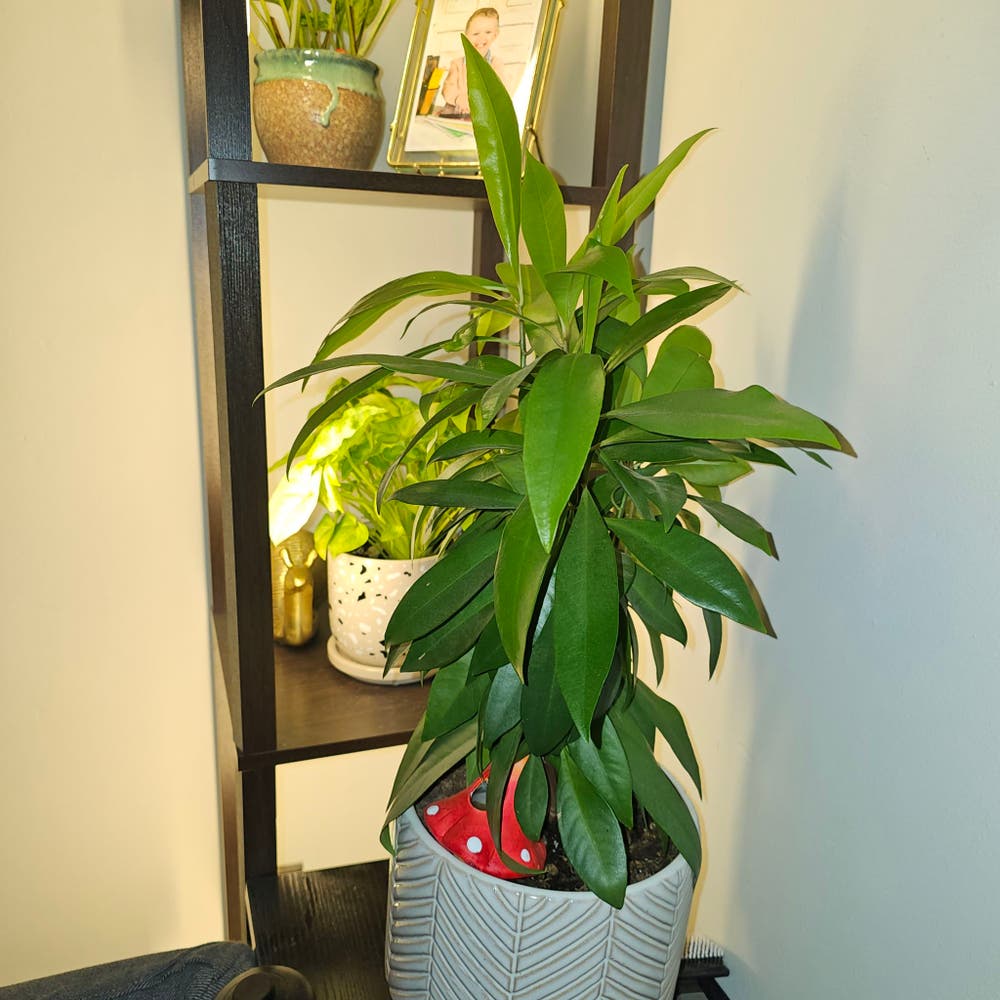
Why Are My Shoebutton Leaves Droopy? 😔
Ardisia elliptica
By the Greg Editorial Team
Jun 17, 2024•5 min read
This article was created with the help of AI so we can cover more plants for you. May contain errors. See one? Report it here.
Say goodbye to droopy Shoebutton leaves 🍂 with these proven plant care lifesavers!
- Under or overwatering? Check soil moisture and drainage to address droopiness.
- 🌡️ Keep it comfy: Maintain 15-23ºC and bright, indirect light for happy leaves.
- Nutrient balance is key: Use a balanced fertilizer to prevent and fix droopy leaves.
Spotting the Signs of Droopy Leaves
🚩 Visual Clues
Droopy leaves are the plant's white flag, signaling an SOS. Look for leaves that hang like a defeated boxer's arms or feel as lifeless as a forgotten party balloon. Discoloration or unusual textures are your plant crying out for attention.
🕰 When to Worry
Natural leaf movements are like a cat's stretch—nothing to fret over. But when your plant's leaves slump more than a teenager on a couch, it's time to spring into action. Persistent droopiness or stems that bend like overcooked spaghetti mean your green buddy is in trouble.

Getting to the Root: Common Causes of Droopiness
💧 Thirsty Roots: The Underwatering Problem
Underwatering is a silent assailant of Shoebutton plants. Leaves droop, pleading for hydration when they don't get enough water. Check the soil; if it's dry to the touch, your plant's thirst needs quenching.
Quick Tips to Check for Underwatering
- Feel the soil – if the top inch is dry, grab the watering can.
- Observe leaf texture – are they brittle and lifeless? Time to water.
- Lift the pot – a lighter pot indicates it's time for a drink.
💦 Drowning in Excess: The Overwatering Issue
Overwatering is like throwing your Shoebutton a pool party without an exit ramp. Leaves turn soft and limp, and roots may begin to rot. Too much water is just as harmful as not enough.
How to Rescue an Overwatered Shoebutton
- Check the soil – if it's soggy, hold off on watering.
- Ensure proper drainage – the pot needs to let go of excess water.
- If the soil is waterlogged, consider repotting with fresh, well-draining soil.
- Trim any rotted roots to prevent spread of decay.

Light and Temperature: Finding the Sweet Spot
⛅️ Too Much or Too Little: Light's Role in Leaf Droop
Shoebutton plants are like Goldilocks; they prefer their light just right. Direct sunlight can lead to a dramatic leaf droop, while too little can cause a lackluster appearance. Aim for bright, indirect light—think of it as the plant's cozy nook away from the harsh rays. Rotate your plant to ensure even exposure without the burn.
🌡️ Weathering the Temperature
Temperature swings are the nemesis of Shoebutton leaf stability. Consistent temperatures between 15-23ºC create a comforting environment for your plant. Avoid placing your Shoebutton near drafty windows or heating vents, as these can cause sudden changes that make leaves droop like a disappointed parent. Remember, your plant doesn't want to ride a temperature roller coaster; it seeks the climate-controlled calm of a predictable spring day.

Feeding Your Shoebutton: Nutrient Needs and Fixes
💡 Spotting Nutrient Deficiencies
Yellowing leaves or stunted growth may not just be a call for attention—they're signs your Shoebutton is missing key nutrients. It's like your plant is holding up a sign saying, "Feed me!" but without the actual sign.
💪 The Right Diet for Your Plant
A balanced fertilizer isn't just a nice-to-have; it's a must for keeping those leaves perky. Think of it as a breakfast of champions for your Shoebutton. Overdo it, though, and you'll be dealing with the aftermath of a nutrient party gone wild—burnt roots and sad, droopy leaves.
🥦 Macronutrient Must-Haves
Your plant's diet should be rich in nitrogen, phosphorus, and potassium—the big three of plant health. Skimp on these, and you're basically sending your Shoebutton to a boot camp with no food.
🌟 Micronutrient Magic
Iron, calcium, and magnesium are the unsung heroes. They're like the backup dancers—less noticeable but vital for the show. Without them, expect a lackluster performance from your Shoebutton.
🧪 Soil Testing: The Litmus Test
Before you go on a fertilizing frenzy, get a soil test. It's like a reality check for what's actually missing in your plant's life.
📅 Fertilizing Frequency
Stick to a schedule that doesn't overwhelm your plant. It's not about dumping food on the problem; it's about consistent care. Watch how your Shoebutton responds and adjust accordingly—this isn't a set-it-and-forget-it kind of relationship.
🚨 The Overachiever's Downfall
Beware of over-fertilization—it's like giving your plant a sugar rush followed by a crash. Use a balanced fertilizer and follow the instructions like it's a recipe for the best cake ever—because precision matters.
Bouncing Back: Reviving Droopy Leaves
💧 Fine-Tuning Watering Habits
Consistency is your plant's best friend when it comes to watering. Here's how to dial in the perfect amount:
- Check the top inch of soil; if it's dry, it's time to water.
- Water thoroughly until it drains out the bottom, then wait for the soil to dry before the next round.
- Adapt the schedule seasonally—plants drink less in winter.
- Use room-temperature water to avoid shocking the roots.
🌿 Adjusting the Environment
Light and temperature can make or break your Shoebutton's mood. To keep it from getting droopy:
- Rotate the plant for even light exposure, preventing lopsided growth.
- Avoid direct sunlight that can scorch leaves, but ensure it gets enough to thrive.
- Stabilize temperatures, avoiding drafts and sudden changes that stress the plant.
🥦 Nutrient Boosts
Feeding your plant is like seasoning food—balance is key. To perk up those leaves:
- Use a balanced, water-soluble fertilizer, but don't overdo it.
- Observe how the plant responds and adjust the feeding schedule accordingly.
- Remember, too much love in the form of fertilizer can lead to nutrient burn.
Keep these tips in mind, and your Shoebutton will be standing tall and proud in no time.
⚠️ Safety First
This content is for general information and may contain errors, omissions, or outdated details. It is not medical, veterinary advice, or an endorsement of therapeutic claims.
Always consult a qualified healthcare professional before using any plant as food, medicine, or supplement.
Never eat any plant (or feed one to pets) without confirming its identity with at least two trusted sources.
If you suspect poisoning, call Poison Control (800) 222-1222, the Pet Poison Helpline (800) 213-6680, or your local emergency service immediately.
Spotted an error? Please report it here.
Turn those droopy leaves 🍃 into perky perfection by letting Greg tailor your Shoebutton's watering and feeding schedule for a thriving, happy plant.