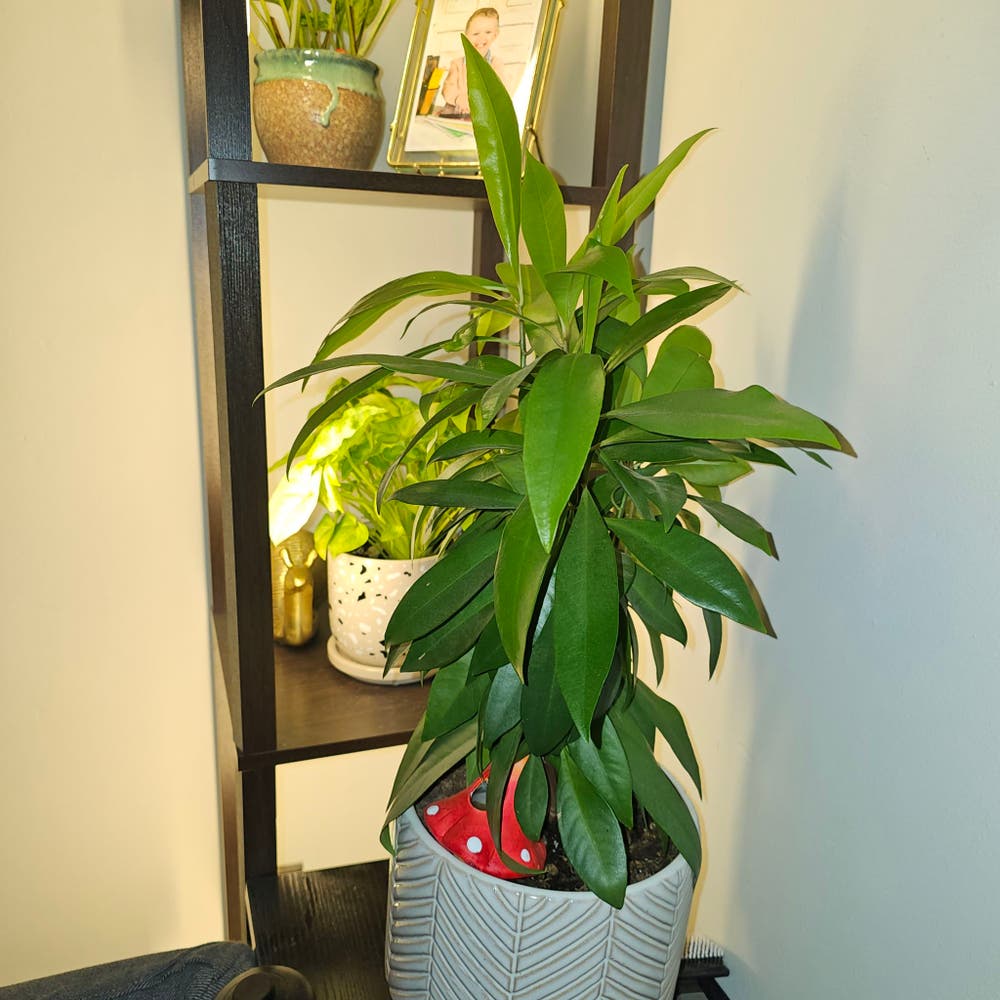
Fertilizing My Shoebutton to Double Its Growth
Ardisia elliptica
By the Greg Editorial Team
Jun 17, 2024•4 min read
This article was created with the help of AI so we can cover more plants for you. May contain errors. See one? Report it here.
Double your Shoebutton's lushness 🌿 with the perfect fertilization technique for explosive growth! 🚀
- 🌱 Fertilize in spring/summer for Shoebutton's lush growth and blooms.
- 🍂 Reduce fertilization in dormancy to prevent over-nourishment.
- Half-strength fertilizer avoids nutrient overload and plant harm.
Timing is Everything: When to Fertilize Your Shoebutton
🌱 Reading the Seasons: Fertilizing During Growth Periods
Spring and summer are your Shoebutton's high seasons for growth. This is when you should bring out the fertilizer. Think of it as your plant's morning coffee—it's about to put in some serious work and could use the boost. During these months, a monthly fertilization schedule aligns with your plant's natural rhythm, encouraging lush foliage and vibrant blooms.
🍂 Less is More: Reducing Fertilization in Dormancy
When the air gets crisp and the days shorten, your Shoebutton enters its chill mode. It's not the time for growth spurts, so ease up on the fertilizing. In fact, you can put the fertilizer away altogether during the fall and winter months. Over-fertilization during dormancy is like offering a heavy meal right before bedtime—unnecessary and uncomfortable. Your plant's roots need a break, just like you need your beauty sleep.

Selecting the Perfect Fertilizer for Your Shoebutton
💡 Understanding N-P-K Ratios for Flowering Plants
N-P-K ratios are like the ABCs of plant nutrition, crucial for your Shoebutton's growth. Nitrogen (N) is the go-to for lush leaves, Phosphorus (P) fuels root and flower development, and Potassium (K) is the silent partner, vital for overall plant health. A 10-10-10 blend is a safe bet for balanced growth. But remember, Shoebutton's aren't greedy; they thrive with modest feeding, so don't go overboard.
🍽️ The Micronutrient Mix: What Else Your Shoebutton Craves
Beyond the big three, your Shoebutton hungers for a cocktail of micronutrients. Iron (Fe) is the lifeblood for chlorophyll, while Manganese (Mn) and Zinc (Zn) are the unsung heroes for plant metabolism and growth. Copper (Cu) and Molybdenum (Mo) are the backstage crew, essential for reproduction and nitrogen regulation. Think of these micronutrients as the spice rack of plant nutrition—small pinches can make a world of difference.

The Art of Fertilizing Shoebutton
💧 Mixing it Right: Preparing Your Fertilizer Solution
Mixing your fertilizer correctly is critical to the health of your Shoebutton. Half-strength is the magic word here. A diluted solution prevents nutrient overload, which can be as harmful as neglect. Use a syringe for precision; it's not just for medicine but an excellent tool for measuring liquid fertilizer.
🌱 Application Techniques: How to Fertilize Without Harming Your Plant
When it's time to apply, think of it as a stealth operation. Direct the solution to the soil, avoiding the leaves to prevent chemical burns. This is not a shower; it's a sip. Overzealous watering can lead to a nutrient party where your Shoebutton wasn't ready to dance. And remember, safety gear isn't just for show—gloves and a mask are your allies in this nurturing endeavor.

Spotting and Solving Over-Fertilization in Shoebutton
🚨 Recognizing the Telltale Signs of Too Much Love
Over-fertilization can be a silent killer for your Shoebutton plant. Yellowing leaves or a crust of mineral salts on the soil surface are your plant's SOS signals. Stunted growth and leaf burn are also red flags that scream, "Ease up on the feed!" If the roots look like they've been through a chemical warfare, it's time to intervene.
🛠 The Recovery Plan: Restoring Your Shoebutton's Health
First, stop fertilizing immediately—your Shoebutton needs a break. Begin the rehab process by gently removing any visible salt crust from the soil. Then, flush the soil with water multiple times to wash away excess fertilizer; think of it as a detox for your plant's home. If the damage is severe, prune away the most affected leaves and roots to help your Shoebutton bounce back. Remember, recovery takes time, so be patient and give your plant some TLC. Regular leaching every few months can prevent a relapse, keeping your Shoebutton healthy and thriving.
⚠️ Safety First
This content is for general information and may contain errors, omissions, or outdated details. It is not medical, veterinary advice, or an endorsement of therapeutic claims.
Always consult a qualified healthcare professional before using any plant as food, medicine, or supplement.
Never eat any plant (or feed one to pets) without confirming its identity with at least two trusted sources.
If you suspect poisoning, call Poison Control (800) 222-1222, the Pet Poison Helpline (800) 213-6680, or your local emergency service immediately.
Spotted an error? Please report it here.
Nurture your Shoebutton to flourish 🌱 with Greg's tailored fertilization reminders, ensuring you feed your green friend just right for those vibrant blooms!