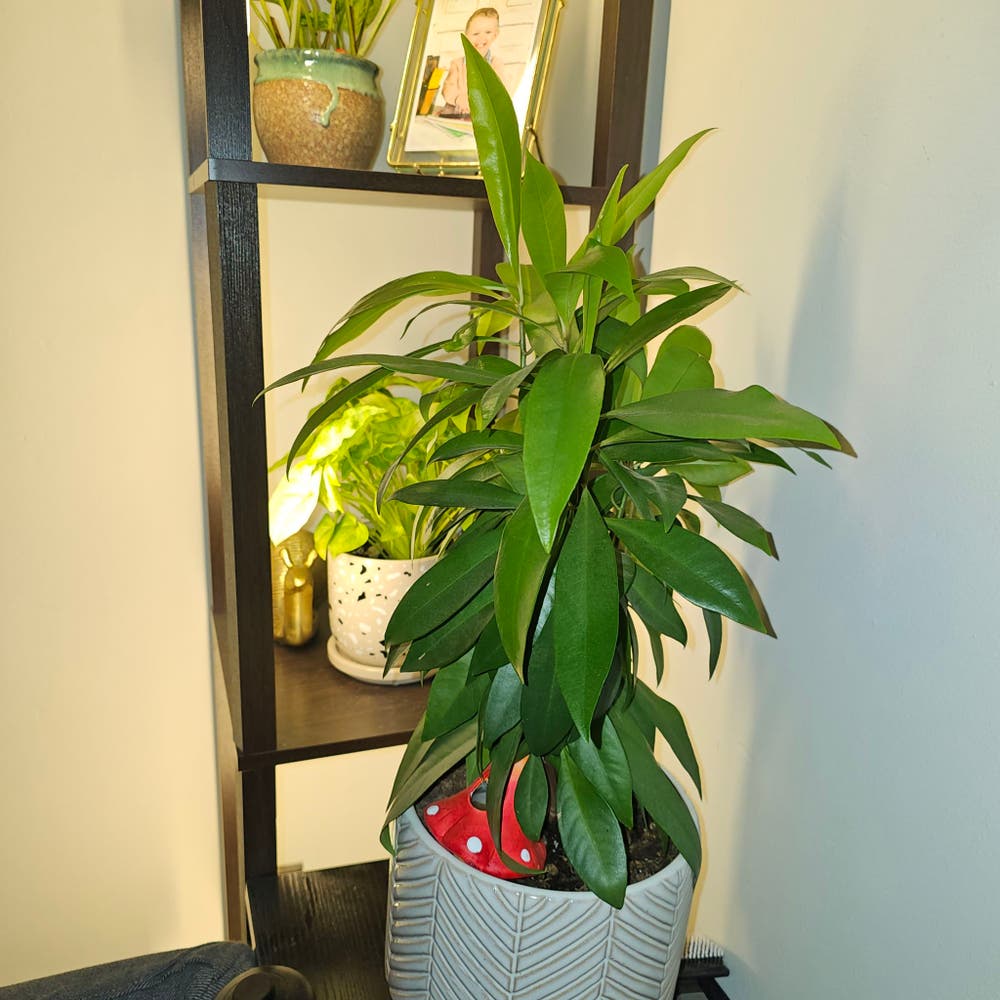
How to Cure Droopy Leaves on Your Shoebutton Ardisia 👟
Ardisia elliptica
By the Greg Editorial Team
Sep 29, 2024•6 min read
This article was created with the help of AI so we can cover more plants for you. May contain errors. See one? Report it here.
Revive droopy Shoebutton Ardisia leaves 🌱 with expert tips on watering and soil for thriving plants!
- 💧 Overwatering causes droopy leaves; look for yellowing and wilting signs.
- 🌱 Underwatering leads to limp leaves; ensure thorough watering reaches the roots.
- 🌞 Bright, indirect light is ideal; avoid direct sunlight to prevent leaf scorch.
Causes of Droopy Leaves
💧 Overwatering: Symptoms and Solutions
Overwatering is a common culprit behind droopy leaves. Look for yellowing leaves, which indicate root stress, and wilting despite wet soil, suggesting that roots may be suffocating.
To remedy overwatering, allow the soil to dry out. Always check moisture levels before watering to avoid further issues. Improving drainage is crucial; use pots with drainage holes and well-draining soil. If the problem persists, consider repotting with a mix that includes perlite or sand for better aeration.
🚰 Underwatering: Identifying and Addressing
Underwatering can also lead to droopy leaves. Symptoms include crispy leaf edges, signaling a lack of moisture, and limp, lifeless leaves.
To address underwatering, water thoroughly to ensure moisture reaches the root zone. Establish a consistent watering schedule—apps like Greg can help with reminders. Monitoring soil moisture with a moisture meter can provide accurate readings to prevent future issues.
🌡️ Environmental Stress: Light and Temperature Effects
Environmental factors play a significant role in leaf health. Shoebutton Ardisia prefers bright, indirect light; too much direct sunlight can scorch its leaves. Signs of inadequate light include stretching stems and pale leaves.
Temperature is equally important, with an ideal range of 65°F to 80°F (18°C to 27°C). Cold drafts or proximity to heat sources can cause stress and droop. Relocate your plant to a more suitable light condition and maintain stable temperatures using a thermometer to monitor conditions.
🪴 Soil Issues: Drainage and Composition
Soil drainage is vital for preventing root rot, which can severely affect your Ardisia. A well-draining soil mix is essential for healthy growth.
The ideal soil composition includes a mix of potting soil, perlite, and peat moss, ensuring both aeration and moisture retention. Regularly check drainage holes to ensure they are not blocked, and consider repotting with the appropriate soil mix every 1-2 years to refresh nutrients.
🐛 Pest Infestation: Identifying Common Pests
Pests can wreak havoc on your Shoebutton Ardisia, leading to droopy leaves. Common offenders include spider mites, which leave webbing and stippled leaves, and aphids, often found in clusters on new growth.
Symptoms of pest infestation include droopy leaves due to stress and nutrient depletion. Regular inspections are key; check the undersides of leaves and stems. If you spot pests, consider using insecticidal soap or neem oil for effective treatment.
Understanding these causes can help you take proactive steps to maintain the health of your Shoebutton Ardisia. Next, we’ll explore how to diagnose droopy leaves effectively.
Diagnosing Droopy Leaves
👀 Visual Symptoms: What to Look For
Droopy leaves can signal various issues with your Shoebutton Ardisia. Start by observing leaf color changes, such as yellowing or browning edges, which indicate stress.
Next, check the leaf texture. Softness may suggest overwatering, while crispy edges often point to underwatering. Overall plant appearance is also crucial; stunted growth or wilting can be clear indicators of underlying problems.
💧 Assessing Soil Moisture Levels
Understanding soil moisture is vital for diagnosing droopy leaves. Use the finger test by inserting your finger into the soil up to 2 inches to gauge moisture levels.
For a more accurate assessment, consider using a moisture meter. This handy tool can provide precise readings, helping you determine whether your plant needs water or if it’s already saturated.
🐛 Checking for Pests and Diseases
Pests can wreak havoc on your Shoebutton Ardisia, leading to droopy leaves. Look for visible insects or webbing on the leaves, which are telltale signs of an infestation.
Additionally, check for sticky residue or honeydew on surfaces, indicating aphids or other pests. Fungal infections can also cause issues; keep an eye out for spots or mold on leaves, as these can further stress your plant.
By carefully diagnosing these symptoms, you can take the necessary steps to restore your plant's health. Next, let’s explore effective treatments for reviving those droopy leaves.
Treating Droopy Leaves
🌱 Step-by-Step Guide to Reviving Droopy Leaves
Reviving droopy leaves starts with a clear assessment of the cause. Determine whether overwatering or underwatering is the issue.
Next, adjust your watering practices based on your findings. If overwatering is the culprit, reduce frequency; if underwatering, increase it.
Improving soil conditions is crucial. Repot your plant if necessary, using a well-draining mix to promote healthy root growth.
Finally, consider increasing humidity levels. A humidifier or a pebble tray can help create a more favorable environment for your Shoebutton Ardisia.
💧 Adjusting Watering Practices
Establishing a consistent watering schedule is key. Water your plant when the top inch of soil feels dry to the touch.
Using room temperature water is also important. Cold water can shock the plant, leading to further droop.
🌿 Improving Soil Conditions
Repotting with a well-draining soil mix is essential for healthy growth. This ensures proper aeration and moisture retention.
Adding organic matter can enhance soil fertility. This not only improves structure but also provides essential nutrients for your plant.
🌫️ Increasing Humidity Levels
Aim for an ideal humidity level of 50-70% for optimal growth. This range helps prevent droopy leaves and promotes overall plant health.
To increase humidity, consider grouping your plants together. This creates a microclimate that benefits all nearby plants.
Using a humidifier is another effective method. It maintains consistent moisture in the air, creating a more comfortable environment for your Shoebutton Ardisia.
By following these steps, you can effectively treat droopy leaves and ensure your plant thrives. Next, let’s explore how to prevent future leaf droop with best practices.
Preventing Future Leaf Droop
🌊 Best Practices for Watering
Watering your Shoebutton Ardisia correctly is crucial for its health. Aim to water deeply but infrequently; this encourages deep root growth and helps prevent droopy leaves.
Monitor environmental conditions closely. Adjust your watering schedule based on humidity and temperature changes to keep your plant thriving.
🌱 Ideal Soil Mix
The right soil mix can make all the difference. A recommended blend is 50% potting soil, 30% perlite, and 20% peat moss.
This combination ensures proper drainage and nutrient availability, which are essential for a healthy Ardisia.
☀️ Optimal Light Conditions
Light plays a vital role in plant health. Provide bright, indirect light to avoid scorching the leaves.
Additionally, rotating the plant every few weeks ensures even light distribution, promoting balanced growth.
🐞 Regular Pest Monitoring
Pest infestations can sneak up on you, so regular monitoring is key. Schedule inspections every 1-2 weeks to check for any unwanted guests.
Implement preventive measures, such as using neem oil, to keep pests at bay and maintain your plant's vitality.
By following these best practices, you can create a nurturing environment for your Shoebutton Ardisia, ensuring it remains vibrant and healthy. Next, let’s explore how to treat droopy leaves effectively if they do occur.
⚠️ Safety First
This content is for general information and may contain errors, omissions, or outdated details. It is not medical, veterinary advice, or an endorsement of therapeutic claims.
Always consult a qualified healthcare professional before using any plant as food, medicine, or supplement.
Never eat any plant (or feed one to pets) without confirming its identity with at least two trusted sources.
If you suspect poisoning, call Poison Control (800) 222-1222, the Pet Poison Helpline (800) 213-6680, or your local emergency service immediately.
Spotted an error? Please report it here.
Transform your droopy Shoebutton Ardisia into a vibrant beauty by mastering its care with Greg's tailored watering reminders and expert tips! 🌿 Thrive together!