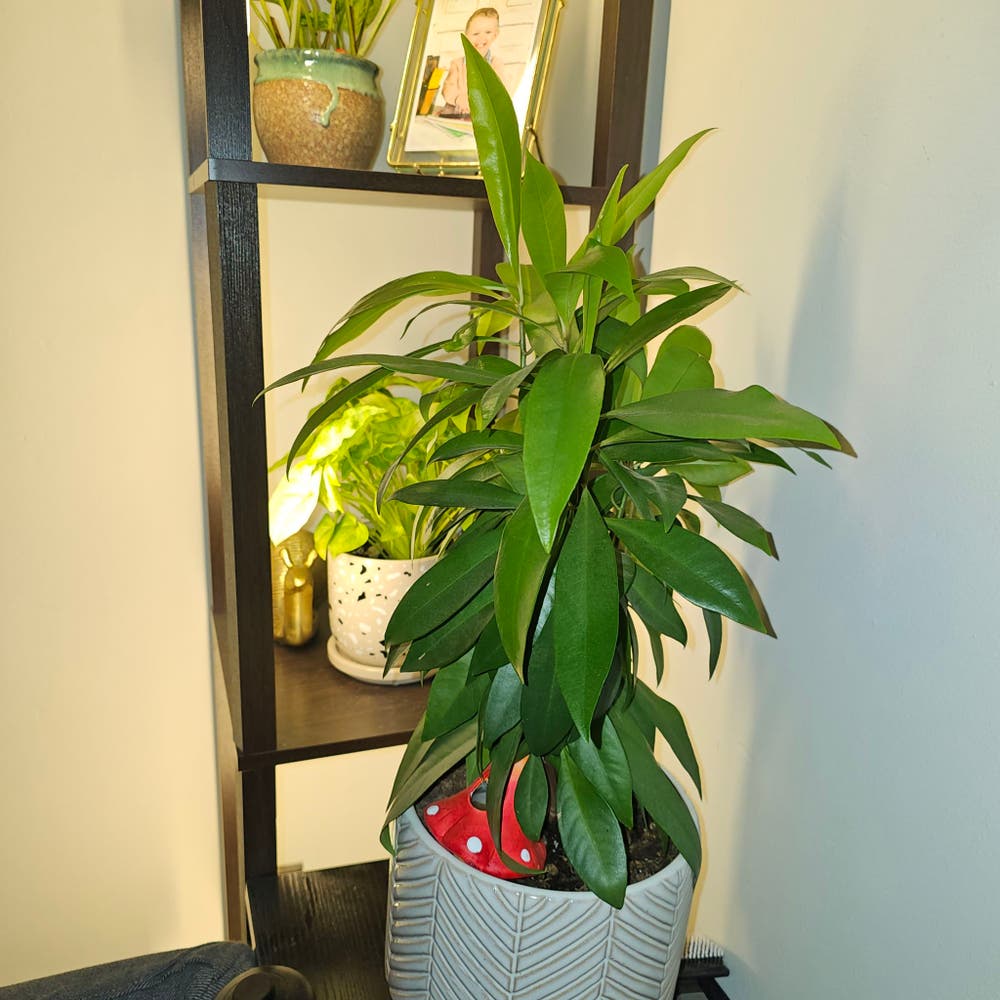
3 Tips for Healing Curling Leaves on Your Shoebutton Ardisia 🩹
Ardisia elliptica
By the Greg Editorial Team
Sep 29, 2024•4 min read
This article was created with the help of AI so we can cover more plants for you. May contain errors. See one? Report it here.
Transform your Shoebutton Ardisia's health with expert tips to diagnose and treat curling leaves! 🌿
- 🌞 Bright, indirect sunlight prevents leaf curling; avoid direct sunlight exposure.
- 💧 Maintain humidity between 50%-70% to keep leaves healthy and prevent curling.
- 🐛 Regularly check for pests like mealybugs; treat infestations promptly for plant health.
Diagnosing the Problem
🌞 Assessing Environmental Conditions
Light Requirements
To keep your Shoebutton Ardisia thriving, it needs bright, indirect sunlight. Direct sun exposure can scorch its leaves, leading to stress and curling.
If you notice stretching stems or pale leaves, it’s a clear sign that your plant isn’t getting enough light. Adjust its position to ensure it receives the right amount of brightness.
Humidity Levels
Humidity plays a crucial role in the health of your Shoebutton Ardisia. Aim for levels between 50% and 70%, which you can easily measure with a hygrometer.
Low humidity can manifest as curling leaves and browning tips. If you see these signs, it’s time to boost the moisture in the air around your plant.
🐛 Checking for Pests
Common Pests Affecting Shoebutton Ardisia
Pests can wreak havoc on your Shoebutton Ardisia. Mealybugs, identifiable by their white, cotton-like masses, are a common nuisance.
Spider mites are another threat, leaving fine webbing and stippled leaves in their wake. Regular checks can help you catch these pests early.
Signs of Infestation
To spot an infestation, examine the undersides of leaves and leaf joints closely. Visible pests are often the first indication that something is wrong.
Look for damage patterns like yellowing leaves or unexpected leaf drop. These signs can help you take action before the situation worsens.
💧 Evaluating Watering Practices
Overwatering vs. Underwatering
Watering practices are vital for your plant's health. Overwatering can lead to yellowing leaves, mushy stems, and even root rot.
On the flip side, underwatering results in dry, crispy leaves and wilting. Finding the right balance is key to keeping your Shoebutton Ardisia happy.
Soil Moisture Testing
To check soil moisture, insert your finger 1-2 inches into the soil. If it feels dry, it’s time to water.
For more precise readings, consider using a moisture meter. This tool can help you maintain optimal soil conditions for your plant.
By diagnosing these issues early, you set the stage for effective treatment and long-term care. Next, we’ll explore how to treat curling leaves to restore your Shoebutton Ardisia to its former glory.
Treating Curling Leaves
🌊 Immediate Actions to Take
Adjusting Watering Schedule
To help your Shoebutton Ardisia thrive, adjust your watering schedule. Water when the top 1-2 inches of soil are dry to the touch, ensuring you avoid waterlogging by allowing proper drainage.
Increasing Humidity
Humidity is crucial for your plant's health. Use a humidifier or place pebble trays filled with water nearby; grouping plants can also enhance local humidity levels.
Treating Pests
If pests are present, act quickly. Apply neem oil or insecticidal soap every 7-14 days until the infestation is under control.
🌱 Long-term Care Strategies
Fertilization Tips
For sustained growth, use a balanced NPK fertilizer (10-10-10) during the growing season. Fertilize every 4-6 weeks, but reduce this frequency in fall and winter.
Soil Amendments
Choose a well-draining potting mix enriched with organic matter. Aim for a soil pH between 6.0 and 6.5 to optimize nutrient uptake.
Repotting Considerations
Repot your Shoebutton Ardisia every 1-2 years or when it becomes root-bound. Look for signs like roots growing out of the drainage holes to determine when it's time to repot.
By implementing these immediate actions and long-term strategies, you can effectively treat curling leaves and promote a healthier plant. Next, let’s explore how to prevent future leaf curl with best practices for care.
Preventing Future Leaf Curl
🌱 Best Practices for Care
Maintaining ideal growing conditions is crucial for your Shoebutton Ardisia.
Ideal Growing Conditions
Keep your plant in a warm environment, avoiding cold drafts that can stress it. Ensure it receives bright, indirect sunlight to promote healthy growth.
Regular Monitoring
Make it a habit to check your plant weekly. Look for any signs of curling leaves or pests, and regularly test the soil moisture to avoid the pitfalls of over or underwatering.
🍂 Seasonal Adjustments
Adjusting your care routine with the seasons can make a significant difference.
Changes in Care During Different Seasons
In winter, reduce watering and fertilization while maintaining humidity levels. During summer, increase your watering frequency and stay vigilant for pests that thrive in warmer conditions.
Preparing for Environmental Changes
Acclimatize your plant gradually when introducing it to new conditions. During dry months, consider using humidifiers or misting to keep humidity levels optimal.
By following these best practices and seasonal adjustments, you can effectively prevent future leaf curl and keep your Shoebutton Ardisia thriving. Next, let’s explore how to treat curling leaves when they do occur.
⚠️ Safety First
This content is for general information and may contain errors, omissions, or outdated details. It is not medical, veterinary advice, or an endorsement of therapeutic claims.
Always consult a qualified healthcare professional before using any plant as food, medicine, or supplement.
Never eat any plant (or feed one to pets) without confirming its identity with at least two trusted sources.
If you suspect poisoning, call Poison Control (800) 222-1222, the Pet Poison Helpline (800) 213-6680, or your local emergency service immediately.
Spotted an error? Please report it here.
Keep your Shoebutton Ardisia's leaves vibrant 🌿 by using Greg's tailored watering reminders and pest alerts to ensure it thrives in your home!