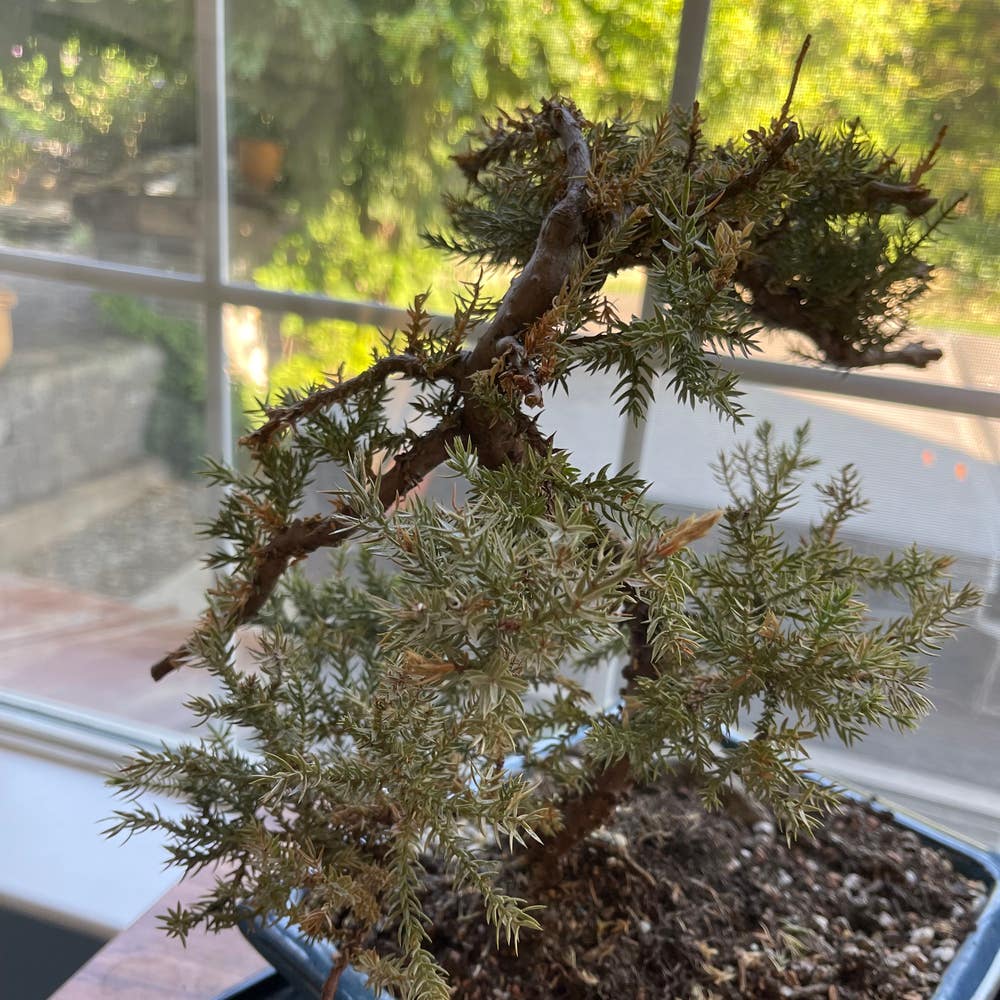
Black Spots on My Japanese Garden Juniper Leaves
Juniperus procumbens
By the Greg Editorial Team
Jun 18, 2024•6 min read
This article was created with the help of AI so we can cover more plants for you. May contain errors. See one? Report it here.
Banish black spots 🍂 from your Japanese Garden Juniper and safeguard its elegance with our definitive care guide.
- Identify black spots by their unique lesions and margins on juniper leaves.
- Isolate and prune affected plants with sterilized tools to prevent spread.
- Prevent with care: Proper watering, mulching, and seasonal adjustments.
Spotting the Black Spots: What to Look For
🕵️ Characteristics of Juniper Black Spots
Dark lesions on the foliage are your first clue. Unlike the random blemishes from environmental stress, these spots come with a posse: concentric rings or feathery margins. Spot any tiny black dots? Those are likely fungal fruiting bodies, throwing a microscopic rave on your plant's dime. A yellow halo might also make an appearance, hinting at a fungal shindig rather than a benign spot.
🎭 Differentiating Black Spots
Now, not all spots are created equal. If you see a spot that's more of a water-soaked look or one that's got a dry, crusty vibe, you're dealing with different beasts. And location matters – spots that favor the base of the foliage might be hinting at a different cause than those freeloading on the tips.
🦠 The Fungal vs. Bacterial Showdown
Fungal infections like to flaunt their presence with those fruiting bodies and halos. Bacterial issues, on the other hand, are sneakier. They might start with a wilt here, a droop there, before they go full-on black spot mania.
So, grab your magnifying glass and channel your inner plant detective. Inspect the roots, scrutinize the watering schedule, and consider the plant's locale. It's not just about solving the mystery of the black spots – it's about saving your juniper's botanical bacon.

Unearthing the Culprits: Common Causes of Black Spots
🍄 Fungal Foes
Kabatina and Phomopsis blight are the usual fungal suspects behind the black spots on your Japanese Garden Juniper. These fungi are like unwanted party crashers, thriving in the moist and cozy environments that our gardening habits sometimes inadvertently create.
High humidity and excessive moisture, whether from overwatering or poor drainage, roll out the red carpet for these fungi. Add in some stagnant air, and you've got the perfect breeding ground for an all-out fungal fiesta on your juniper leaves.
🦠 Bacterial Baddies
Bacterial diseases can also throw their hat into the ring, manifesting as black spots on your plant. Unlike their fungal counterparts, bacterial spots can appear water-soaked or slimy, and they might bring a foul odor if a secondary infection sets in.
To differentiate between bacterial and fungal causes, look for the hallmarks of each. Fungal spots often start as small black dots with a yellow halo, while bacterial spots can look like they've been soaked in water. If you're smelling something funky, bacteria might be to blame.
Remember, it's not just about slapping on a treatment; it's about understanding these nuances to prevent future outbreaks. Keep your juniper's environment less inviting to these pathogens by managing moisture and improving air circulation. It's like telling these party crashers the gig is up before they even step foot in the door.

First Response: Immediate Actions to Take
🛡️ Isolation is Key
Upon detecting black spots, isolate your Japanese Garden Juniper pronto. Like quarantining a sneezing human, this step stops the contagion from turning your garden into a plant ICU.
🕵️ Damage Assessment
Next, channel your inner detective and scrutinize the foliage. Are we talking a few freckles or a full-blown pox? The scale of the outbreak dictates whether you'll be a plant paramedic or a leafy undertaker.
✂️ Prune with Precision
Got your pruning shears? Good. Now, snip off those spotty leaves like a surgeon removing appendixes. Sterilize your tools between cuts—think of it as washing your hands in an operating room.
🌬️ Environmental Tweaks
Adjust the plant's digs. Too much moisture? Let's not turn this into a fungal rave. Lighting and airflow are your new best friends. Think of them as the bouncers at the door of Club Juniper.
👀 Monitor Relentlessly
Keep an eye on your green patient like a hawk with a health degree. New spots? No spots? More spots? Your observations will steer the ship through these spotty waters.

Battling Black Spots: Treatment Strategies
🍄 Fungicide Frontline
Choosing the right fungicide is crucial in combating fungal-induced black spots. Options range from copper-based products to biocontrol agents like neem oil. Timing is critical: apply fungicides as buds break in spring, before symptoms appear. Always adhere strictly to the label's instructions; overuse is counterproductive and can harm the plant.
Application technique matters. Spray thoroughly, ensuring coverage of every leaf, both front and back. It's like applying sunscreen—miss a spot, and you're inviting trouble. Repeat applications as directed, because fungi are tenacious.
💊 Bacterial Battle Plan
When bacterial infections are the culprits, antibacterial treatments come into play. Act swiftly, as you would when catching a cold; the earlier you address the infection, the better. The application should be as precise and careful as defusing a bomb—meticulously follow instructions to avoid exacerbating the issue.
🌿 Cultural Combat Techniques
Adjusting care routines can help discourage black spot formation. Ensure good air circulation and adequate sunlight; these are like a fitness routine for plants, keeping them robust and less susceptible to disease. Pruning prowess is essential—remove infected foliage with sanitized tools to prevent spread. Think of it as plant surgery; clean your tools after each use to maintain hygiene.
Regular checks are your early warning system. Spacing plants appropriately can prevent trouble from spreading—think of them as needing personal space, like introverts at a party. Watering should be like a well-timed joke—not too much, not too little, just enough to prevent the soil from becoming a fungal playground.
Keeping the Spots at Bay: Prevention Tips
💧 Watering Wisdom
Watering is crucial; too much and you invite trouble. Ensure the soil around your Japanese Garden Juniper dries out before you reach for the hose again. Think of it as a mini drought; your juniper will thank you by staying healthy and spot-free.
🌿 Mulching Mastery
Mulch is your garden's secret weapon, acting as a moisture regulator and a barrier against spore hitchhikers. A 2 to 3-inch layer of organic mulch, like shredded bark, does wonders without suffocating your juniper's roots.
🌦 Seasonal Care Adjustments
As the seasons shift, so should your care routine. Less water in the cooler months, a bit more shade during scorching summer days. It's about adapting to keep your juniper's defenses up against black spots.
✂️ Pruning Prowess
Get snippy with infected foliage, but only with sterilized shears. It's like giving your juniper a health-boosting haircut. And remember, prune during dry weather to avoid giving those fungal foes a free ride.
🌱 Soil and Space Smarts
Space your junipers out for better air circulation; it's like social distancing for plants. Opt for well-draining soil to prevent water from pooling at the roots. It's all about creating an environment that's inhospitable to black spot culprits.
⚠️ Safety First
This content is for general information and may contain errors, omissions, or outdated details. It is not medical, veterinary advice, or an endorsement of therapeutic claims.
Always consult a qualified healthcare professional before using any plant as food, medicine, or supplement.
Never eat any plant (or feed one to pets) without confirming its identity with at least two trusted sources.
If you suspect poisoning, call Poison Control (800) 222-1222, the Pet Poison Helpline (800) 213-6680, or your local emergency service immediately.
Spotted an error? Please report it here.
Eradicate black spots 🌿 with Greg's personalized care plans, ensuring your Japanese Garden Juniper thrives in the ideal environment and stays healthy.