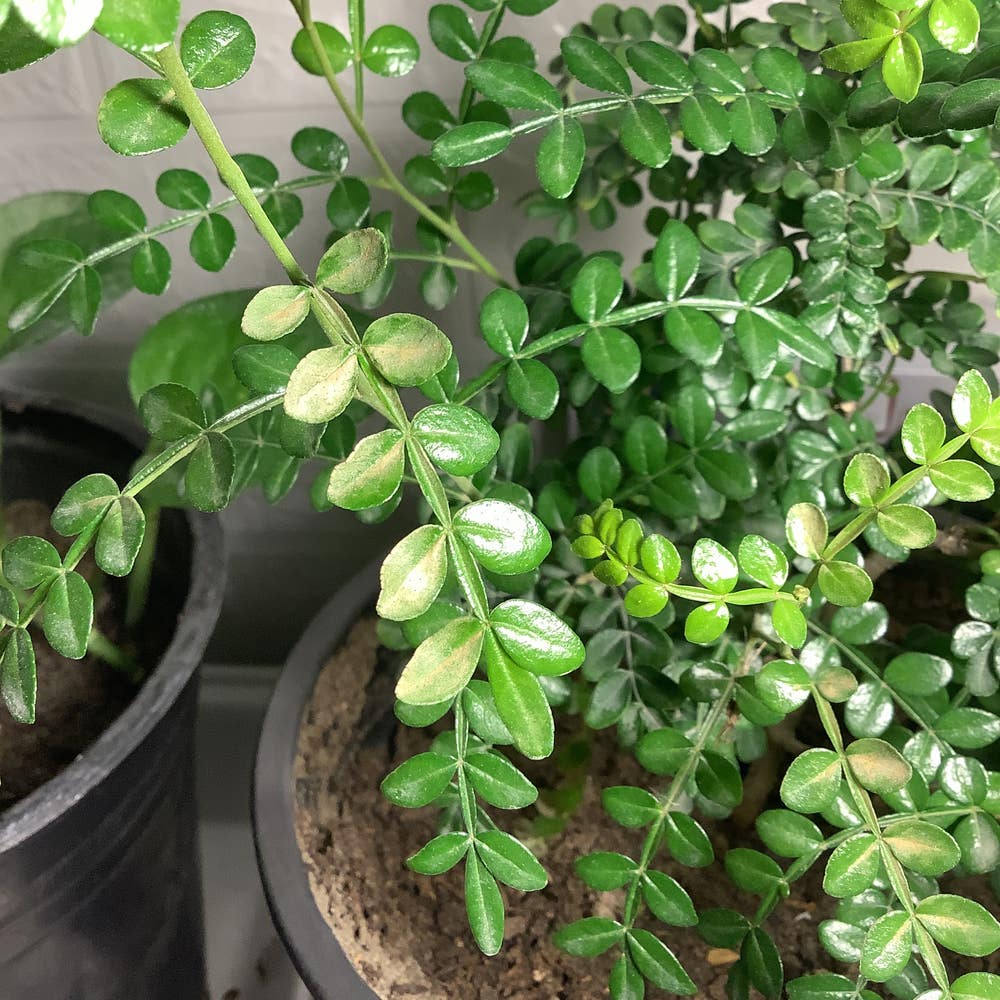
🍋 Why Does My Wild Lime Have Yellow Leaves?
Zanthoxylum fagara
By the Greg Editorial Team
Jun 18, 2024•4 min read
This article was created with the help of AI so we can cover more plants for you. May contain errors. See one? Report it here.
- 🍂 Nutrient imbalances and water issues cause yellow leaves on Wild Lime.
- 🐛 Pests and diseases can also turn leaves yellow; early detection is key.
- ☀️🌡️ Proper sunlight, temperature, and humidity maintain healthy leaf color.
Spotting the Culprits Behind Yellow Leaves
💡 Nutrient Deficiencies
Nitrogen and iron are crucial for maintaining the lush green color of Wild Lime leaves. When these nutrients are lacking, the plant's leaves can turn a telltale yellow. Nitrogen deficiency typically starts with the older leaves, which can become pale or fully yellow. Iron deficiency, on the other hand, often targets the younger leaves, causing yellowing between the veins while leaving the veins themselves dark green.
🚰 Overwatering and Underwatering Woes
Overwatering can transform the soil into a damp nightmare for Wild Lime, leading to root rot and yellow leaves. Conversely, underwatering can leave the plant dehydrated, with leaves that are wilted and yellow. The key is to check the soil's moisture level before watering—aim for a drink when the top inch feels dry, and ensure the pot has adequate drainage.
🍽️ Uninvited Guests: Pests and Diseases
Pests such as aphids and diseases like Alternaria can also turn the Wild Lime's leaves yellow. Aphids, tiny sap-suckers, often congregate under leaves, leaving behind yellowing foliage. Alternaria, a fungal foe, manifests as brown and yellow spots. Vigilance is vital—regularly inspecting the underside of leaves can help catch these culprits early.

Turning Over a New Leaf: Remedies and Prevention
🌿 Feeding Your Wild Lime Right
Nutrient balance is key for a Wild Lime's leaf health. Fertilize with a balanced mix that caters to citrus needs, ensuring you do so when the soil is moist to prevent root burn. Moderation is your friend; overfeeding can lead to nutrient burn, which is just as bad as underfeeding.
🌡️ pH and Friends
Soil pH can make or break your Wild Lime's ability to uptake nutrients. Aim for a pH between 6.0 and 7.0. Too acidic? Add some lime. Too alkaline? Sulfur might be your go-to amendment. Remember, a pH test is like a quick health check-up for your soil.
💧 Watering Wisdom
Consistency wins the game. Water deeply but allow the soil to dry out slightly between sessions. This encourages strong root growth and prevents both over and underwatering. Think of it as training your Wild Lime to be water-wise.
🌱 Soil Sleuthing
Ensure your Wild Lime's soil is well-draining. Mix in organic matter like coco coir and add perlite for that extra aeration. Your Wild Lime's roots despise soggy conditions, so give them the bed they deserve.
🐛 Keeping Pests and Diseases at Bay
Early detection can save your Wild Lime from a yellow-leaf fate. Regularly inspect for common pests like citrus mites and diseases such as root rot. If you spot trouble, act swiftly with organic or mild chemical treatments, always considering the impact on the ecosystem.
🛡️ Natural and Chemical Shields
For pests, sometimes a blast of water or soapy spray does the trick. For diseases, organic options like a homemade fungicide might be enough. Chemical treatments? They're a last resort. Think of them as the nuclear option—effective but with potential fallout.

Environmental Tweaks for Perfect Greenery
🌞 Sunbathing and Shade: Finding the Balance
Wild Lime plants need the right amount of light to maintain their vibrant green leaves. Too much direct sunlight can lead to a sunburnt look, while insufficient light can cause leaves to yellow and lose their luster.
🔄 Rotate for Even Growth
Rotate your Wild Lime regularly to ensure all sides receive equal light, preventing lopsided growth and uneven leaf coloration.
🌦 Seasonal Adjustments
Be mindful of the changing seasons; as the sun's intensity varies, so should your plant's exposure to prevent leaf tan lines or a pale complexion.
🌡 Weathering the Weather: Temperature and Humidity
Temperature and humidity levels are crucial in keeping your Wild Lime's leaves from turning yellow.
🌡 Temperature Consistency
Aim for a consistent temperature that doesn't swing to the extremes of hot or cold. Think of maintaining a mild spring day indoors for your plant.
💧 Humidity Balance
Find the humidity sweet spot; too much can lead to fungal issues, while too little can stress the plant, affecting its vital functions like transpiration and photosynthesis.
🛡 Protective Measures
In extreme heat, provide some afternoon shade to lower leaf temperature and promote healthier growth. During colder months, a layer of mulch can act as insulation to protect the roots.
🚫 Avoid Drafts
Keep your Wild Lime away from drafts and sudden temperature changes, which can stress the plant and lead to yellowing leaves.
⚠️ Safety First
This content is for general information and may contain errors, omissions, or outdated details. It is not medical, veterinary advice, or an endorsement of therapeutic claims.
Always consult a qualified healthcare professional before using any plant as food, medicine, or supplement.
Never eat any plant (or feed one to pets) without confirming its identity with at least two trusted sources.
If you suspect poisoning, call Poison Control (800) 222-1222, the Pet Poison Helpline (800) 213-6680, or your local emergency service immediately.
Spotted an error? Please report it here.
Banish yellow leaves and ensure your Wild Lime stays radiantly green 🍃 with Greg's tailored care reminders and real-time community support.