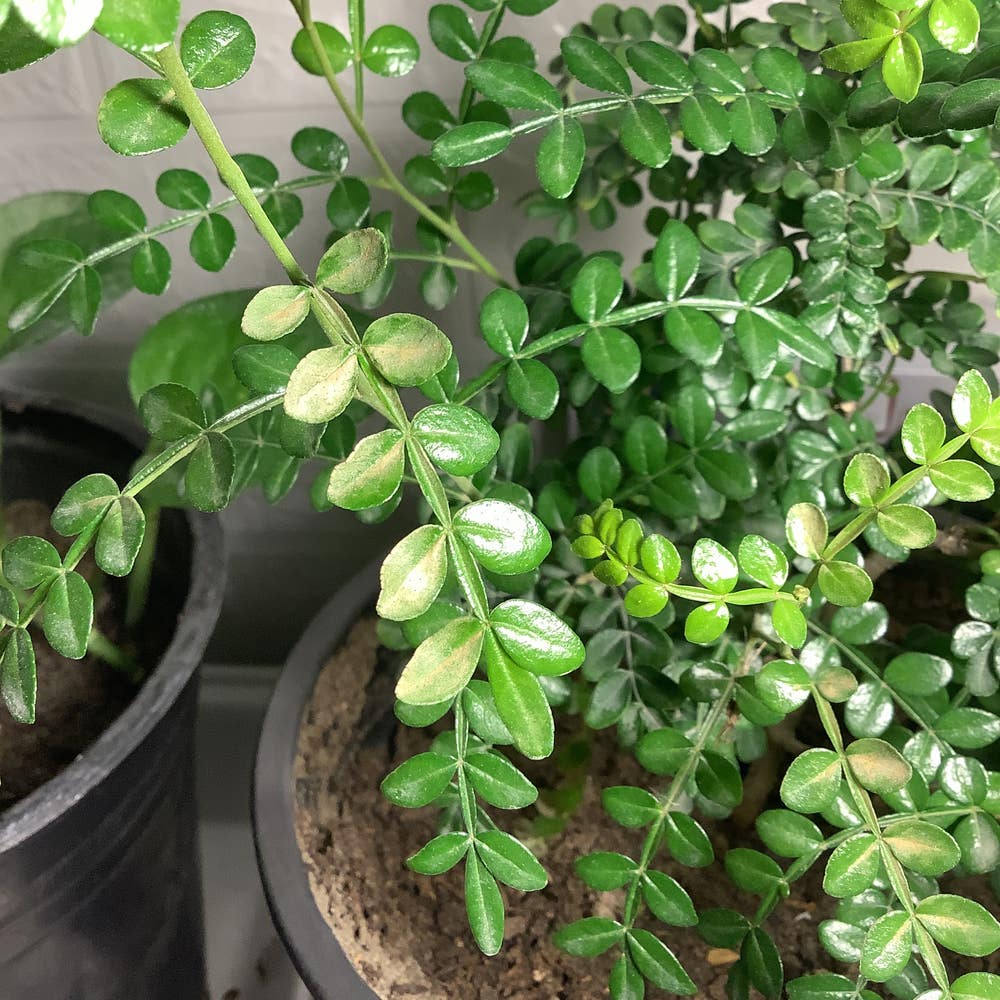
🍂 Why Are There Brown Spots on My Wild Lime Leaves?
Zanthoxylum fagara
By the Greg Editorial Team
Jun 18, 2024•4 min read
This article was created with the help of AI so we can cover more plants for you. May contain errors. See one? Report it here.
- 🌱 Overwatering and pests lead to brown spots; adjust watering and control pests.
- 🍄 Fungal diseases need proper fungicides; ensure good airflow to prevent them.
- 🔍 Regular inspections help catch early signs; use well-draining soil for prevention.
Spotting the Trouble: Recognizing Brown Spots
🍂 What They Look Like
Wild Lime leaves with brown spots often exhibit a range of symptoms. These spots may start as small specks and can grow into larger patches. The color can vary from light tan to a deep brown. They might present as dry and brittle or have a water-soaked look, which can hint at the underlying cause.
🕵️ Where to Find Them
Brown spots typically appear on areas of the leaf that are most vulnerable to environmental stresses or pest attacks. They can be found anywhere from the leaf center to the margins. Pay special attention to the undersides of leaves, as pests like to hide there. Observe whether the spots are isolated, widespread, or form a particular pattern, as this can be crucial for diagnosis.
The Usual Suspects: Pinpointing the Causes
💦 Too Much Love: Overwatering Woes
Overwatering is the equivalent of drowning your Wild Lime in affection. It's a classic case of too much of a good thing leading to trouble. Roots suffocate, unable to breathe or take up nutrients, and the leaves respond with unsightly brown spots.
🐜 Uninvited Guests: Pests That Cause Havoc
Pests like spider mites, aphids, and mealybugs are the freeloaders of the plant world. They latch on, suck the sap, and leave your Wild Lime's leaves dotted with brown battle scars. Vigilance is key—catch them before they turn your plant into an all-you-can-eat buffet.
🍄 Fungal Foes: Diseases That Discolor
Fungal diseases, such as Anthracnose and Leaf Spot, are like uninvited party crashers. They thrive in the wet conditions created by overzealous watering. First, they bring yellow spots, which mature into the dreaded brown. It's a fungal fiesta on your Wild Lime's foliage, and not the good kind.
Brown Spot Boot Camp: Effective Treatments
💧 Drying Out: Balancing Moisture Levels
Overwatering can turn your Wild Lime's home into a swamp, and brown spots love a swamp. Cut back on the H2O and let the topsoil dry out before you water again. Think of it as giving your plant a thirst for life, not drowning it in love.
🦠 Fungus Among Us: Choosing the Right Fungicide
Fungus can be a stealthy adversary, but the right fungicide is like a secret agent for your plants. Rotate your fungicides to keep the fungus guessing and follow the label like it's the law. Copper-based options can be both effective and environmentally conscious.
🐜 Bug Off: Keeping Pests at Bay
Pests are the party crashers of the plant world. To show them the door, introduce natural predators like ladybugs, or use neem oil as a polite but firm bouncer. Insecticidal soaps can also clean up your pest problem, leaving your Wild Lime spotless.
Keeping Spots at Bay: Prevention Tactics
🌱 The Right Foundation: Soil and Drainage Essentials
Well-draining soil isn't just a recommendation; it's a necessity for keeping your Wild Lime's feet dry and healthy. Think of it as the difference between wading in a swamp and strolling on a breezy beach. Opt for a mix that's high in organic matter but doesn't hold onto water like a sponge. If you're potting, ensure those drainage holes are clear—no one likes waterlogged roots.
💨 Breezy Does It: Ensuring Good Airflow
Airflow is like a breath of fresh air for your Wild Lime—literally. It's the unsung hero that thwarts fungal growth and keeps those leaves spot-free. Place your plant where the air can dance around it, not trapped in a stagnant corner. Prune any dense foliage to prevent the leaves from getting too cozy and inviting fungal gatecrashers.
👀 Vigilant Gardening: Routine Leaf Inspections
Regular leaf inspections are the equivalent of neighborhood watch for your plants. Catch those early signs of distress and act swiftly. Be the detective that spots the slightest discoloration or suspicious spot. Remember, early detection is key, and your vigilance can mean the difference between a minor issue and a full-blown brown spot breakout.
⚠️ Safety First
This content is for general information and may contain errors, omissions, or outdated details. It is not medical, veterinary advice, or an endorsement of therapeutic claims.
Always consult a qualified healthcare professional before using any plant as food, medicine, or supplement.
Never eat any plant (or feed one to pets) without confirming its identity with at least two trusted sources.
If you suspect poisoning, call Poison Control (800) 222-1222, the Pet Poison Helpline (800) 213-6680, or your local emergency service immediately.
Spotted an error? Please report it here.
Keep your Wild Lime leaves spotless 🍃 by using Greg to tailor moisture levels and pest control, ensuring your plant stays as vibrant as your green thumb ambitions.