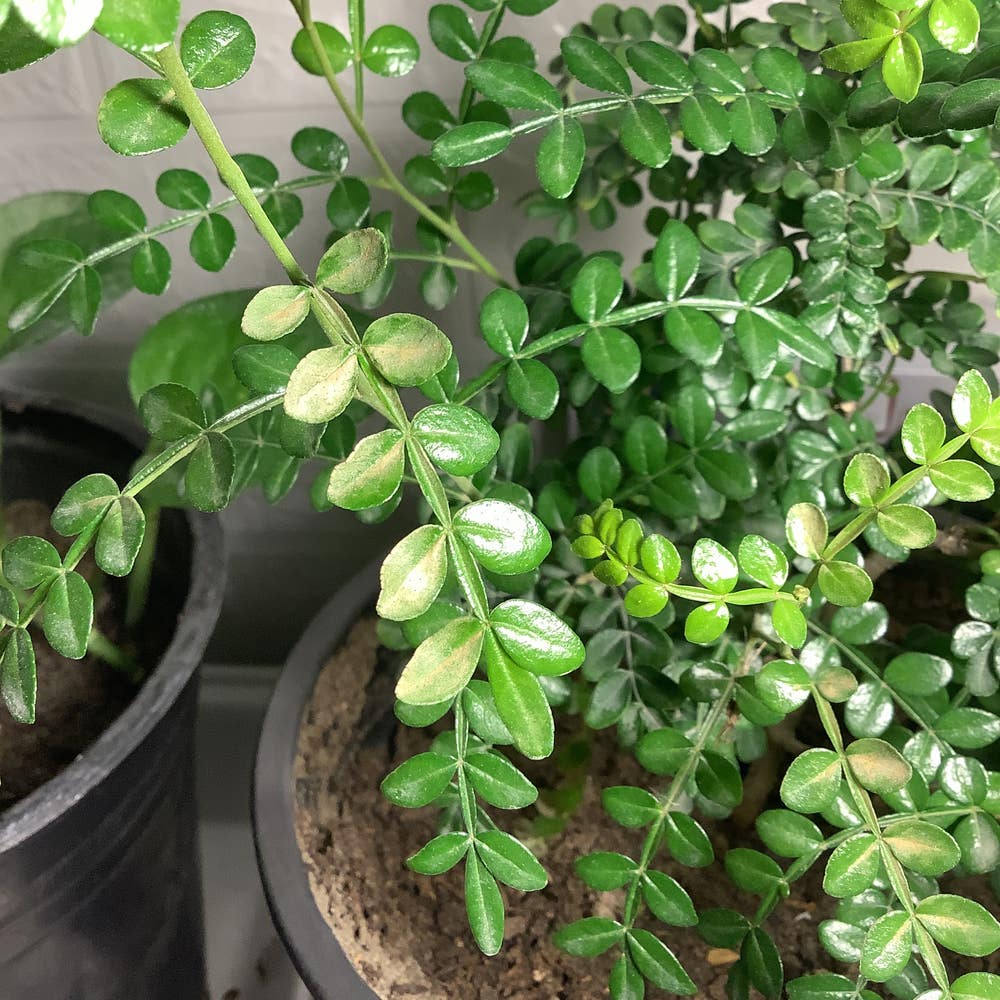
Why Are My Wild Lime Leaves Droopy? 😔
Zanthoxylum fagara
By the Greg Editorial Team
Jun 18, 2024•6 min read
This article was created with the help of AI so we can cover more plants for you. May contain errors. See one? Report it here.
- 💧 Balance water needs: Over/underwatering causes droopiness.
- ☀️🌡️ Adjust light and heat: Find the Goldilocks zone for health.
- 🌱 Nutrients and repotting: Soil tests and repotting can revive plants.
Spotting the Signs: Is Your Wild Lime Unhappy?
Droopy leaves on a Wild Lime plant are like a red flag in a sea of greenery. Pay attention—your plant's trying to tell you something.
🚩 Telltale Symptoms of Droopiness
Look for leaves that hang with a certain despondence, their usual vibrant stance now a wilted frown. If the leaves feel limp and lack their characteristic firmness, it's a sign. Yellowing or a pale hue? That's your Wild Lime waving a white flag, signaling a deeper issue.
🔍 Quick Tips for Diagnosis
Morning check-ups are crucial. If leaves perk up after the sun rises, it's likely a temporary slump. But if the droop persists into the afternoon, consider it a cry for help. A quick leaf lift can be telling—a healthy leaf will resist, while a droopy one will flop, revealing its distress. Keep an eye out for other signs like yellowing or texture changes, which can indicate nutrient deficiencies or environmental stress. Remember, spotting these signs early can be the difference between a quick fix and a prolonged plant saga.

Thirsty or Drowning? Balancing Water Needs
🚰 Spotting the Signs of Each in Wild Lime
Underwatering turns your Wild Lime leaves into wilted wallflowers, dry and curled up in despair. On the flip side, overwatering makes them yellow and lifeless, like they've lost their zest for life.
💧 How to Tweak Your Watering Ways for Perkier Leaves
First, feel the soil—if it's dry a couple of inches down, it's time to water. But if it's damp, hold off to avoid a soggy situation.
🌧 The Weekly Watering Wisdom
Start with a weekly schedule, but stay flexible. Adjust for the temperature and humidity—more water during a heatwave, less when it's cooler.
📏 The Moisture Meter Method
Consider using a moisture meter as your secret weapon. It's like having a backstage pass to your plant's hydration status—no guesswork needed.
👆 The Finger Test
Old-school but effective: stick your finger in the soil. If it's as dry as yesterday's toast, your plant's thirsty. If it feels like a damp sponge, you're in the clear.
🍃 Observing Leaf Language
Leaves don't lie. If they're more wrinkled than a crumpled paper bag, it's a cry for water. Yellow and limp? Ease up on the H2O.
🌱 Adjusting to the Seasons
Your watering routine isn't set in stone. Like your wardrobe, it should change with the seasons. More hydration in the summer, less when winter rolls around.
🌊 Avoiding the Extremes
Remember, your Wild Lime doesn't want to swim or wither. It's all about finding that hydration harmony.

Light and Heat: Finding the Sweet Spot
🌞 The Goldilocks Zone for Wild Lime
Wild Lime plants have a sweet spot when it comes to light and temperature. Too much sun and they're toast; too little and they're basically in hibernation. Bright, indirect sunlight is your target—like the kind that filters through a sheer curtain.
🚨 Symptoms of Light Deprivation and Heat Stress
Leaves turning a paler shade of green? That's your Wild Lime begging for more light. If they're crispy or curled, it's getting scorched. Keep an eye out for these signs; they're your plant's version of a distress signal.
🔄 Adjusting Your Plant's Spot and Environment
If your Wild Lime is throwing a fit, move it away from that sunbeam or radiator. Find a spot that's just right, where it can enjoy the light without feeling like it's baking. And remember, consistency is key—these plants aren't fans of change. If you're dealing with a dark apartment, a grow light can be a game-changer. It's like a personal sun for your leafy friend.
Feeding Finesse: Nutrients for Nimble Leaves
🎯 Zeroing in on Nutrient Needs and Deficiencies
Nutrient deficiencies in Wild Lime can turn your plant's performance from a headliner to a no-show. Yellow leaves? That's the Wild Lime's version of a distress flare. A soil test is your backstage pass to the root of the problem, revealing which nutrients are MIA.
🕵️ Identifying What Your Wild Lime is Lacking
Iron, calcium, and magnesium are the unsung heroes for your Wild Lime. They're like the backup dancers—essential, though they don't always grab the spotlight. Spot a lackluster leaf? It's time to cast these key players.
🌱 Fertilizer Choices and Schedules to Banish the Droops
Choosing a fertilizer is less about a one-size-fits-all and more about tailoring to your plant's needs. Think of it as a nutrient wardrobe—what's the season? What's the stage? Liquid fertilizers are your quick fix, while granules are the slow-release option for the long haul.
Organic Options
Organic fertilizers, like fish bone meal, are the slow food movement of plant care. They release nutrients at a leisurely pace, meaning you won't have to play the overbearing plant parent.
Timing and Application
Timing is everything. Spread out the fertilizer applications to avoid the feast-or-famine scenario. And always apply on moist soil to help your Wild Lime sip, not gulp, the nutrients.
Monitoring and Adjusting
After you've played nutrient matchmaker, keep a close eye on your plant. It's like a first date—look for signs of a good match and be ready to adjust your approach. Leaves still droopy? Might be time to switch up the nutrient mix.
Rescue and Recovery: Reviving Your Wild Lime
When your Wild Lime is more droopy than a Monday morning mood, it's time for a rescue mission. Let's get those leaves standing at attention again.
🌱 Step-by-Step Revival Guide
- Assess the Damage: Soggy soil? Sun-starved? Check for these first.
- Adjust Watering: If the soil feels like a wet sponge, let it dry out before the next watering.
- Light Check: Move your plant to a spot that's bright but not baking.
- Temperature Control: Keep it cozy, but away from drafts or radiators.
- Trim the Dead Weight: Snip off any sad, droopy leaves to refocus energy.
- Root Rehab: If you spot root rot, it's time to trim the dark, mushy parts.
- Repotting Time: If it's been a year or the plant has doubled in size, give it fresh soil and a new pot.
🌿 When to Consider Repotting
- Roots Circling the Drain: If roots are spiraling like a bad TV series plot, repot.
- Soil Quality: If the soil is more compacted than city traffic, refresh it.
- Plant Size: Has your Wild Lime outgrown its home? Upgrade its living space.
🌱 Creating a Recovery Plan
- Soil Mix: Combine well-draining soil with organic matter. Think fluffy, not clumpy.
- Pot Selection: Choose a breathable pot that's just the right size—no mansions needed.
- Aftercare: Post-repotting, keep a watchful eye. It's like a stakeout for signs of recovery or distress.
Remember, reviving a plant is not a sprint; it's a marathon with watering cans and soil scoops. Keep the soil comfortable, the pot breathable, and the water just right. Your Wild Lime will thank you by perking up and possibly even throwing a leafy high-five.
⚠️ Safety First
This content is for general information and may contain errors, omissions, or outdated details. It is not medical, veterinary advice, or an endorsement of therapeutic claims.
Always consult a qualified healthcare professional before using any plant as food, medicine, or supplement.
Never eat any plant (or feed one to pets) without confirming its identity with at least two trusted sources.
If you suspect poisoning, call Poison Control (800) 222-1222, the Pet Poison Helpline (800) 213-6680, or your local emergency service immediately.
Spotted an error? Please report it here.
Ensure your Wild Lime thrives by adjusting 🔄 care with Greg's personalized reminders for watering, light, and fertilizing, tailored to your home's unique environment.