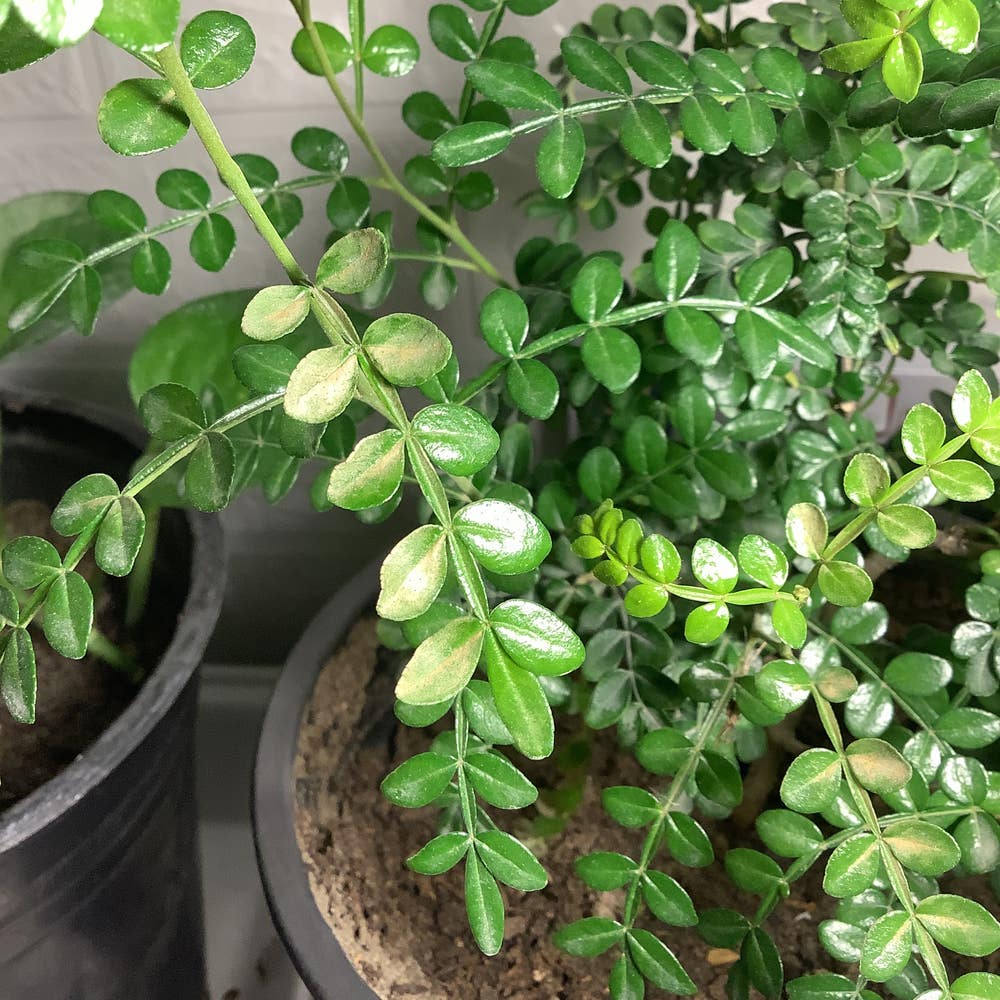
Why Are My Wild Lime Leaves Curling?
Zanthoxylum fagara
By the Greg Editorial Team
Feb 07, 2024•4 min read
This article was created with the help of AI so we can cover more plants for you. May contain errors. See one? Report it here.
- 🌿 Environmental stress, pests, or fungi cause wild lime leaf curl.
- 🔍 Visual and hands-on inspection crucial for identifying curl causes.
- 🛡️ Prevent curl with TLC and pest control - water, shade, and beneficial insects.
Spotting the Culprits Behind Leaf Curling
💡 Environmental Stressors
Heat, cold, and inconsistent watering can turn wild lime leaves into botanical origami. Leaves curl to protect themselves from extreme temperatures and to conserve moisture.
🐜 Pesky Pests
Aphids, spider mites, and citrus leaf miners are the tiny terrors of the wild lime world. These critters suck the life out of leaves, leaving them twisted and deformed.
🍄 Fungal Foes
Fungal infections are the stealthy saboteurs behind leaf curl. Look for discoloration and powdery residues as signs of these unwanted guests.
How to Diagnose Leaf Curling in Wild Lime
👀 Visual Inspection
- Look for patterns: Leaf curl can signal various issues, from water stress to pest invasions.
- Seasonal shifts: Curling in fall or winter might be normal, but persistent or new curling warrants a closer look.
🕵️♂️ Hands-On Investigation
- Get magnified: A magnifying glass can reveal pests like aphids or the fine webbing of spider mites.
- Check for disease: Fungal spores or lesions? A fungicide might be your next step. Unsure? Consult an expert.
- Water woes: Leaves dull green or crispy? Time to reassess your watering routine.
- Pest patrol: Spot any sticky residue or tiny tunnels? Time to bring out the neem oil or hose down those aphids.
Turning the Tide on Leaf Curling
🌿 Environmental TLC
In the battle against leaf curl, environmental balance is key. Wild Lime plants are not fans of extreme weather, so it's crucial to provide just the right amount of water, shade, and shelter.
Adjusting Water and Shade
Too much sun can leave leaves frazzled, while insufficient light leads to a sad, droopy appearance. Strike a balance with a shade cloth during peak sun hours and ensure your plant gets its daily dose of morning or late afternoon light.
Shelter from the Elements
Wind can be another invisible adversary, twisting leaves into contorted shapes. Erect a windbreak or move potted plants to a more protected area to shield them from gusty conditions.
🐜 Pest Control Tactics
Pests are the sneak thieves of the plant world, but with the right tactics, you can keep them from making off with your plant's health.
Deploying Natural Warriors
Introduce beneficial insects like ladybugs to chow down on aphids, or apply neem oil as a natural deterrent. These methods are like enlisting a neighborhood watch for your Wild Lime.
Chemical Countermeasures
When the pest situation goes DEFCON 1, it's time to bring out the chemical agents. Use horticultural oils or insecticidal soaps as targeted strikes, always following the label to avoid collateral damage to your plant or the environment.
Keeping Leaf Curl at Bay
💧 Best Practices for Plant Health
Watering wisdom is non-negotiable. Your Wild Lime craves consistency—establish a watering routine that's just right. Overwatering is a no-go, as is letting the soil turn into the Sahara. Mulching magic works wonders; it's like a thermostat for the soil, keeping it cool in the heat and cozy when it's cold. And don't skimp on fertilization finesse; feed your plant with the nutrients it needs, but don't turn it into a buffet for pests.
🐜 Proactive Pest Defense
Set up a pest patrol routine like you're the neighborhood watch. Regular inspections are your first line of defense. Catch those aphids and spider mites before they settle in for a feast. Encourage beneficial insects and birds; they're like the bouncers at the club of your garden, keeping the riff-raff out. And if pests do break through, be ready with your arsenal—insecticidal soap or neem oil can be the gentle smackdown they need. Remember, the best offense is a solid defense. Keep your plant strong, and it'll be less inviting to pests and diseases.
⚠️ Safety First
This content is for general information and may contain errors, omissions, or outdated details. It is not medical, veterinary advice, or an endorsement of therapeutic claims.
Always consult a qualified healthcare professional before using any plant as food, medicine, or supplement.
Never eat any plant (or feed one to pets) without confirming its identity with at least two trusted sources.
If you suspect poisoning, call Poison Control (800) 222-1222, the Pet Poison Helpline (800) 213-6680, or your local emergency service immediately.
Spotted an error? Please report it here.
Turn your wild lime's frown upside down with Greg's custom care alerts 🌿, which help you adjust water, shade, and defend against pests, ensuring your plant's leaves stay perfectly uncurled.