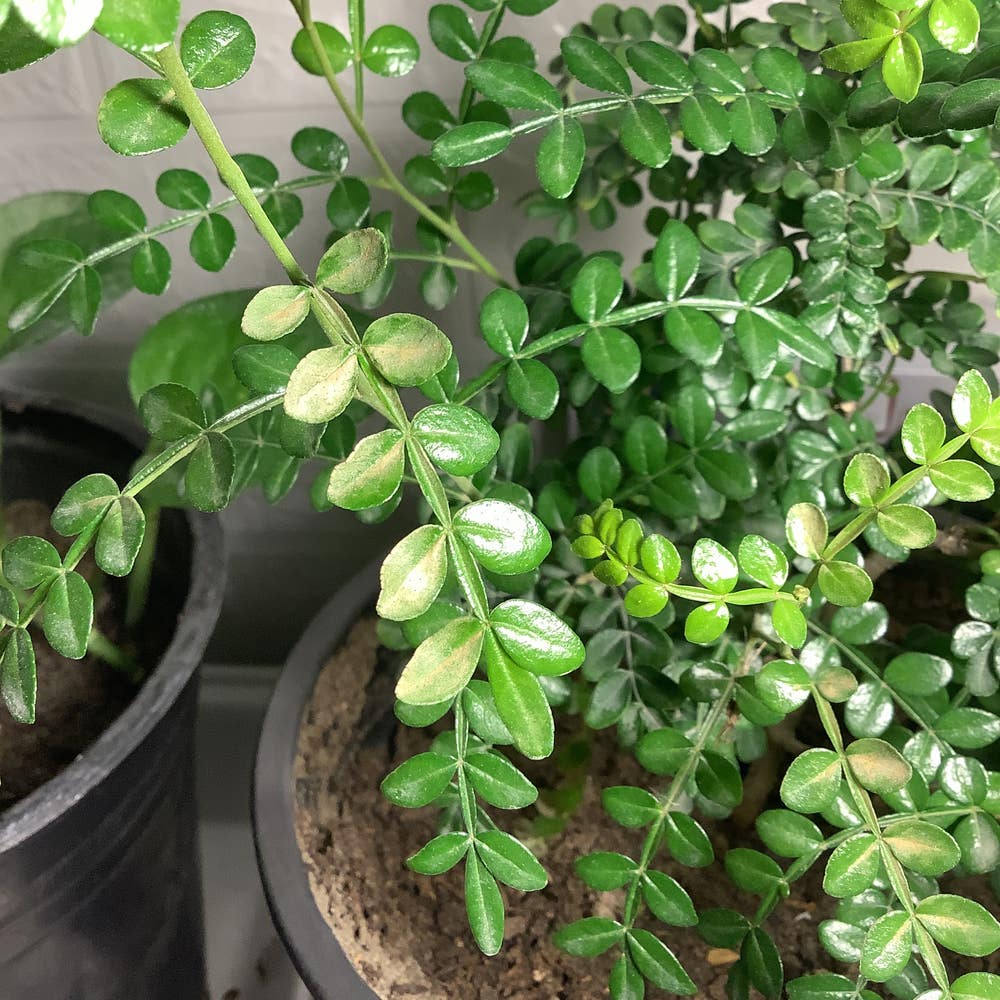
Why Are My Wild Lime Leaves Falling Over?
Zanthoxylum fagara
By the Greg Editorial Team
Feb 07, 2024•4 min read
This article was created with the help of AI so we can cover more plants for you. May contain errors. See one? Report it here.
- 🌧️ Overwatering causes root rot: Let soil dry, trim rot, use well-draining soil.
- 💧 Underwatering leads to droop: Water thoroughly, check soil moisture consistently.
- ☀️🌡️ Bright, indirect light and stable temps: Keep between 65°F and 80°F.
When Too Much Love Causes Harm: Overwatering
🚰 Spotting the Signs of Overwatering
Yellowing leaves on your Wild Lime might not be a sign of autumn but a cry for help. If the leaves are dropping like flies and the soil smells like a damp basement, you're looking at overwatering. Root rot could be the silent killer here, turning the roots into a mushy mess.
🚰 Fixing the Flood
First, stop watering. Let the soil dry out to the touch before you even think about giving it another drink. If the roots are more mush than mass, it's time for surgery—trim the rot away and repot in fresh, well-draining soil.
🚰 Watering Wisdom
To prevent a repeat, water only when the top inch of soil feels dry. Think of it as the plant's version of a thirst meter. And remember, your Wild Lime doesn't need a daily water cooler gossip session; it's more of a weekly catch-up kind of plant.
Thirsty for Attention: Underwatering Woes
🏜️ The Drought Effect on Wild Lime
Wild Lime plants have a tell-tale sign when they're not getting enough water: their leaves droop and lose their usual zesty vigor. The soil feels like a dry, abandoned sandbox, and the leaves might sport more brown tips than a barista's tip jar after a double shift.
💦 Quenching the Thirst
To revive a parched Wild Lime, give it a thorough watering. Ensure the water reaches deep, like a satisfying gulp after a desert trek. Don't just sprinkle the surface; that's like expecting a raincoat to hydrate you.
📅 Setting a Watering Schedule
Consistency is your plant's best friend. Don't rely on memory alone; use reminders or a moisture meter to check the soil's mood. Aim for soil that's moist but not soggy, like a perfectly wrung-out sponge. Adjust your watering schedule to your plant's feedback, not the other way around.
Light and Temperature: The Balancing Act
🌞 Finding the Sweet Spot for Sunlight
Wild Lime plants thrive in bright, indirect sunlight. Direct sun can be too harsh, causing leaves to wilt or even burn. To adjust light exposure, consider the orientation of your windows. East or west-facing windows often provide the ideal light conditions. If your plant is in a south-facing window, use sheer curtains to diffuse the intense midday sun.
Rotate your plant periodically to ensure all sides receive equal light, preventing lopsided growth. If your Wild Lime is reaching for the light, it's a sign that it's not getting enough. On the flip side, if leaves are fading or showing signs of scorch, it's getting too much direct sun.
🌡️ Keeping Cool Under Pressure
Temperature plays a crucial role in preventing leaf droop. Consistent temperatures between 65°F and 80°F (18-27°C) are ideal. Avoid placing your Wild Lime near drafty areas or heat sources, as sudden temperature changes can stress the plant.
In winter, move plants away from cold windows and provide extra humidity if the indoor heat is cranked up. During summer, ensure good airflow to prevent overheating. Remember, your plant doesn't have the luxury of moving itself to a better spot—it's relying on you to keep its environment stable.
Feeding Frenzy: Nutrient Needs and Deficiencies
💡 The Telltale Signs of Nutrient Starvation
Yellowing leaves might be screaming for nitrogen. A Wild Lime plant's plea for help could be in the form of weak stems or leaves that seem to have lost their will to live. Chlorosis, or the yellowing of leaf tissue due to a lack of chlorophyll, is often a billboard for deficiency. If you notice interveinal chlorosis—where the veins stay green but the tissue in between turns yellow—this could be a sign of iron or magnesium deficiency.
🍽️ Serving Up a Balanced Diet
Choosing the right fertilizer is like picking a tailored suit; it needs to fit your plant's needs perfectly. A balanced N-P-K (nitrogen, phosphorus, potassium) ratio is a good starting point, but don't ignore the micronutrients. Overfeeding is a no-go; it's like giving your plant a sugar rush followed by the inevitable crash. Stick to the recommended dosage and keep an eye on your plant's response. If you're unsure, a soil test can be a game-changer—it's like getting a sneak peek into your plant's pantry.
⚠️ Safety First
This content is for general information and may contain errors, omissions, or outdated details. It is not medical, veterinary advice, or an endorsement of therapeutic claims.
Always consult a qualified healthcare professional before using any plant as food, medicine, or supplement.
Never eat any plant (or feed one to pets) without confirming its identity with at least two trusted sources.
If you suspect poisoning, call Poison Control (800) 222-1222, the Pet Poison Helpline (800) 213-6680, or your local emergency service immediately.
Spotted an error? Please report it here.
Revive your Wild Lime with consistent care 🌿 using Greg's custom watering plan and soil moisture alerts, ensuring your green buddy thrives without the guesswork.