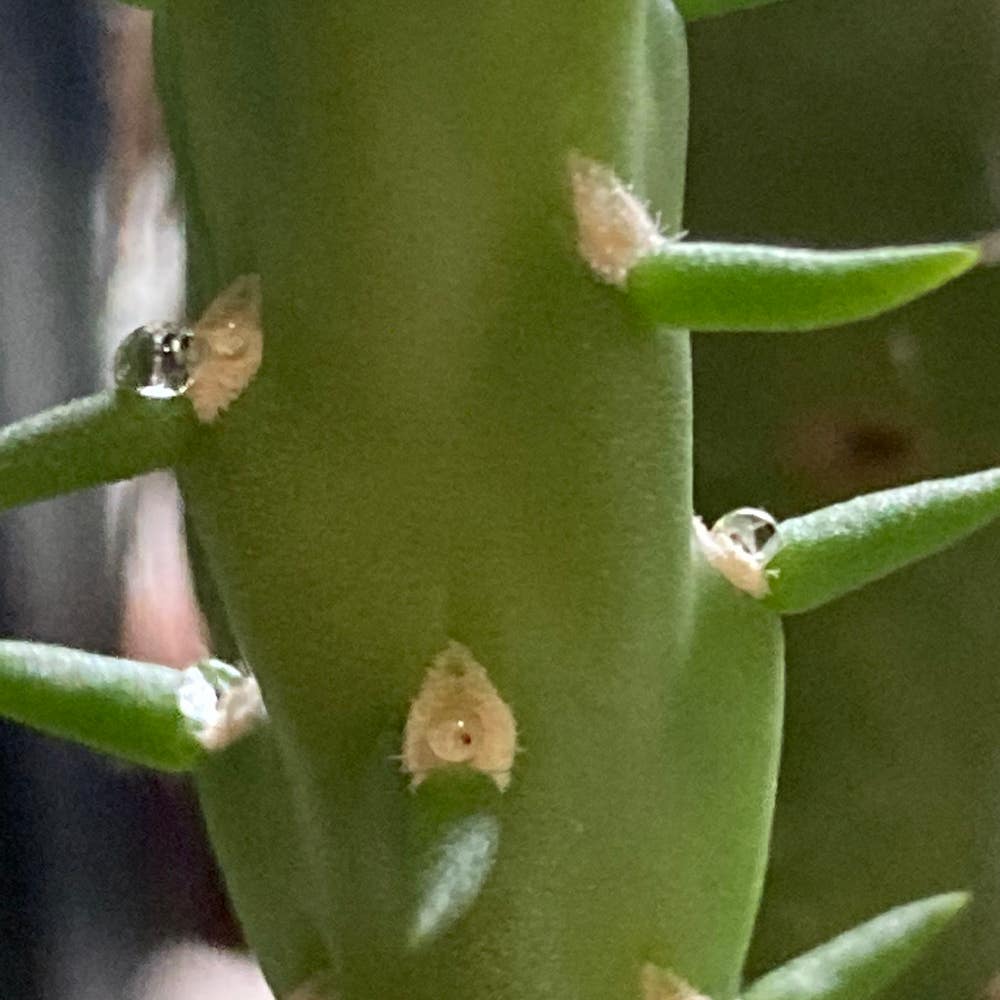
🌵 Why Are My Teddy Bear Cholla Leaves Dropping?
Cylindropuntia bigelovii
By the Greg Editorial Team
Mar 31, 2024•4 min read
This article was created with the help of AI so we can cover more plants for you. May contain errors. See one? Report it here.
Solve the leaf-drop puzzle of your Teddy Bear Cholla for a thriving, resilient cactus 🌵.
- 🌵 Under/overwatering affects leaf health: Watch soil moisture and drainage.
- 🌡️ Stable temperatures prevent leaf drop: Avoid extreme heat and cold snaps.
- 🐜 Combat pests and diseases: Regular inspections and treatments are crucial.
When Thirsty Spines Drop Leaves: Underwatering
🌵 Spotting the Signs of Thirst
Teddy Bear Cholla cacti are hardy, but they speak volumes through their appearance when underwatered. Look for leaves that have become wrinkled, a sign they're more dehydrated than a raisin in the sun. The soil will be as dry as a bone, and the plant's overall demeanor will seem lackluster, as if it's given up on life.
💧 Quenching the Thirst
To prevent your Teddy Bear Cholla from becoming a desert casualty, water deeply when the soil is completely dry. Ensure the water reaches the roots by checking that it drains out of the bottom of the pot. This is not a plant that enjoys a sip; it prefers a long, quenching drink followed by a period of drought. Remember, it's better to err on the side of underwatering than to drown the poor thing in your affections.
Drowning in Love: Overwatering Woes
🌊 Too Much of a Good Thing
Overwatering can transform your Teddy Bear Cholla from a desert warrior to a waterlogged wimp. Yellowing leaves and a mushy base are distress signals; they indicate that your plant's roots are gasping for air, unable to absorb nutrients properly.
Finding the Watering Sweet Spot
The key to hydration is not a set schedule but soil moisture. If the soil feels like a wrung-out sponge, skip the watering can. Ensure proper drainage to prevent your Cholla's roots from sitting in moisture like an unwanted bath.
When the Environment Strikes Back
🌡️ Temperature Tantrums and Sunburn
Teddy Bear Cholla cacti are not fans of dramatic temperature shifts. Much like a spoiled housecat that finds the slightest change in its environment unacceptable, these cacti react poorly to fluctuations. Extreme heat can cause leaves to wilt and scorch, while cold snaps turn them brittle. To avoid these issues, keep your cactus away from heaters and air conditioners. Use a thermometer to maintain a consistent temperature, similar to a mild spring day in the desert.
💦 Humidity Havoc
Humidity levels are like a tightrope walk for Teddy Bear Cholla—too dry, and the leaves shrivel; too moist, and you're practically rolling out the red carpet for fungal issues. The goal is to strike a balance. Consider using a humidifier or a pebble tray to maintain comfortable humidity levels. Also, ensure good air circulation to prevent the air from becoming stagnant and overly humid, as this can lead to leaf drop.
Unwanted Guests: Pests and Diseases
🐛 Bug Battles
Pests can wreak havoc on your Teddy Bear Cholla, causing leaves to drop as if they're going out of style. Aphids, mealybugs, and spider mites are the usual suspects, treating your plant like a buffet. They suck the sap right out, leaving the leaves weak and ready to fall.
Sticky residue or webbing on your plant? That's a red flag. Weekly inspections are your best bet for catching these critters early. If you spot them, show no mercy. A blast of water or a swipe of insecticidal soap can send them packing. For stubborn infestations, neem oil is your go-to.
🍄 Fungal Foes
Fungal diseases are the ninjas of the plant world—stealthy and damaging. Black or brown spots on leaves with a yellow halo are classic signs. If your Cholla's leaves are dropping like flies, it might be time to play detective and check for these symptoms.
Overwatering is often the accomplice in fungal crimes, creating a wet wonderland for spores. Keep the leaves dry and the soil well-drained to avoid these issues. If you spot trouble, remove the affected leaves and hit the fungus with a targeted fungicide. Remember, prevention is always better than cure, so keep your watering in check and your plant's environment stable.
⚠️ Safety First
This content is for general information and may contain errors, omissions, or outdated details. It is not medical, veterinary advice, or an endorsement of therapeutic claims.
Always consult a qualified healthcare professional before using any plant as food, medicine, or supplement.
Never eat any plant (or feed one to pets) without confirming its identity with at least two trusted sources.
If you suspect poisoning, call Poison Control (800) 222-1222, the Pet Poison Helpline (800) 213-6680, or your local emergency service immediately.
Spotted an error? Please report it here.
Ensure your Teddy Bear Cholla avoids the dreaded leaf drop by letting Greg's custom reminders 📅 and environmental tracking keep your cactus perfectly watered and pampered.