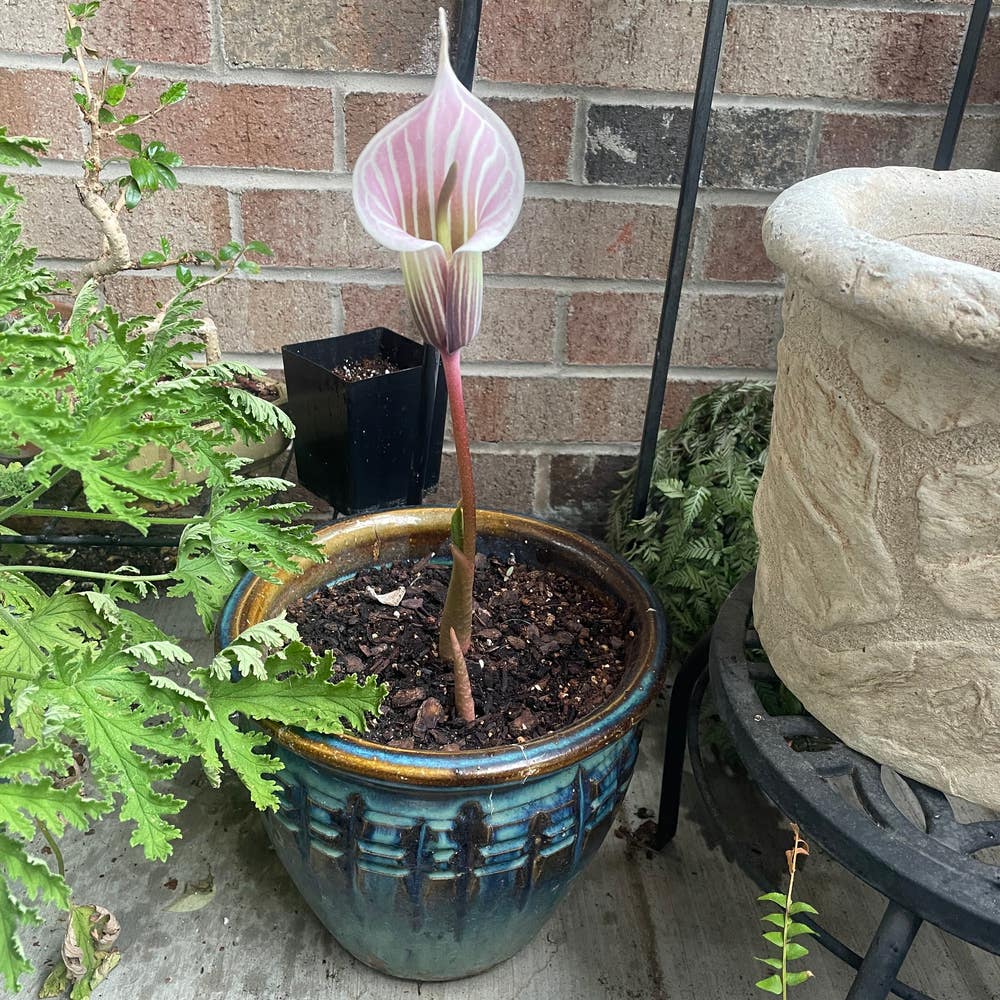
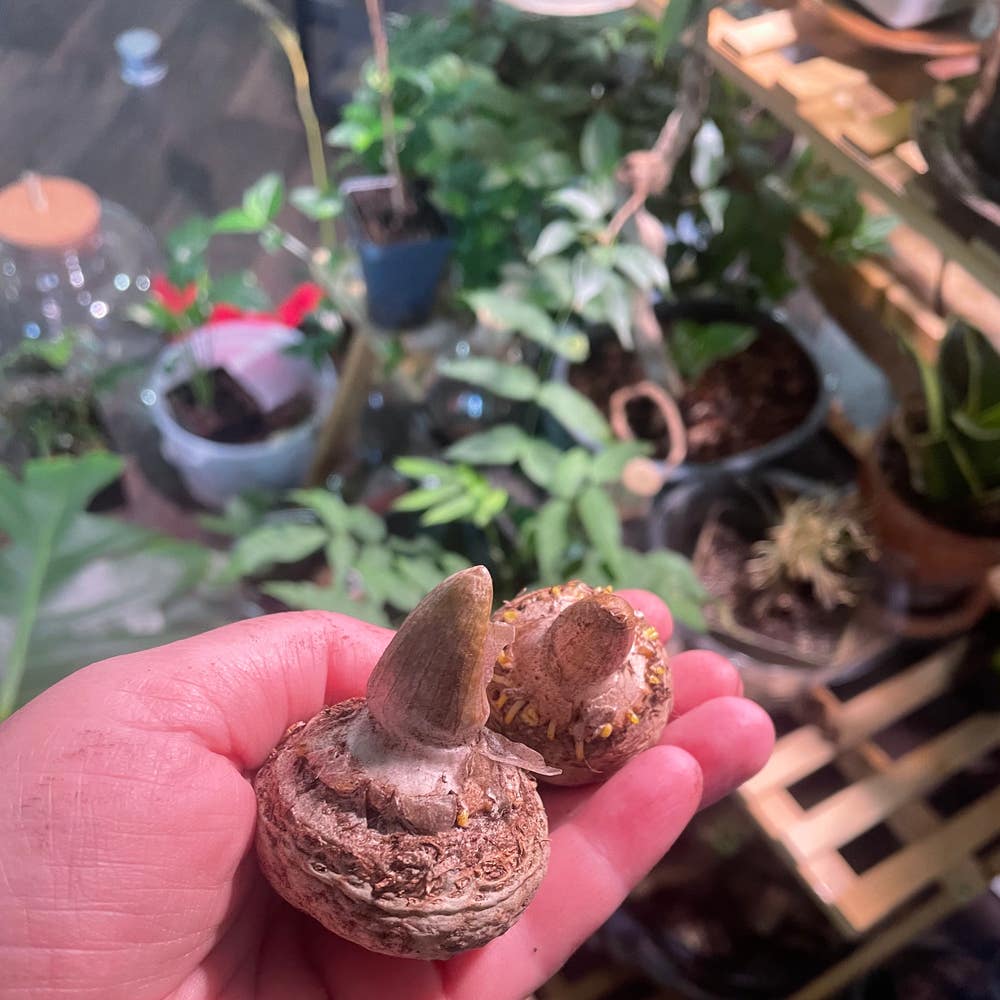
How to Fertilize Your Jack in the Pulpit
Arisaema triphyllum
By the Greg Editorial Team
Mar 05, 2024•3 min read
This article was created with the help of AI so we can cover more plants for you. May contain errors. See one? Report it here.
Nurture a thriving Jack in the Pulpit 🌿 with smart, season-savvy fertilization tips!
- Spring fertilization kickstarts growth, but ease up in autumn for dormancy.
- Organic vs. Synthetic: Choose based on desired nutrient release speed.
- Balanced NPK ratio ensures healthy foliage and flower production.
Timing is Everything: When to Fertilize
🌱 Reading the Growth Cues
Jack in the Pulpit doesn't have a calendar. It relies on environmental cues to signal its needs. Spring is a period of active growth, making it the ideal time to start fertilizing. As the plant unfurls new leaves and stems, it's your cue to provide the nutrients it craves for this energy-intensive phase.
🍂 Seasonal Smarts
Come autumn, the plant's growth slows as it prepares for dormancy. This is the time to ease up on fertilizing, allowing the Jack in the Pulpit to enter its rest period without the stress of excess nutrients. Fertilizing during this time should be lighter and less frequent, helping the plant to wind down naturally.
Choosing Your Green Thumb Ammo: Selecting the Right Fertilizer
💪 Organic vs. Synthetic Showdown
Organic fertilizers are the slow-release marathon runners of plant nutrition, ideal for those who prefer a gentle approach. They nourish your Jack in the Pulpit gradually, fostering robust growth over time. Think of them as the plant world's version of a home-cooked meal, packed with all the good stuff, minus the rush.
Synthetic fertilizers, in contrast, are the sprinters. They deliver nutrients fast and furiously, giving your plant a quick boost. However, they come with a caution sign: overuse can lead to the dreaded fertilizer burn, a plant's worst nightmare.
🔍 Decoding the NPK Mystery
The NPK ratio is like a secret code that unlocks the potential of your Jack in the Pulpit. Nitrogen (N) is the green-growth guru, phosphorus (P) the root and bloom booster, and potassium (K) the overall health enhancer. Balancing these three is key to a thriving plant.
For Jack in the Pulpit, a balanced NPK ratio is the golden ticket. It ensures that the plant doesn't go overboard with leaf production at the expense of its unique flowers. Remember, the right NPK ratio is like a well-tuned orchestra, with each nutrient playing its part in harmony.
Fertilizer Application: Doing it Right
💡 The How-To of Fertilizing
Timing is crucial when it comes to fertilizing your Jack in the Pulpit. Start in early spring and continue through fall, aiming for three applications during the growing season. Here's how to apply fertilizer without fuss:
- Choose a balanced fertilizer; a 20-20-20 or 30-10-10 ratio is ideal.
- Dilute the fertilizer to half-strength to prevent over-concentration.
- Apply evenly around the plant, avoiding direct contact with the stem and leaves.
- Water your plant before and after fertilizing to help soil absorption.
💡 Avoiding the Burn
To prevent the dreaded fertilizer burn, follow these steps:
- Water first: Moist soil allows for better nutrient uptake.
- Even distribution: Avoid nutrient hotspots by spreading the fertilizer uniformly.
- Follow the label: Stick to recommended dosages to avoid overdoing it.
- Observe: Keep an eye on your plant's response and adjust as needed.
Remember, less is often more. Over-fertilizing can lead to root damage and foliage burn, so when in doubt, under-fertilize.
Oops, Too Much! Dealing with Over-Fertilization
🚨 Spotting the Telltale Signs
Yellowing leaves, stunted growth, and a white crust on the soil surface scream over-fertilization. If your Jack in the Pulpit's edges are more brown than green, it's time to reassess your fertilizing strategy.
🛠️ The Recovery Plan
First, stop fertilizing immediately. Remove any visible fertilizer. Then, flush the soil with water to wash away excess nutrients; this might need repeating every few days. Prune any damaged foliage. Your plant doesn't need more food right now—it needs a recovery period. Consider a diluted fertilizer approach in the future to avoid another nutrient shock.
⚠️ Safety First
This content is for general information and may contain errors, omissions, or outdated details. It is not medical, veterinary advice, or an endorsement of therapeutic claims.
Always consult a qualified healthcare professional before using any plant as food, medicine, or supplement.
Never eat any plant (or feed one to pets) without confirming its identity with at least two trusted sources.
If you suspect poisoning, call Poison Control (800) 222-1222, the Pet Poison Helpline (800) 213-6680, or your local emergency service immediately.
Spotted an error? Please report it here.
Ensure your Jack in the Pulpit flourishes with balanced nutrients 🌿 by using Greg to track the ideal NPK ratio and fertilization schedule throughout the seasons.