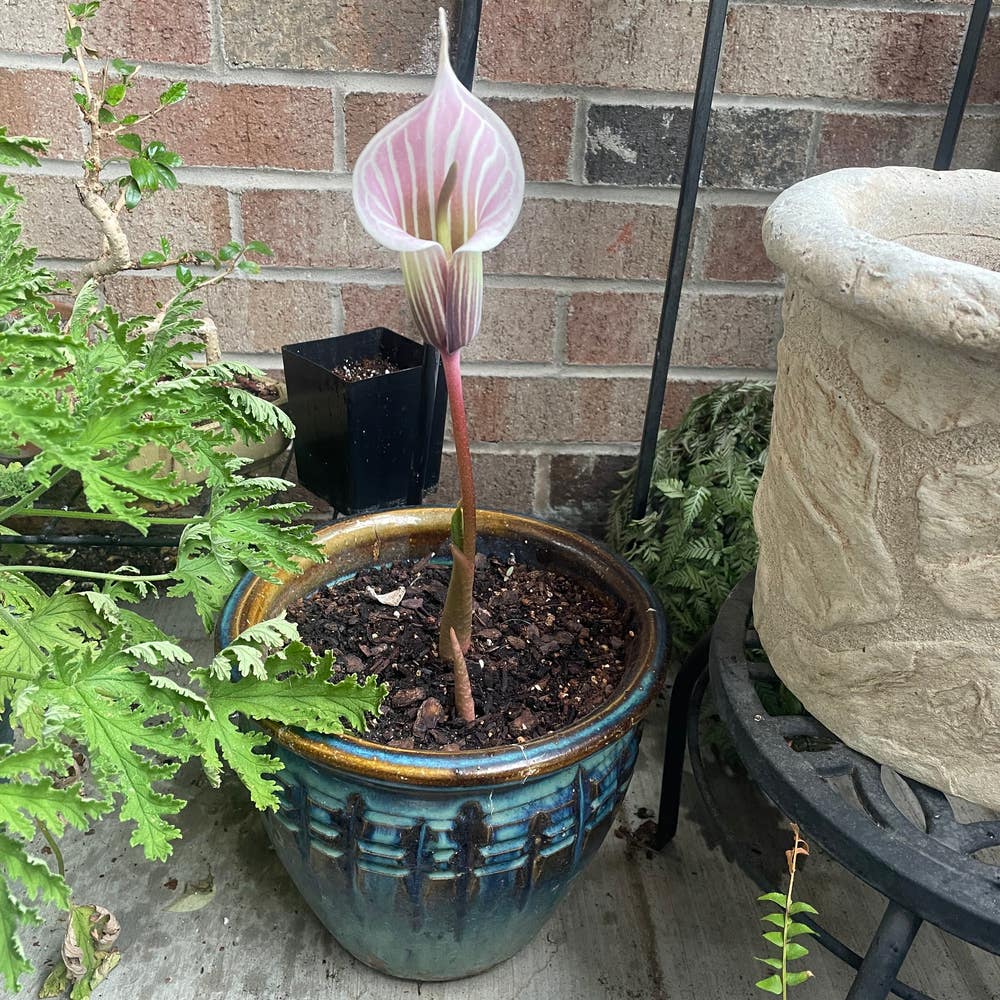
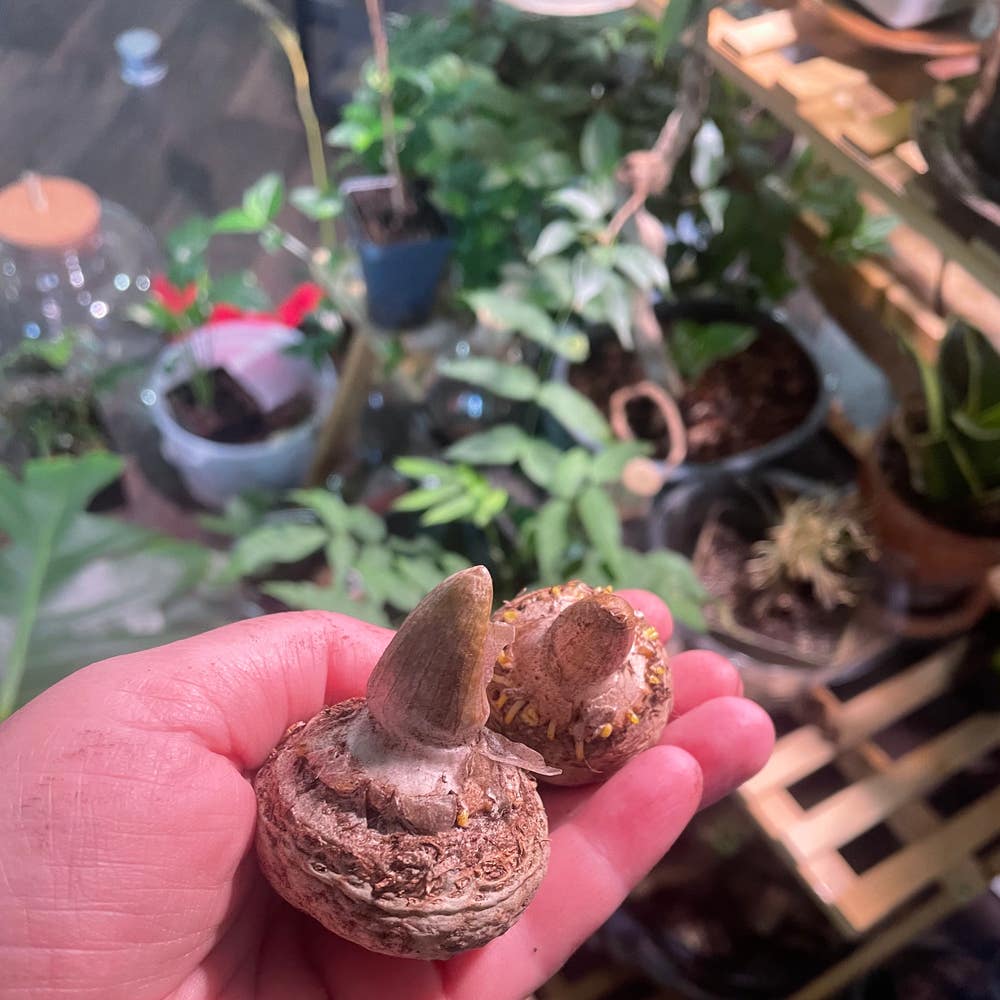
🌺 5 Quick Fixes for Jack-in-the-Pulpit Bloom Problems
Arisaema triphyllum
By the Greg Editorial Team
Oct 18, 2024•4 min read
This article was created with the help of AI so we can cover more plants for you. May contain errors. See one? Report it here.
Master the art of nurturing Jack-in-the-Pulpit blooms 🌸 with essential tips on light, soil, and care!
- 🌞 Dappled sunlight is essential for Jack-in-the-Pulpit to bloom effectively.
- 🌱 Improve soil quality with organic matter to boost flower production.
- 💧 Consistent watering prevents stress; avoid both overwatering and underwatering.
Failure to Bloom
🌞 Causes
Light Conditions
Insufficient dappled sunlight can significantly inhibit blooming. Jack-in-the-Pulpit thrives in partial shade, so too little light can stunt its growth.
Soil Quality
Poor nutrient content and drainage can also affect flower production. If the soil lacks essential nutrients, your plant may struggle to bloom.
Age of the Plant
Younger plants may take longer to reach maturity and bloom. Patience is key, as they often need time to establish themselves.
💡 Solutions
Adjusting Light Exposure
Ensure the plant receives adequate dappled sunlight for optimal growth. Consider relocating it to a spot that mimics its natural habitat.
Improving Soil Nutrients
Use organic matter or balanced fertilizers to enhance soil quality. This will provide the necessary nutrients for robust blooming.
By addressing these common causes and implementing these solutions, you can encourage your Jack-in-the-Pulpit to flourish. Next, let’s explore what to do if you notice premature flower drop.
Premature Flower Drop
🥵 Causes
Premature flower drop in Jack-in-the-Pulpit can be frustrating. One major culprit is environmental stress, such as sudden temperature changes or extreme weather conditions, which can shock the plant and cause buds to fall.
Watering issues also play a significant role. Both overwatering and underwatering can stress the plant, leading to flower drop. If the roots are too wet or too dry, the plant struggles to thrive.
Pest infestations are another concern. Pests can weaken the plant, making it more susceptible to dropping flowers prematurely.
🛠️ Solutions
To combat these issues, start with proper watering techniques. Aim to maintain consistent moisture levels without waterlogging the soil. This balance is crucial for keeping your plant healthy and blooming.
Next, implement effective pest management strategies. Regularly inspect your plants for any signs of pests. If you spot any, consider using organic insecticides to protect your Jack-in-the-Pulpit without harming the environment.
By addressing these causes and solutions, you can help your Jack-in-the-Pulpit thrive and enjoy a beautiful bloom season. Next, let’s explore the abnormal flower development that can also affect your plant’s health.
Abnormal Flower Development
🌱 Causes
Nutritional Imbalances
A lack of essential nutrients can lead to malformed flowers on your Jack-in-the-Pulpit. Key nutrients like nitrogen, phosphorus, and potassium are crucial for healthy flower development.
Improper Pruning
Incorrect pruning techniques can disrupt the plant's natural growth cycle. If you prune too aggressively or at the wrong time, it can hinder blooming.
Disease
Fungal or bacterial infections can severely affect flower quality. Keeping an eye out for signs of disease is essential for maintaining healthy blooms.
💡 Solutions
Fertilization Tips
To combat nutritional imbalances, apply a balanced fertilizer rich in nitrogen, phosphorus, and potassium. This will support robust growth and vibrant flowers.
Correct Pruning Methods
Prune only when necessary and avoid cutting back too much foliage. This helps maintain the plant's natural shape and encourages healthy blooms.
Disease Management
Implement preventive measures to keep diseases at bay. Regularly inspect your plants and treat any infections promptly to ensure they stay healthy and bloom beautifully.
By addressing these issues, you can enhance the flowering potential of your Jack-in-the-Pulpit. Next, let’s explore the environmental factors that can influence flowering.
Environmental Factors Affecting Flowering
🌞 Light Requirements
Jack-in-the-Pulpit thrives in dappled sunlight, mimicking its natural woodland habitat. Too much direct sunlight can scorch its leaves, while inadequate light can stifle blooming.
🍽️ Nutritional Needs
Key nutrients play a vital role in flowering. Focus on nitrogen for lush leaf growth, phosphorus for robust root and flower development, and potassium for overall plant vitality.
⚠️ Signs of Nutrient Deficiencies
Watch for yellowing leaves, stunted growth, and poor flower formation. These signs indicate nutrient deficiencies that can be addressed through soil testing and targeted fertilization.
🌱 Soil and Moisture Conditions
Aim for a soil pH between 5.5 and 7.0, ensuring it remains consistently moist and well-drained. This balance is crucial for optimal blooming.
🛠️ Amending Soil for Better Drainage
To enhance soil structure and fertility, incorporate organic matter like compost and peat moss. This will improve drainage and nutrient retention, creating a healthier environment for your Jack-in-the-Pulpit.
Understanding these environmental factors is essential for nurturing healthy blooms. Next, let’s explore how to tackle specific blooming issues effectively.
⚠️ Safety First
This content is for general information and may contain errors, omissions, or outdated details. It is not medical, veterinary advice, or an endorsement of therapeutic claims.
Always consult a qualified healthcare professional before using any plant as food, medicine, or supplement.
Never eat any plant (or feed one to pets) without confirming its identity with at least two trusted sources.
If you suspect poisoning, call Poison Control (800) 222-1222, the Pet Poison Helpline (800) 213-6680, or your local emergency service immediately.
Spotted an error? Please report it here.
Boost your Jack-in-the-Pulpit blooms 🌼 by using Greg's tailored watering reminders and soil tips to create the perfect environment for vibrant flowers!