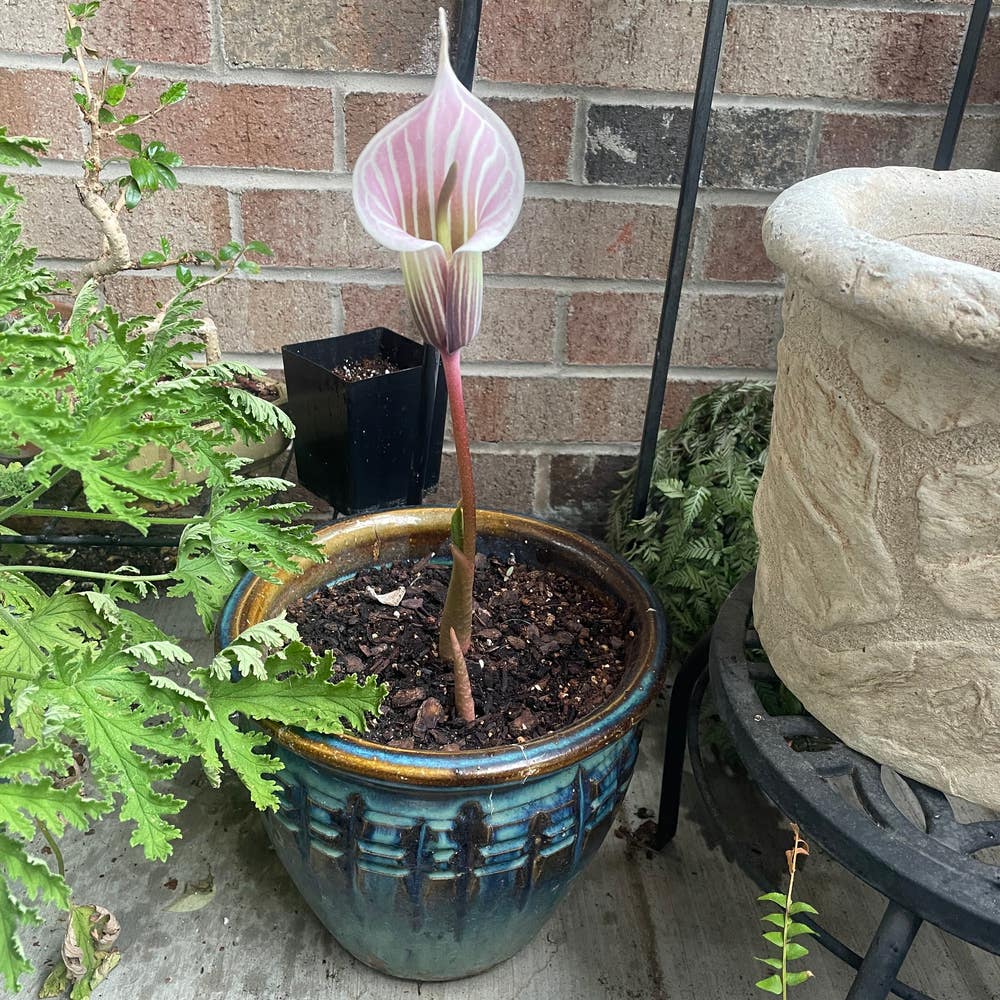
🌬️ 5 Tips for Caring for Your Jack-in-the-Pulpit in Winter
Arisaema triphyllum
By the Greg Editorial Team
Oct 18, 2024•4 min read
This article was created with the help of AI so we can cover more plants for you. May contain errors. See one? Report it here.
Unlock your Jack-in-the-Pulpit's potential this winter 🌱 for a thriving, vibrant spring revival!
- ❄️ Frost protection is vital for Jack-in-the-Pulpit to thrive in winter.
- 🌱 Mulching insulates roots and maintains soil temperature during cold months.
- 🌬️ Sheltered planting reduces exposure to harsh winds and frost damage.
Winter Care Techniques
❄️ Frost protection methods
Frost protection is crucial for your Jack-in-the-Pulpit. It prevents damage that can hinder its growth and vitality.
To protect against frost, consider these techniques:
- Mulching: Use organic materials like straw or leaves to insulate the roots. This layer helps maintain soil temperature.
- Covering: During extreme cold spells, cover the plant with frost cloths or burlap. This extra layer acts as a shield against harsh conditions.
- Location considerations: Plant your Jack-in-the-Pulpit in sheltered areas. This reduces exposure to biting winds and frost.
💧 Adjusting watering schedules during winter
In winter, it's essential to adjust your watering schedule. Reducing frequency helps prevent waterlogging, which can be detrimental.
Check soil moisture levels before watering. This ensures you’re not overdoing it, as the plant requires less water during dormancy.
Well-drained soil is vital. It prevents root rot, allowing your plant to thrive when spring arrives.
🌱 Fertilizing considerations in winter
Generally, avoid fertilizing during the plant's dormancy. This allows it to rest without unnecessary stress.
However, if your Jack-in-the-Pulpit shows signs of growth, consider using a diluted fertilizer. This can give it a gentle boost.
Maintaining a nutrient balance is important. It prepares your plant for the vigorous growth that spring brings.
As you care for your Jack-in-the-Pulpit this winter, keep these techniques in mind. They will set the stage for a healthy, vibrant plant come spring. Next, we’ll explore how to provide indoor care when temperatures drop significantly.
Indoor Winter Care
🏠 When to bring indoors
As winter approaches, it's crucial to keep an eye on your Jack-in-the-Pulpit. If extreme cold forecasts or prolonged frost are on the horizon, it’s time to consider bringing your plant indoors.
Typically, this should happen before the first hard frost hits. This proactive step can save your plant from unnecessary stress and damage.
🌱 Indoor care requirements and conditions
Once indoors, your Jack-in-the-Pulpit needs specific conditions to thrive. Aim for bright, indirect light to mimic its natural habitat, ensuring it gets the energy it needs without being overwhelmed.
Temperature is another key factor. Maintain a cool environment, ideally between 50°F to 60°F (10°C to 15°C), to keep your plant comfortable during its dormancy.
Watering is also essential but should be adjusted. Reduce the frequency, ensuring the soil remains moist but not soggy. This balance helps prevent root rot while keeping your plant hydrated.
By paying attention to these indoor care requirements, you can help your Jack-in-the-Pulpit survive the winter and emerge healthy come spring.
Next, let’s explore how to prepare your plant for the upcoming growth season.
Spring Preparation
🌱 Signs of Recovery from Winter Damage
As winter fades, keep an eye out for signs that your Jack-in-the-Pulpit is bouncing back. Look for new growth emerging and vibrant colors in the leaves, which indicate a healthy plant ready for the warmer months.
Assessing damage is equally important. Check for any dead or mushy stems, as these can hinder your plant's recovery. Early detection allows for timely intervention.
🌼 Preparing for Spring Growth
Spring is the perfect time to give your Jack-in-the-Pulpit a fresh start. Begin by cleaning up the garden; remove any dead foliage and debris that accumulated over winter. This not only improves aesthetics but also prevents pests and diseases.
Next, consider fertilization. Applying a balanced fertilizer will support new growth and ensure your plant has the nutrients it needs to thrive.
Finally, adjust your watering schedule. Gradually increase the frequency as temperatures rise, ensuring the soil remains moist but not soggy. This careful approach will help your plant flourish as it emerges from dormancy.
With these steps, your Jack-in-the-Pulpit will be well-prepared for the vibrant growth of spring. Next, let’s explore common winter problems and their solutions to ensure your plant remains healthy year-round.
Common Winter Problems and Solutions
🥶 Identifying and Addressing Frost Damage
Frost can be a sneaky enemy for your Jack-in-the-Pulpit. Symptoms of frost damage include wilting, browning leaves, and stunted growth, which can be alarming to spot.
To help your plant recover, start by pruning any damaged areas. This encourages new growth and allows the plant to focus its energy on healthier parts.
🚫 Preventing Rot During Winter Dormancy
Drainage is crucial during winter dormancy. Ensure that your pots or garden beds have adequate drainage to prevent water from pooling around the roots.
Regularly monitor moisture levels to avoid overwatering. Signs of rot include soft, discolored roots and stems, which can be detrimental if not addressed quickly. If you detect rot, remove affected areas and adjust your watering practices to promote healthier growth.
By staying vigilant and proactive, you can help your Jack-in-the-Pulpit thrive even in the coldest months. Next, let’s explore how to prepare your plant for the vibrant growth of spring.
⚠️ Safety First
This content is for general information and may contain errors, omissions, or outdated details. It is not medical, veterinary advice, or an endorsement of therapeutic claims.
Always consult a qualified healthcare professional before using any plant as food, medicine, or supplement.
Never eat any plant (or feed one to pets) without confirming its identity with at least two trusted sources.
If you suspect poisoning, call Poison Control (800) 222-1222, the Pet Poison Helpline (800) 213-6680, or your local emergency service immediately.
Spotted an error? Please report it here.
Keep your Jack-in-the-Pulpit thriving this winter ❄️ with Greg's personalized care reminders that ensure your plant stays cozy and healthy all season long!