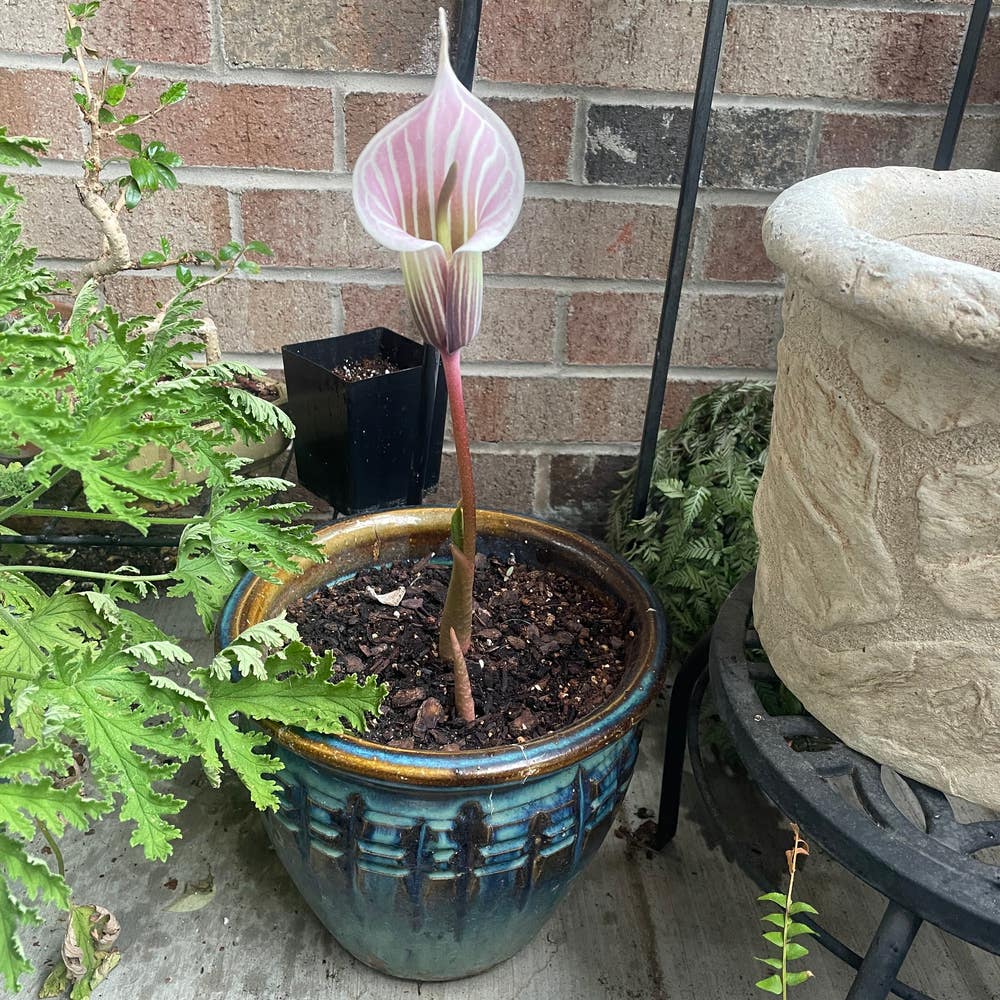
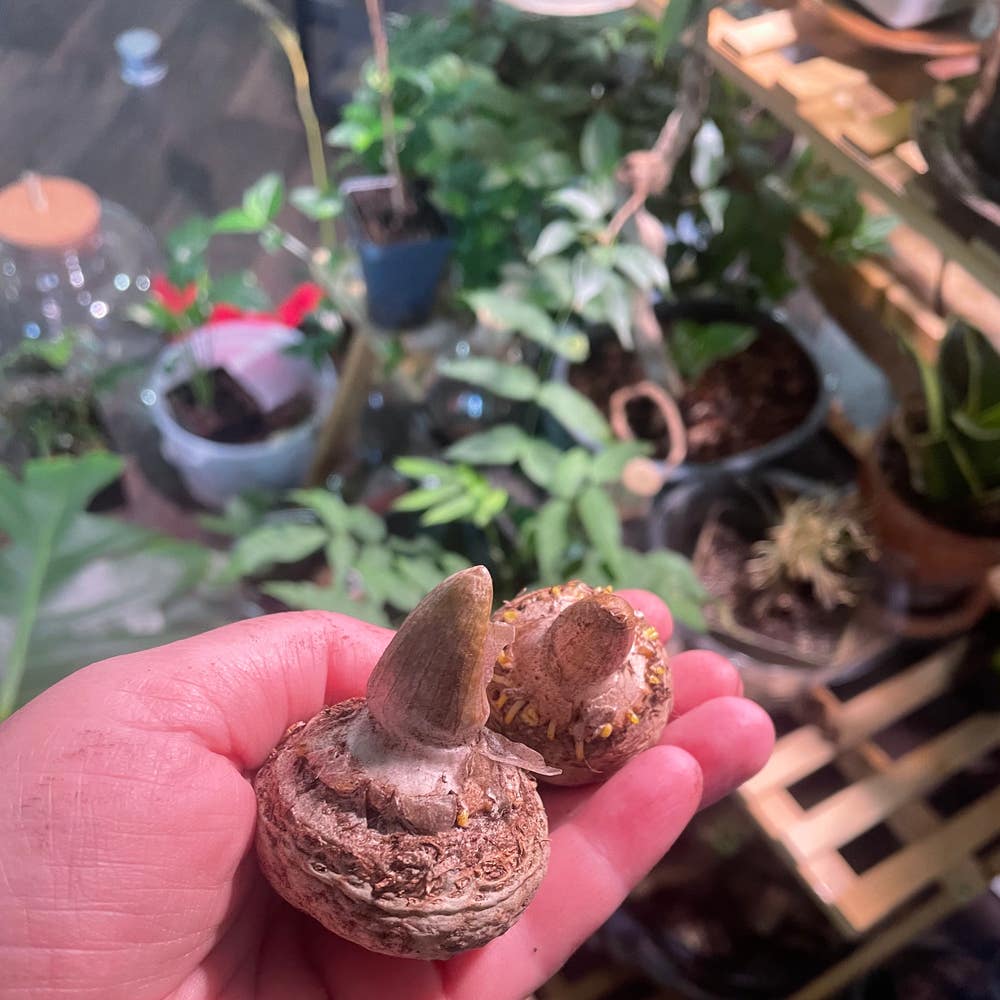
5 Top Pot Choices for Your Jack-in-the-Pulpit 🍄
Arisaema triphyllum
By the Greg Editorial Team
Oct 18, 2024•4 min read
This article was created with the help of AI so we can cover more plants for you. May contain errors. See one? Report it here.
Unlock your Jack-in-the-Pulpit's full potential 🌱 by mastering pot materials and sizes for optimal growth! 🪴
- 🌱 Clay pots promote air circulation and moisture regulation for healthy Jack-in-the-Pulpit growth.
- 💧 Drainage holes are essential to prevent root rot and maintain optimal moisture levels.
- 🪴 Repot every 1-2 years to avoid root crowding and ensure healthy plant development.
Pot Materials
Benefits of Clay Pots 🌱
Clay pots are a gardener's best friend. Their porous nature allows for better air circulation to the roots, promoting healthier growth.
These pots also help regulate moisture levels, reducing the risk of overwatering. Plus, they add a rustic aesthetic appeal to any garden setting.
Advantages of Plastic Pots 💧
Plastic pots are lightweight and incredibly easy to move around. This makes them ideal for those who like to rearrange their plants frequently.
They are generally more affordable than clay pots and retain moisture longer, which can be beneficial in certain conditions.
Comparison of Other Materials 🏺
Ceramic Pots
Ceramic pots are both attractive and durable, making them a popular choice. However, they can be heavy and more expensive than other options.
While they often provide better drainage than plastic pots, they typically don’t match the drainage capabilities of clay.
Biodegradable Pots
Biodegradable pots offer an eco-friendly option, particularly suitable for seedlings. They break down over time, which can affect plant stability as they mature.
Choosing the right pot material is crucial for the health of your Jack-in-the-Pulpit. Each option has its unique benefits, so consider your specific needs and environment when making a decision.
Next, let’s dive into the importance of drainage considerations for your pots.
Drainage Considerations
Importance of Drainage Holes 🌧️
Drainage holes are crucial for preventing water accumulation and root rot. They allow excess water to escape, maintaining optimal moisture levels for your Jack-in-the-Pulpit.
How Drainage Affects Root Health 🌱
Healthy roots need oxygen, and poor drainage can suffocate them. Watch for signs of trouble, like yellowing leaves, wilting, or stunted growth.
Solutions for Pots Without Drainage Holes 🛠️
If your pot lacks drainage holes, you can still improve drainage. Start by adding a layer of gravel or stones at the bottom to help excess water escape.
Another option is to use a pot liner with drainage holes. This provides added protection while ensuring your plant stays healthy and thriving.
With proper drainage, your Jack-in-the-Pulpit will flourish, setting the stage for successful repotting in the future.
Repotting Guidelines
Signs That It's Time to Repot 🌱
Knowing when to repot your Jack-in-the-Pulpit is crucial for its health. Look for roots visible through drainage holes, as this indicates the plant has outgrown its current home.
If the soil dries out too quickly or retains too much moisture, it's a sign that the pot is no longer suitable. Stunted growth or yellowing leaves can also signal that your plant needs more space to thrive.
Step-by-Step Guide to Repotting 🛠️
Repotting can seem daunting, but it's straightforward. Follow these steps for a successful transition:
- Choose a new pot that is 2 inches larger in diameter.
- Prepare fresh potting soil suitable for Jack-in-the-Pulpit.
- Carefully remove the plant from its current pot, loosening the root ball.
- Place the plant in the new pot, ensuring it is centered.
- Fill in with potting soil, firming gently around the roots.
- Water thoroughly to settle the soil.
This process not only gives your plant more room but also refreshes its growing medium.
Choosing the Right Pot During Repotting 🪴
Selecting the right pot is just as important as the repotting process itself. Consider the plant's current size and growth stage to ensure a good fit.
Make sure the new pot has adequate drainage holes to prevent water accumulation. Additionally, choose a material that suits your environment; for instance, clay pots can help regulate moisture levels effectively.
With these guidelines, your Jack-in-the-Pulpit will be well on its way to thriving in its new home. Next, let’s explore container size recommendations to ensure your plant continues to flourish.
Container Size Recommendations
Ideal Container Sizes for Seedlings 🌱
For seedlings, small pots ranging from 4 to 6 inches are ideal. These sizes encourage root establishment, giving your Jack-in-the-Pulpit a solid start.
Using a seed-starting mix can further enhance growth. This specialized soil provides the nutrients and drainage necessary for young plants to thrive.
Recommended Sizes for Mature Plants 🌳
As your plant matures, you'll need larger pots, typically between 12 to 14 inches in diameter. These sizes accommodate full growth and ensure your plant has enough space to flourish.
Stability is crucial at this stage. A larger pot helps support the height of the plant, preventing it from toppling over.
Adjusting Container Size as the Plant Grows 📏
Monitoring your plant's growth is essential. Repotting every 1 to 2 years keeps your Jack-in-the-Pulpit healthy and thriving.
Gradually increasing the pot size helps prevent root crowding. This approach ensures your plant has ample room to grow without becoming root-bound.
Transitioning to the next topic, let's explore the importance of drainage considerations for your pots.
⚠️ Safety First
This content is for general information and may contain errors, omissions, or outdated details. It is not medical, veterinary advice, or an endorsement of therapeutic claims.
Always consult a qualified healthcare professional before using any plant as food, medicine, or supplement.
Never eat any plant (or feed one to pets) without confirming its identity with at least two trusted sources.
If you suspect poisoning, call Poison Control (800) 222-1222, the Pet Poison Helpline (800) 213-6680, or your local emergency service immediately.
Spotted an error? Please report it here.
Elevate your Jack-in-the-Pulpit’s health with the perfect pot choice 🌿 and let Greg guide you with tailored reminders and tips for thriving growth!