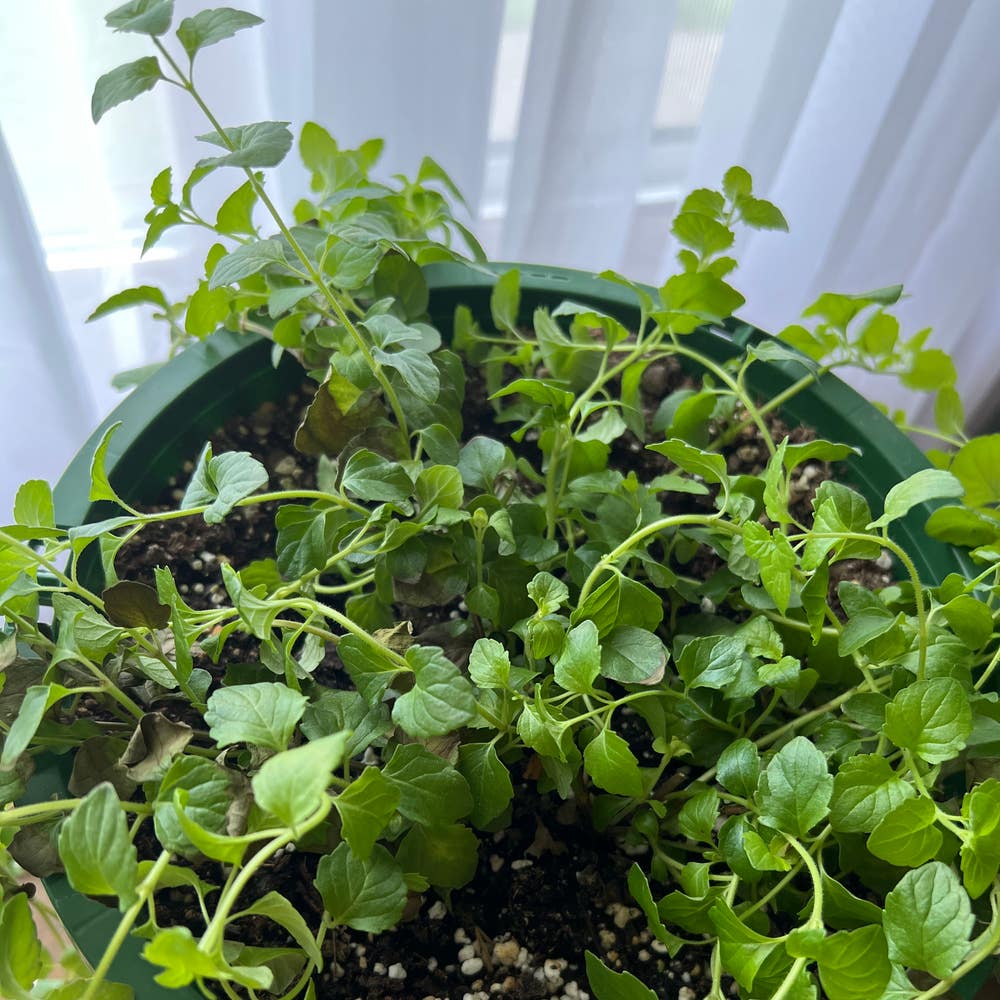
How to Cure Curling Leaves on Your Indian Borage 💧
Coleus amboinicus
By the Greg Editorial Team
Nov 24, 2024•5 min read
This article was created with the help of AI so we can cover more plants for you. May contain errors. See one? Report it here.
Transform your Indian Borage's health 🌿 by quickly diagnosing and treating curling leaves for vibrant growth!
- 🌱 Curling leaves indicate pests or stress; inspect for symptoms early.
- 💧 Overwatering and underwatering are common causes; check soil moisture regularly.
- 🌞 Bright, indirect sunlight and optimal conditions prevent leaf curl in Indian Borage.
Diagnosing Curling Leaves
Identifying Symptoms of Leaf Curl 🌿
When diagnosing curling leaves on your Indian Borage, start by observing the visual signs. Look for changes in leaf shape, such as curling inward or outward, and note any color changes like yellowing or browning.
Early diagnosis is crucial for effective treatment. The sooner you identify the problem, the better chance your plant has to recover.
Differentiating Between Causes 🕵️♂️
Next, differentiate between potential causes of leaf curl. Assess whether the issue stems from pest damage or environmental stress.
For pest damage, inspect for visible insects or webbing on the leaves. If environmental stress is suspected, check the temperature and humidity levels around your plant.
Utilize tools for diagnosis, such as a soil moisture meter to gauge moisture levels or conduct a thorough pest inspection. These tools can help pinpoint the exact issue affecting your plant.
Assessing Plant Health and Growth Conditions 🌱
Evaluating the overall health of your Indian Borage is essential. Check the size and color of the leaves; healthy plants typically have vibrant, robust foliage.
Monitor the growth rate and new leaf production as indicators of plant vigor. Regular health checks can prevent issues from escalating, ensuring your plant remains healthy and thriving.
By staying vigilant and proactive, you can maintain the health of your Indian Borage and address any curling leaves effectively. Next, we will explore treatment options to restore your plant's vitality.
Treating Curling Leaves
🌊 Step-by-Step Treatment for Overwatering
Overwatering is a common culprit behind curling leaves. Start by assessing the soil moisture using a moisture meter or your finger to gauge how wet the soil is.
If you find that the soil is overly saturated, stop watering immediately. Next, improve drainage by repotting your Indian Borage in well-draining soil if necessary.
Keep an eye out for root rot, which can develop in soggy conditions. If you notice any affected roots, trim them away and consider applying a fungicide to protect the plant.
💧 Step-by-Step Treatment for Underwatering
Underwatering can also lead to curling leaves, so it’s essential to check the soil moisture regularly. Ensure the soil is dry but not completely bone dry before watering.
When it’s time to water, do so thoroughly, allowing excess water to drain from the bottom of the pot. Adjust your watering schedule to every 1-2 weeks, depending on the environmental conditions.
🐛 Pest Control Methods
Pests can wreak havoc on your Indian Borage, causing leaves to curl. Here are some effective control methods to consider.
🌱 Organic Control Techniques
For a natural approach, apply neem oil to affected areas every 7-14 days. This eco-friendly option helps deter pests without harming beneficial insects.
Insecticidal soap is another great choice; just follow the product instructions for application. These methods can effectively manage pest populations while keeping your plant healthy.
⚗️ Chemical Control Techniques
If pests persist, you may need to resort to chemical control. Systemic insecticides can be effective, but always follow label instructions for safety. This ensures you protect both your plant and the environment.
🌿 Nutrient Supplementation Techniques
Providing the right nutrients is crucial for your Indian Borage's recovery. Start by choosing a balanced NPK fertilizer or an organic option that suits your plant's needs.
Apply fertilizer every 4-6 weeks during the growing season to promote healthy growth. Look for signs of improvement, such as new growth and healthier leaves, as indicators that your plant is thriving again.
With these treatment methods, you can effectively address curling leaves and restore your Indian Borage to its vibrant self. Next, let’s explore how to prevent curling leaves from occurring in the first place.
Preventing Curling Leaves
🌊 Best Watering Practices for Indian Borage
To keep your Indian Borage healthy, establish a consistent watering schedule. Allow the soil to dry out between waterings to prevent overwatering, which is a common cause of leaf curl.
Water deeply and evenly to encourage robust root growth. This technique ensures that the roots can access moisture effectively, promoting overall plant health.
🌱 Soil Requirements and Amendments
The right soil mix is crucial for your Indian Borage. Use a well-draining potting mix, ideally with perlite or sand, to prevent water retention that can lead to root issues.
Maintaining the correct soil pH is also important. Aim for a pH between 6.0 and 7.0 to optimize nutrient uptake and support healthy growth.
🐞 Regular Pest Monitoring and Control
Regular inspections are key to preventing pest infestations. Schedule weekly checks for any signs of pests to catch issues early.
Introduce beneficial insects like ladybugs as a preventative measure. These natural allies can help keep harmful pests at bay, ensuring your plant remains healthy.
☀️ Optimal Growing Conditions
Light Requirements
Your Indian Borage thrives in bright, indirect sunlight. Aim for 6-8 hours of light daily to promote vibrant growth and prevent leaf curl.
🌡️ Temperature and Humidity
Maintaining the right temperature is essential. Keep your plant in an environment between 20°C to 30°C (68°F to 86°F) for optimal growth.
Humidity levels should also be monitored. Aim for a range of 40-60% to create a comfortable atmosphere for your Indian Borage.
🍂 Seasonal Care Tips to Prevent Leaf Curl
Adjust your watering and feeding routine with the changing seasons. This flexibility helps meet your plant's varying needs throughout the year.
Protect your Indian Borage from extreme weather conditions. Use shade cloth or move the plant indoors during harsh weather to shield it from stressors that can lead to curling leaves.
By following these preventative measures, you can maintain the health of your Indian Borage and enjoy its lush foliage year-round. Next, let’s explore how to treat curling leaves when they do occur.
⚠️ Safety First
This content is for general information and may contain errors, omissions, or outdated details. It is not medical, veterinary advice, or an endorsement of therapeutic claims.
Always consult a qualified healthcare professional before using any plant as food, medicine, or supplement.
Never eat any plant (or feed one to pets) without confirming its identity with at least two trusted sources.
If you suspect poisoning, call Poison Control (800) 222-1222, the Pet Poison Helpline (800) 213-6680, or your local emergency service immediately.
Spotted an error? Please report it here.
Revive your Indian Borage from curling leaves with early detection 🔍 and let Greg guide you with tailored watering reminders and pest control tips for a flourishing plant!