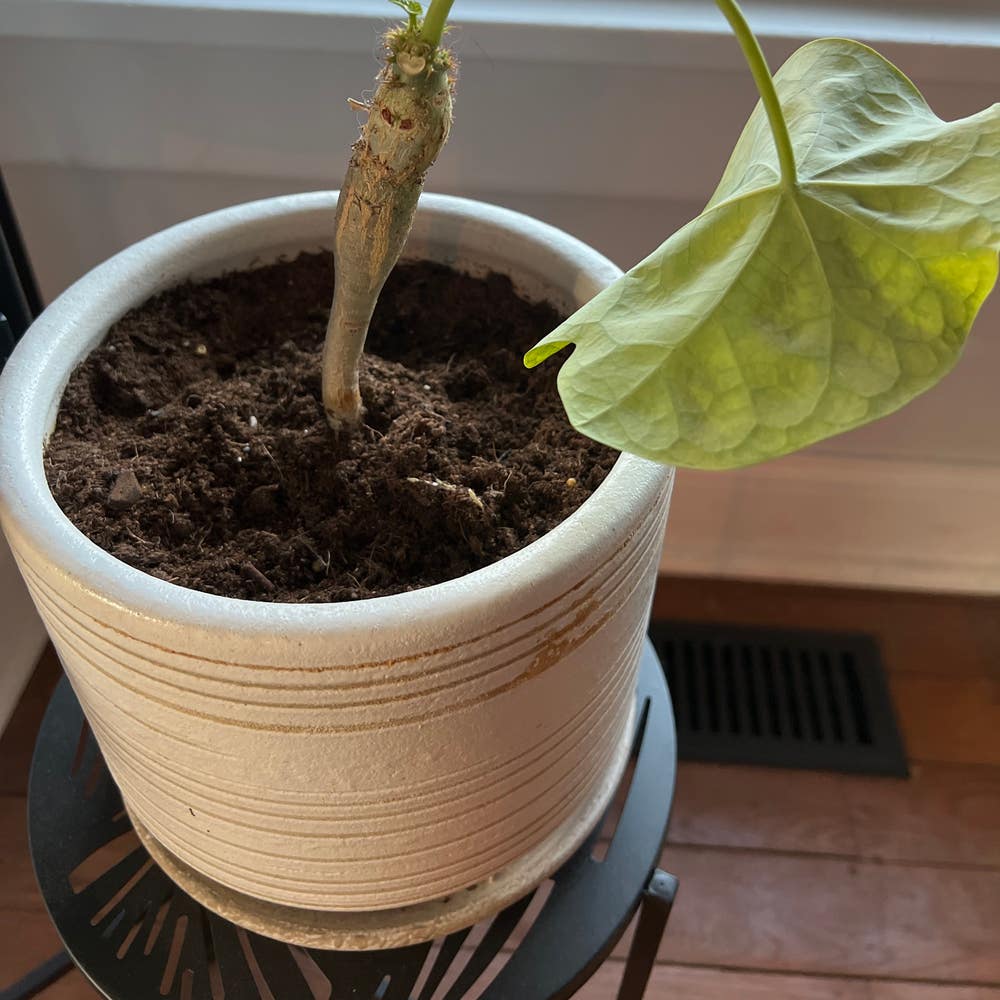
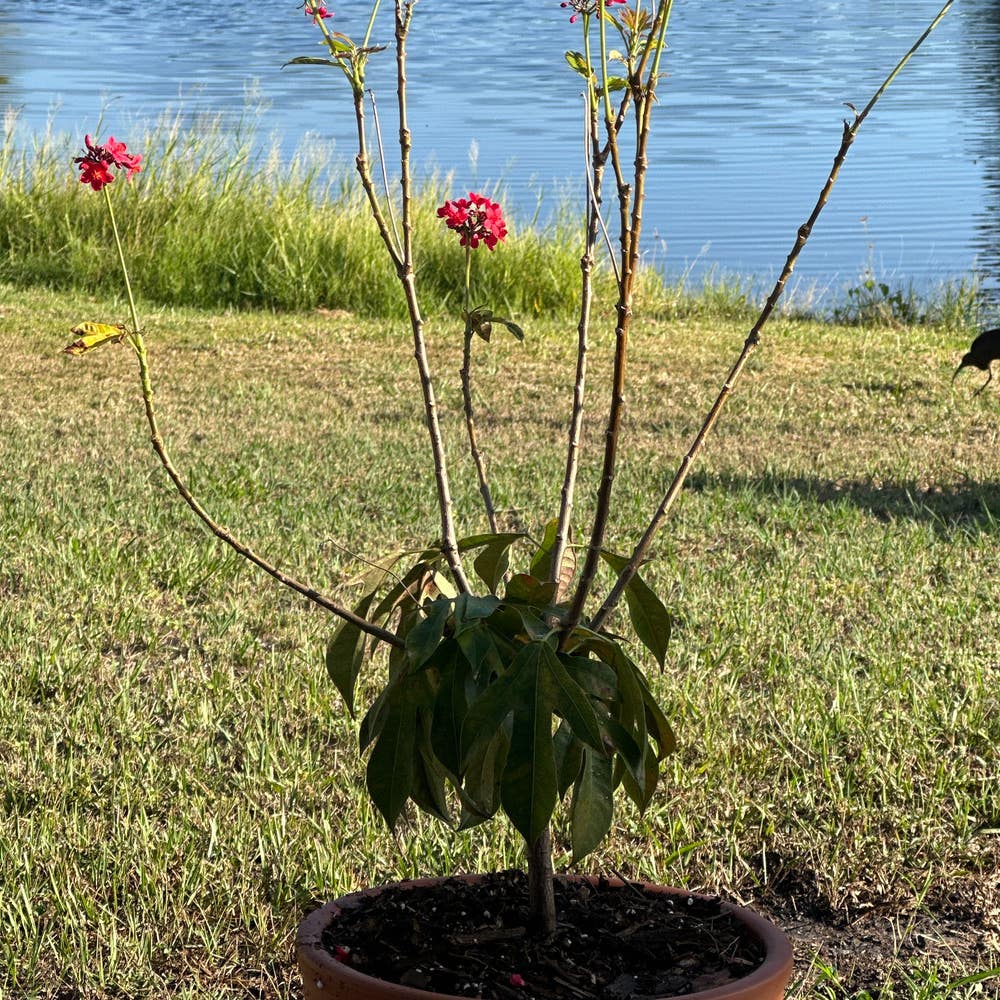
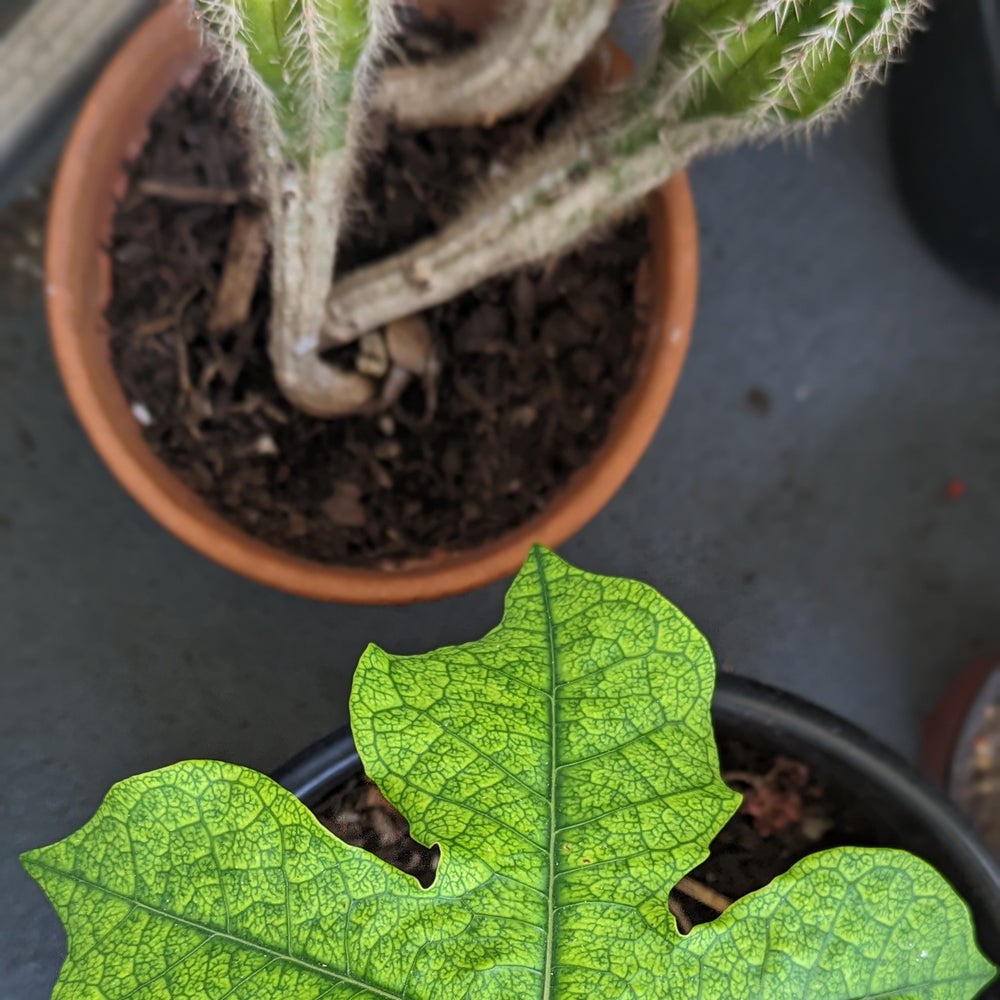
What Is The Best Way To Water a Buddha Belly Plant?
Jatropha podagrica
By the Greg Editorial Team
Jun 18, 2024•4 min read
This article was created with the help of AI so we can cover more plants for you. May contain errors. See one? Report it here.
Nurture your Buddha Belly plant's quirky charm with the ultimate watering guide. 🌿🚰
- 🌵 Check soil moisture before watering; top inch dry means it's time.
- 🌞❄️ Adjust watering with seasons: more in summer, less in winter.
- 🚫 Avoid overwatering: ensure pots have drainage to prevent soggy roots.
When to Water Your Buddha Belly Plant
🌱 Spotting Thirsty Soil
Check the soil before you even think about watering. If the top inch is dry, your Buddha Belly plant is ready for a drink. Ignore this step, and you might as well be pouring your efforts down the drain.
🍃 Reading the Leaves
Your plant's leaves are like a mood ring—they change when they're thirsty. Drooping, yellowing, or curling at the edges? That's your cue to grab the watering can. Just remember, leaves can be drama queens, so double-check with the soil before you douse them.

How to Water Your Buddha Belly Plant
💧 The Soak and Dry Method
Watering a Buddha Belly plant isn't rocket science, but it does require a bit of finesse. Soak the soil thoroughly until water runs out of the drainage holes, then wait for the top inch to dry out before the next watering. This method mimics the natural wet-dry cycles the plant would experience in its native habitat.
🚱 Mistakes to Avoid
Overwatering is the kiss of death for your Buddha Belly plant. If the leaves start looking like they've had one too many, you're probably drowning them in love. Cut back on the H2O and let the plant breathe. Conversely, if your plant is shriveling up like a prune, it's time to up the hydration ante. Remember, balance is key.

Seasonal Watering Adjustments
🌞 Summer Sizzle and Winter Chills
In the summer heat, your Buddha Belly plant's thirst ramps up. Water generously when the soil dries out, but don't let it take a dip in standing water. As the mercury rises, so does the frequency of your watering sessions.
Come winter, it's a different story. The plant's growth slows, and it's time to ease off the hydration pedal. Water sparingly, allowing the soil to dry out more between waterings. It's a delicate dance of observation and restraint.
🌡 Weathering the Extremes
During heatwaves, vigilance is key. Your plant might need a drink more often, but don't go overboard. Overwatering is just as perilous as dehydration.
In a cold snap, your Buddha Belly plant prefers to stay on the dry side. Think of it as putting your plant on a water diet to match its slowed-down metabolism.
Remember, these are not hard and fast rules. Your home's microclimate plays a huge role. Keep an eye on the soil and leaves for cues, and adjust your watering rhythm to the beat of the seasons.

The Role of Pots and Drainage in Watering
🏡 Choosing the Right Home for Your Plant
Selecting a pot for your Buddha Belly plant is like picking a roommate; compatibility is key. Drainage holes are non-negotiable, unless you fancy a horticultural horror show. A pot without holes is a one-way ticket to Soggy Roots Central. If you've fallen for a pot that's as sealed as a drum, drill some holes or pop in a layer of gravel. But remember, gravel is not a get-out-of-jail-free card—it's a band-aid on a bullet wound if you're not careful.
🦸♂️ Drainage: The Unsung Hero
Drainage is the silent guardian of your plant's roots. Terra cotta pots are the MVPs, wicking away moisture like a pro, while plastic is the clingy type, holding onto water for dear life. Empty the saucer after watering; it's not a pool party for the roots. And size does matter—too big, and the soil stays wet like a forgotten gym towel; too small, and your plant will thirst faster than you can say "hydration." Keep an eagle eye on the soil's moisture with a touch-test, and adjust your watering routine like a DJ tweaks a track—until it's just right.
⚠️ Safety First
This content is for general information and may contain errors, omissions, or outdated details. It is not medical, veterinary advice, or an endorsement of therapeutic claims.
Always consult a qualified healthcare professional before using any plant as food, medicine, or supplement.
Never eat any plant (or feed one to pets) without confirming its identity with at least two trusted sources.
If you suspect poisoning, call Poison Control (800) 222-1222, the Pet Poison Helpline (800) 213-6680, or your local emergency service immediately.
Spotted an error? Please report it here.
Ensure your Buddha Belly plant stays perfectly quenched through the seasons with Greg's season-smart watering schedule 🌦, tailored to your home's unique environment.