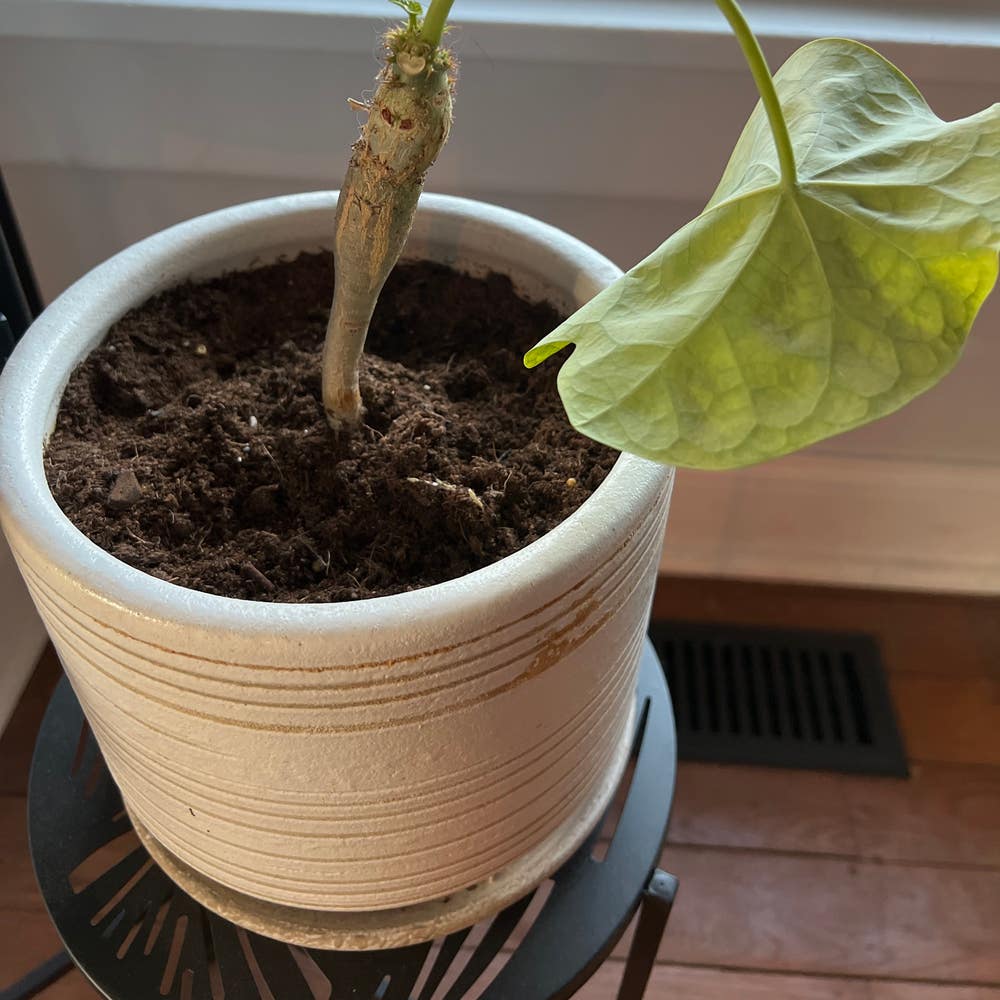
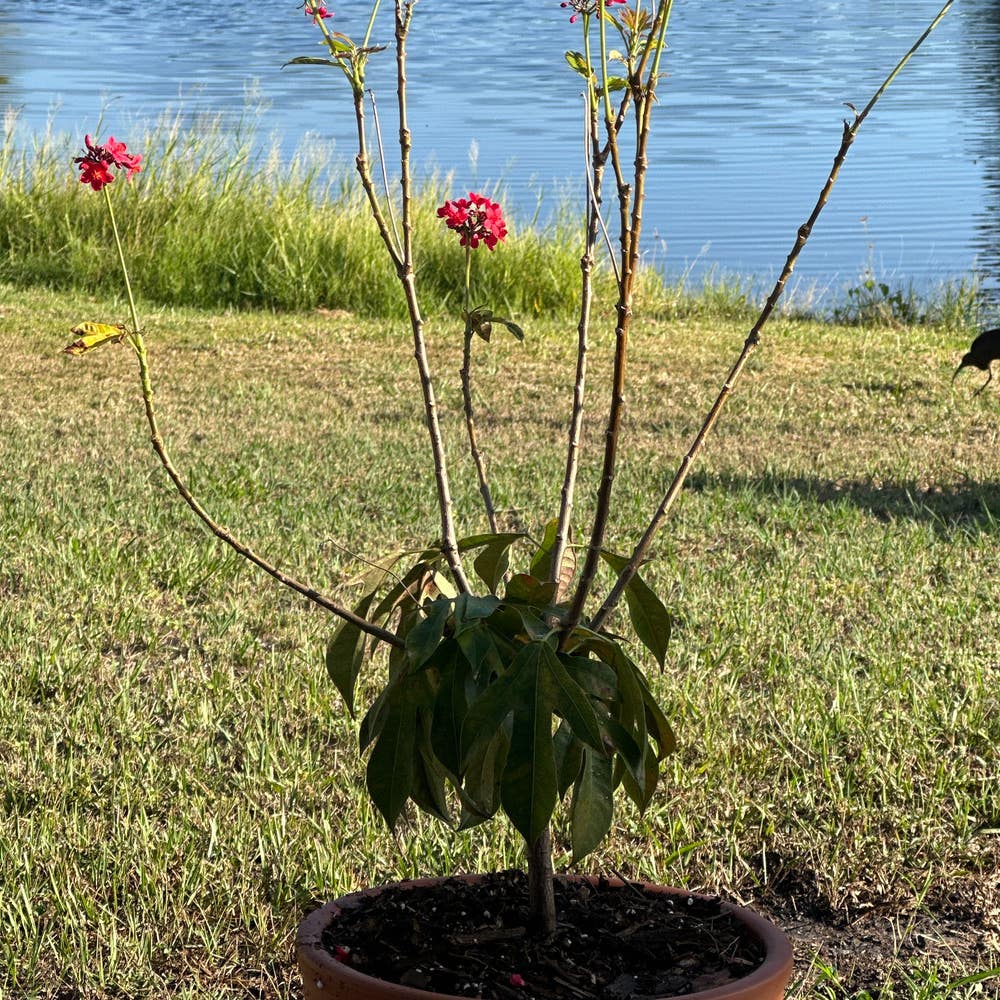
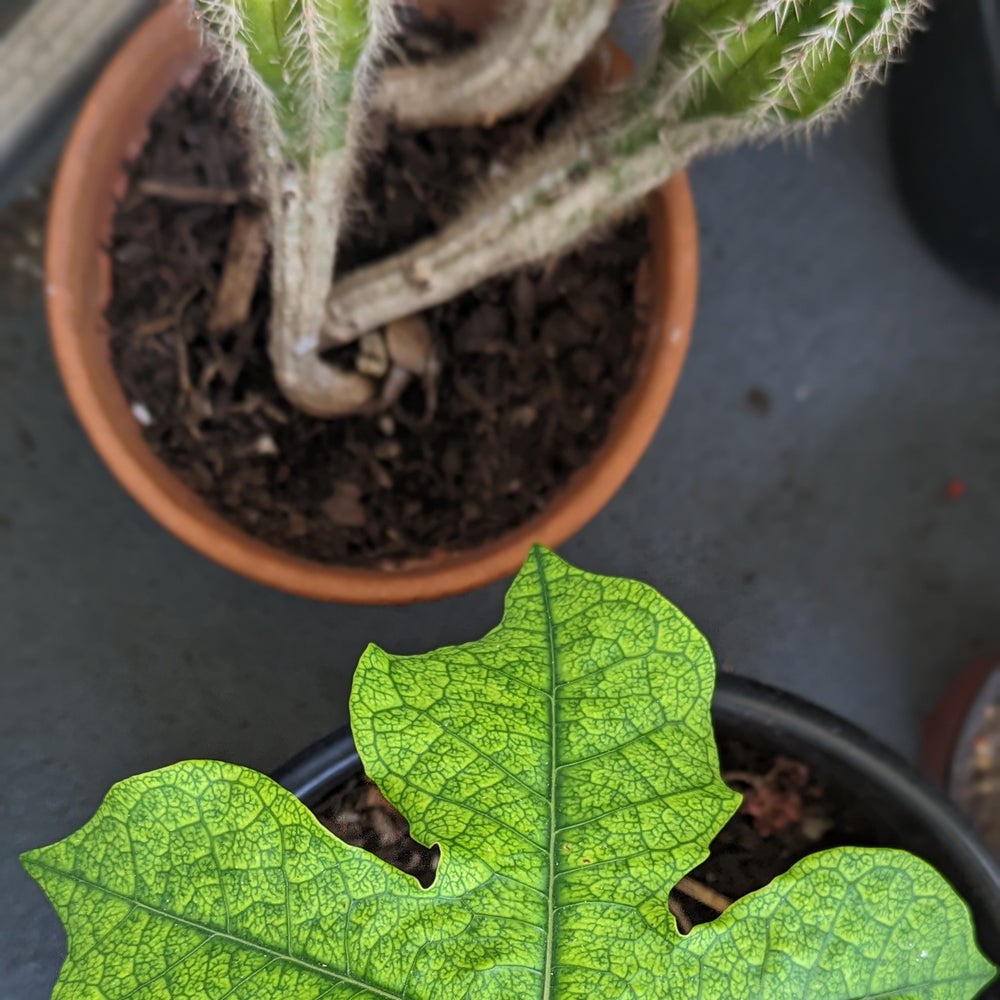
👐 How to Cure Leaves Falling Over on Your Buddha's Palm Plant
Jatropha podagrica
By the Greg Editorial Team
Oct 19, 2024•6 min read
This article was created with the help of AI so we can cover more plants for you. May contain errors. See one? Report it here.
Revive your drooping Buddha's Palm 🌴 with these expert tips for vibrant, healthy leaves and a thriving indoor garden!
- 💧 Overwatering and underwatering cause drooping leaves; check soil moisture regularly.
- 🌡️ Maintain humidity and temperature between 50-70% and 65°F to 85°F for health.
- 🐛 Monitor for pests like spider mites; use neem oil for effective control.
Causes of Leaves Falling Over
💧 Overwatering
Overwatering is a common issue that can lead to serious problems for your Buddha's Palm. When the roots are submerged in too much water, they can become stressed, leading to several telltale signs.
Signs and Symptoms
- Leaf droop: The leaves will appear limp and heavy, often hanging downwards.
- Yellowing leaves: This indicates root stress and can be a precursor to root rot.
- Root rot: A foul smell from the soil and mushy roots are clear indicators that your plant is in trouble.
🚰 Underwatering
On the flip side, underwatering can also cause leaves to droop. If your plant isn't getting enough water, it will show distress in various ways.
Signs and Symptoms
- Leaf droop: Leaves become limp and dry, losing their vitality.
- Crispy leaf edges: This is a sign of severe water stress, indicating that immediate action is needed.
- Soil dryness: If the soil pulls away from the pot edges, it’s a clear sign that your plant is thirsty.
🥦 Nutrient Deficiencies
Nutrient deficiencies can significantly impact the health of your Buddha's Palm. Each nutrient plays a specific role, and a lack of any can lead to visible symptoms.
Specific Nutrients and Their Effects
- Nitrogen deficiency: Look for yellowing of older leaves and stunted growth.
- Potassium deficiency: This often manifests as leaf tip burn and weak stems.
- Magnesium deficiency: Interveinal chlorosis, or yellowing between leaf veins, is a common sign.
🌡️ Environmental Stress
Environmental factors can also lead to leaves falling over. Temperature and humidity play crucial roles in your plant's overall health.
Temperature and Humidity Factors
- Temperature fluctuations: Leaves may droop in response to cold drafts or excessive heat.
- Humidity levels: The ideal humidity for Buddha's Palm is between 50-70%. Lower levels can cause significant leaf stress.
🐛 Pest Infestations
Pests can wreak havoc on your Buddha's Palm, leading to drooping leaves and other issues. Identifying these pests early is key to effective treatment.
Common Pests Affecting Buddha's Palm
- Spider mites: Look for webbing and stippled leaves as signs of infestation.
- Mealybugs: These appear as cotton-like masses on leaves and stems.
- Scale insects: Hard, shell-like bumps on stems and leaves indicate a scale infestation.
Understanding these causes is essential for maintaining a healthy Buddha's Palm. By identifying the signs early, you can take action to restore your plant's vitality and prevent further issues. Next, we’ll explore how to diagnose the problem effectively.
Diagnosing the Problem
Assessing Soil Moisture Levels 🌊
To determine if your Buddha's Palm needs water, stick your finger 1-2 inches into the soil. If it feels dry, it's time to give your plant a drink.
For more precise readings, consider using a moisture meter. This tool can help you avoid the common pitfalls of overwatering or underwatering.
Checking for Pests and Diseases 🐛
A visual inspection is crucial for identifying pests. Look closely at the leaves and stems for any unwanted visitors.
Fungal infections can also be a concern. Keep an eye out for spots or mold, which may indicate a disease issue.
Evaluating Environmental Conditions 🌍
Light
Your Buddha's Palm thrives in bright, indirect light. Direct sunlight can scorch its delicate leaves, so position it wisely.
Temperature
The optimal temperature range for this plant is between 65°F to 85°F (18°C to 29°C). Sudden temperature fluctuations can stress your plant, leading to drooping leaves.
Humidity
Humidity plays a significant role in your plant's health. Use a hygrometer to monitor levels, aiming for a comfortable range of 50-70%.
By assessing these factors, you can pinpoint the cause of your plant's distress. This understanding sets the stage for effective solutions to restore its vitality.
Solutions and Treatments
🌊 Adjusting Watering Practices
How to Water Correctly
- Check soil moisture before watering. Stick your finger about 1-2 inches into the soil. If it feels dry, it’s time to water.
- Water thoroughly until it drains from the bottom. This ensures that the roots receive adequate moisture.
- Frequency: Water when the top 1-2 inches of soil are dry. This simple practice can prevent both overwatering and underwatering.
🕳️ Improving Soil Drainage
Repotting Tips
- Choose a pot with drainage holes. This is crucial for preventing water from pooling at the bottom.
- Use a well-draining potting mix. Look for mixes specifically designed for palms or tropical plants.
- Repot every 1-2 years to refresh soil. This helps maintain nutrient levels and prevents compaction.
🌱 Fertilizing
Recommended Nutrients and Schedules
- Use a balanced liquid fertilizer (NPK 10-10-10) during the growing season. This provides essential nutrients for healthy growth.
- Frequency: Fertilize every 4-6 weeks during spring and summer. Consistent feeding supports robust plant health.
💧 Increasing Humidity
Methods to Raise Humidity Levels
- Use a humidifier: Aim to maintain humidity levels between 50-70%. This is ideal for your Buddha's Palm.
- Group plants together: This creates a microclimate, increasing local humidity.
- Pebble trays: Fill a tray with water and pebbles, then place the pot on top. As the water evaporates, it boosts humidity around the plant.
🐞 Pest Control
Organic and Chemical Options
- Neem oil: This natural remedy is effective against spider mites and mealybugs. It’s safe and easy to apply.
- Insecticidal soap: Perfect for indoor use, it targets soft-bodied insects without harming your plant.
- Regular monitoring: Check your plants weekly for early signs of pests. Catching issues early can save your plant from serious damage.
By implementing these solutions, you can effectively address the issues causing your Buddha's Palm's leaves to fall over. With proper care, your plant will thrive and bring beauty to your space. Next, let’s explore preventative measures to keep your plant healthy long-term.
Preventative Measures
Best Practices for Ongoing Care 🌱
Maintaining a regular watering schedule is crucial for your Buddha's Palm. Adjust your watering frequency based on seasonal changes to ensure your plant stays hydrated without becoming waterlogged.
Fertilization is another key aspect. Following a consistent schedule helps prevent nutrient deficiencies, keeping your plant vibrant and healthy.
Seasonal Care Adjustments ☀️
During winter, it's wise to reduce both watering and fertilization. Your plant enters dormancy, requiring less attention and resources.
In summer, increase humidity levels and keep a close eye on pests. The warmer weather can bring unwanted visitors, so vigilance is essential.
Monitoring Plant Health Regularly 🔍
Make it a habit to check your plant weekly for signs of stress or pests. Early detection can save your plant from more significant issues down the line.
Adjust your care based on these observations. Being proactive ensures your Buddha's Palm thrives year-round, setting the stage for a flourishing indoor garden.
⚠️ Safety First
This content is for general information and may contain errors, omissions, or outdated details. It is not medical, veterinary advice, or an endorsement of therapeutic claims.
Always consult a qualified healthcare professional before using any plant as food, medicine, or supplement.
Never eat any plant (or feed one to pets) without confirming its identity with at least two trusted sources.
If you suspect poisoning, call Poison Control (800) 222-1222, the Pet Poison Helpline (800) 213-6680, or your local emergency service immediately.
Spotted an error? Please report it here.
Keep your Buddha's Palm perky and vibrant 🌱 by using Greg's personalized reminders for watering and humidity, ensuring your plant thrives with every tip from this guide!