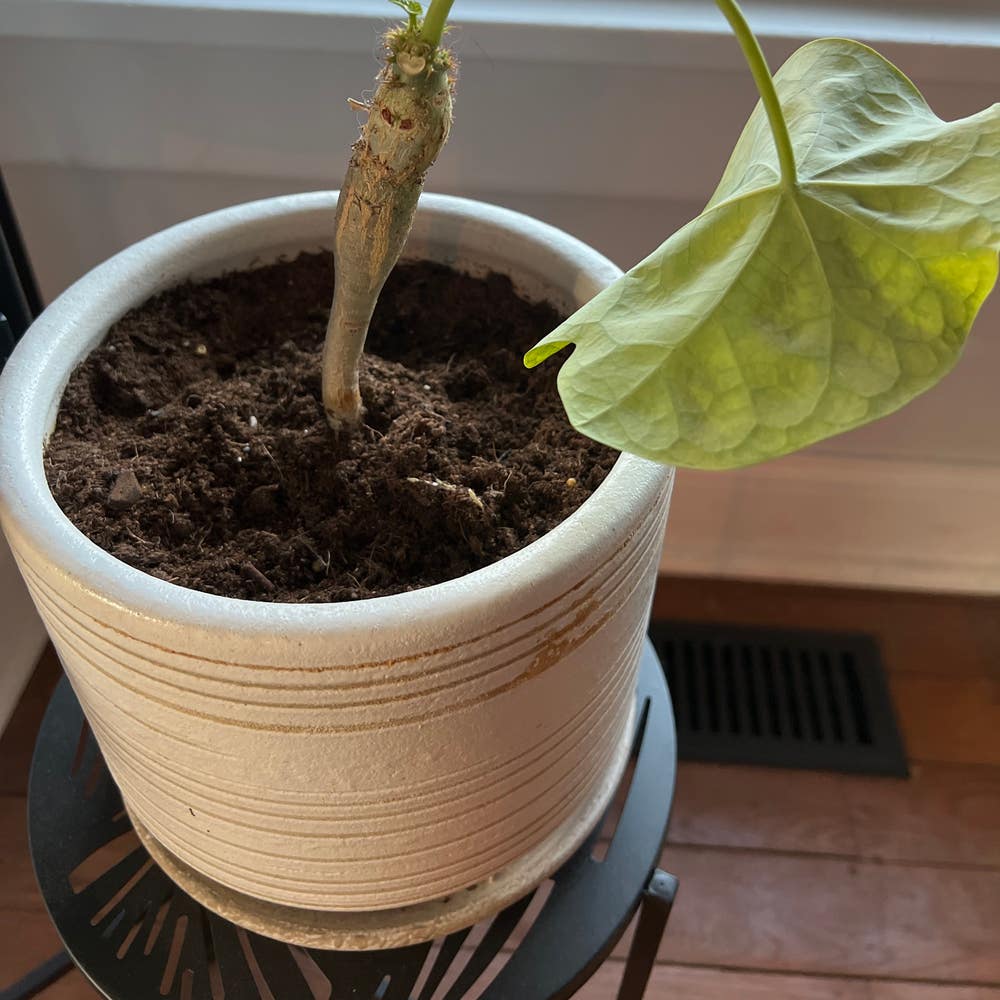
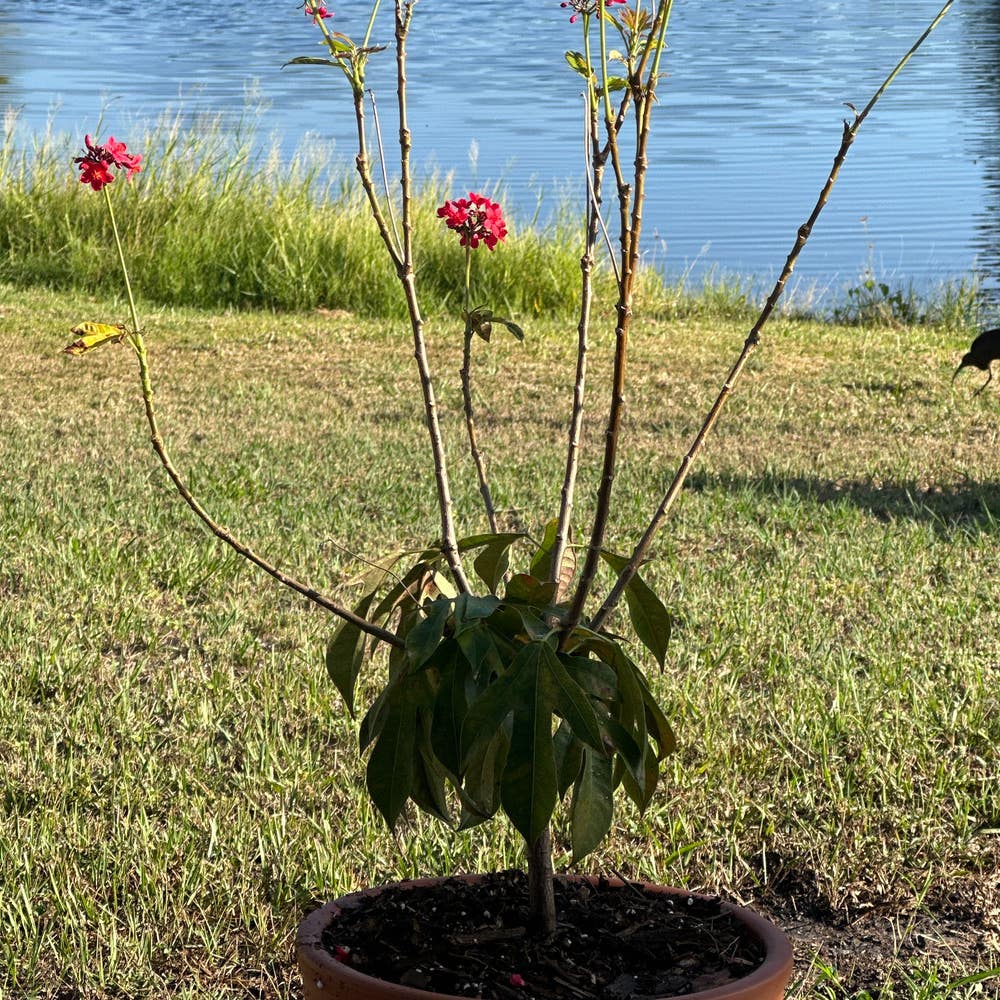
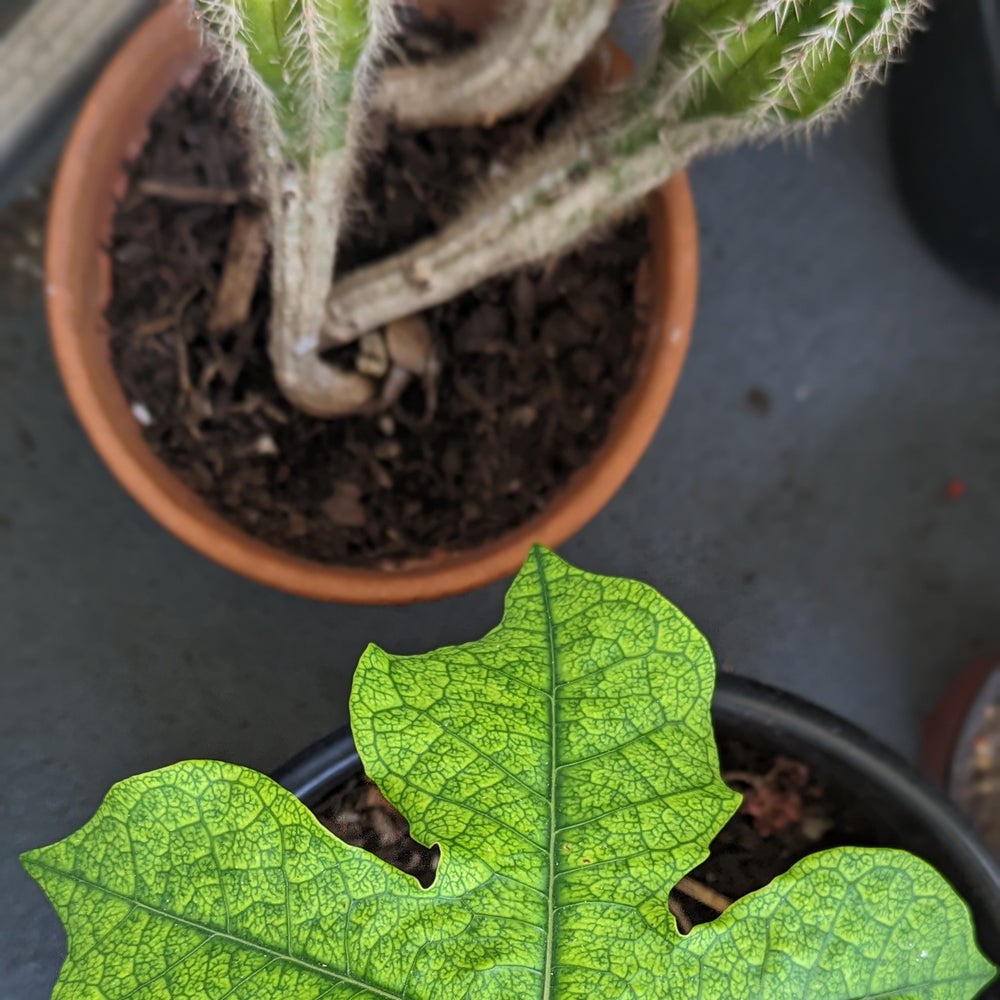
🧘♂️ Your Buddha's Palm Plant's Light Requirements
Jatropha podagrica
By the Greg Editorial Team
Oct 19, 2024•4 min read
This article was created with the help of AI so we can cover more plants for you. May contain errors. See one? Report it here.
Master the light needs of your Buddha's Palm 🌴 to unlock its full growth potential and vibrant beauty! 🌞
- 🌞 Buddha's Palm thrives in bright, indirect light for 6-8 hours daily.
- 🌿 Low light slows growth; some exposure is essential for health.
- ❌ Avoid direct sunlight to prevent leaf scorch and browning tips.
Indoor Light Conditions
Optimal Indoor Lighting 🌟
For your Buddha's Palm plant, bright, indirect light is the gold standard for indoor growth. Aim for 6-8 hours of bright, indirect sunlight daily, placing your plant near east or north-facing windows for optimal results.
Low Light Tolerance 🌑
This plant can adapt to low light environments, making it a versatile choice for various indoor settings. While it can survive in shaded areas, be aware that slower growth may occur, and signs of insufficient light include elongated stems and pale leaves.
Avoiding Direct Sunlight 🚫
Direct sunlight can be detrimental to your Buddha's Palm. It is sensitive to harsh rays, which can lead to leaf scorch and browning tips, so maintain a safe distance from windows to prevent damage.
Understanding these light requirements is crucial for nurturing a healthy Buddha's Palm. Next, let’s explore the outdoor light conditions that can further enhance its growth.
Outdoor Light Conditions
Optimal Outdoor Lighting 🌞
Your Buddha's Palm Plant thrives in dappled sunlight when outdoors. Aim for a cozy spot under taller plants or trees, where it can soak up 4-6 hours of filtered sunlight daily.
Shade-Loving Characteristics 🌳
This plant is a true shade lover, able to flourish in partial shade. However, it still craves a bit of direct sunlight for optimal health, so keep an eye out for vibrant leaf color and healthy growth as signs of adequate light.
Understanding these light preferences will help your Buddha's Palm reach its full potential. Next, let’s explore how light impacts its growth and flowering.
Impact of Light on Growth and Flowering
🌱 Growth Patterns
Light exposure plays a crucial role in the overall growth of your Buddha's Palm plant. It directly influences leaf development and stem strength, making adequate lighting essential for a healthy plant.
Insufficient light can stunt growth rates and lead to unhealthy leaves. If your plant is struggling, check its light conditions; it might be time to adjust its placement.
🌸 Flowering Conditions
When it comes to flowering, the Buddha's Palm typically doesn't bloom indoors due to inadequate light. However, if you provide optimal outdoor conditions, especially for mature plants, you might just witness those beautiful flowers.
Understanding these light requirements can help you nurture your plant effectively. With the right conditions, your Buddha's Palm can thrive and possibly surprise you with its blooms.
Next, let's explore how to use grow lights to enhance your plant's growth, especially during those darker months.
Use of Grow Lights
🌟 Benefits of Grow Lights
Grow lights are a game-changer for indoor gardening, especially in low-light environments or during the winter months. They provide the necessary light spectrum that your Buddha's Palm Plant craves, ensuring it thrives even when natural sunlight is scarce.
When choosing grow lights, consider the two main types: LED and fluorescent. LEDs are energy-efficient and long-lasting, while fluorescent lights are often more affordable but may need replacing sooner.
💡 Recommended Grow Light Conditions
For optimal growth, full-spectrum grow lights are your best bet. These lights mimic natural sunlight, providing the right wavelengths for photosynthesis.
Aim for a duration of 12-14 hours of light each day. This consistent exposure helps your plant maintain its health and vigor, especially during darker months.
📏 Placement and Distance
Proper placement of grow lights is crucial for maximizing their effectiveness. Keep the lights about 12-24 inches away from your plant, depending on the type of light you’re using.
As your Buddha's Palm grows, be sure to adjust the height of the lights. This ensures that your plant receives the optimal exposure it needs to flourish.
With the right grow lights, your indoor garden can thrive, even in less-than-ideal conditions. Next, let’s explore some common misconceptions about light requirements for your Buddha's Palm Plant.
Common Misconceptions
Misconception: Needs Direct Sunlight 🌞
Many believe that Buddha's Palm plants thrive in direct sunlight, but this is a misconception. In reality, these plants are sensitive to direct exposure, which can lead to leaf scorch and browning tips.
To avoid damage, place your plant in bright, indirect light. This ensures it receives the necessary energy without the risks associated with harsh sunlight.
Misconception: Low Light Means No Light 💡
Another common misunderstanding is that low light conditions mean no light is needed at all. While Buddha's Palm can tolerate low light, it doesn’t mean it will flourish.
Adequate light is crucial for the plant's health. Even in low-light environments, some light exposure is necessary to maintain vibrant growth and prevent issues like elongated stems and pale leaves.
Understanding these misconceptions can help you provide the best care for your Buddha's Palm. With the right light conditions, your plant can thrive beautifully.
Next, let’s explore how light impacts growth and flowering in these fascinating plants.
⚠️ Safety First
This content is for general information and may contain errors, omissions, or outdated details. It is not medical, veterinary advice, or an endorsement of therapeutic claims.
Always consult a qualified healthcare professional before using any plant as food, medicine, or supplement.
Never eat any plant (or feed one to pets) without confirming its identity with at least two trusted sources.
If you suspect poisoning, call Poison Control (800) 222-1222, the Pet Poison Helpline (800) 213-6680, or your local emergency service immediately.
Spotted an error? Please report it here.
Unlock your Buddha's Palm's full potential 🌱 by using Greg's tailored light tips and reminders to create the ideal environment for vibrant growth!